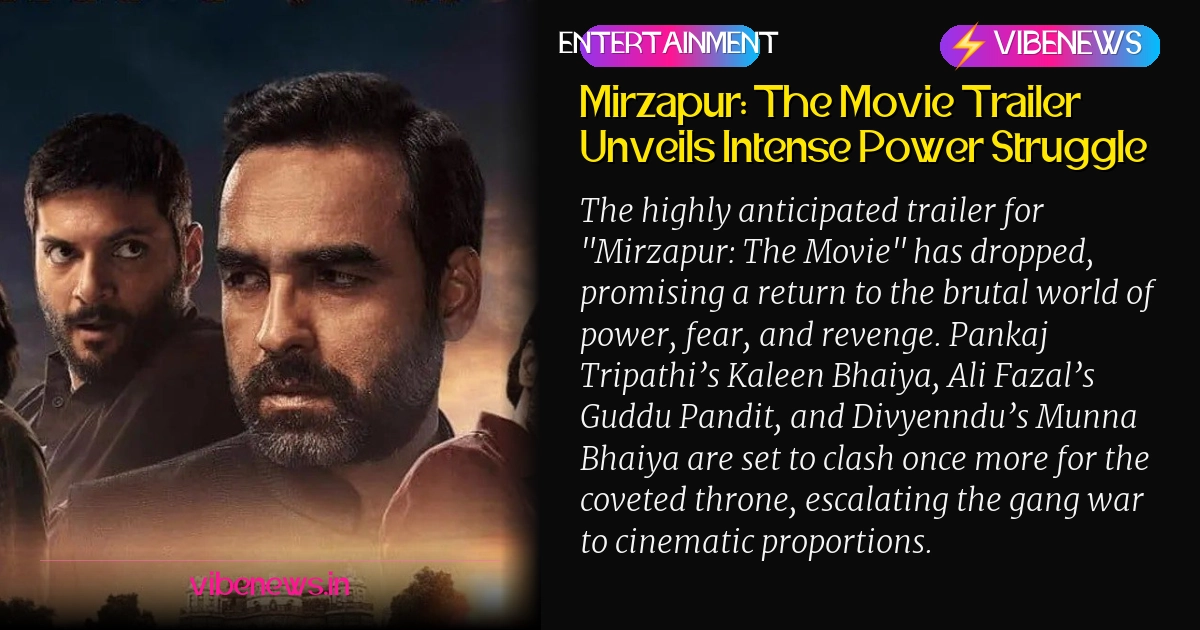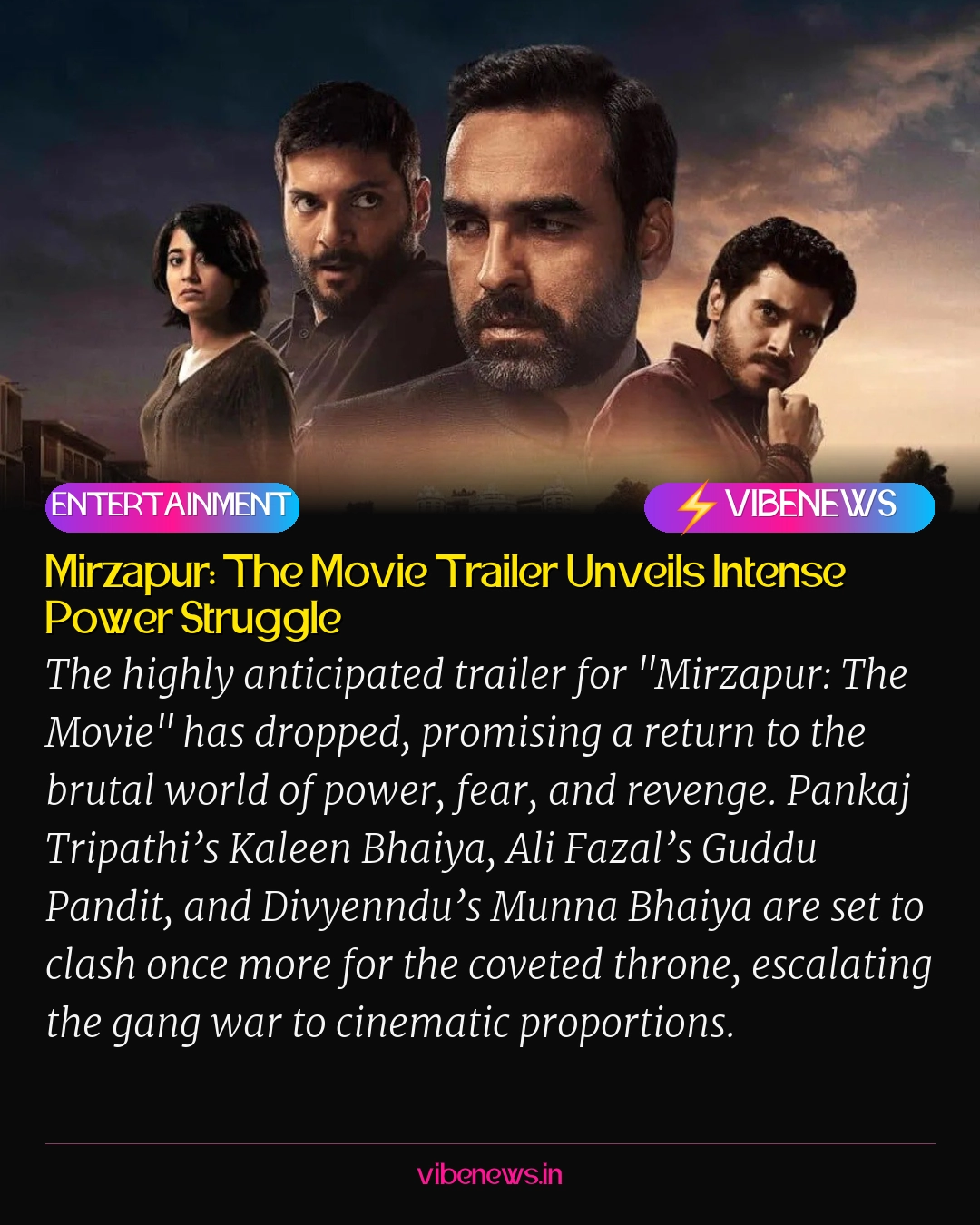
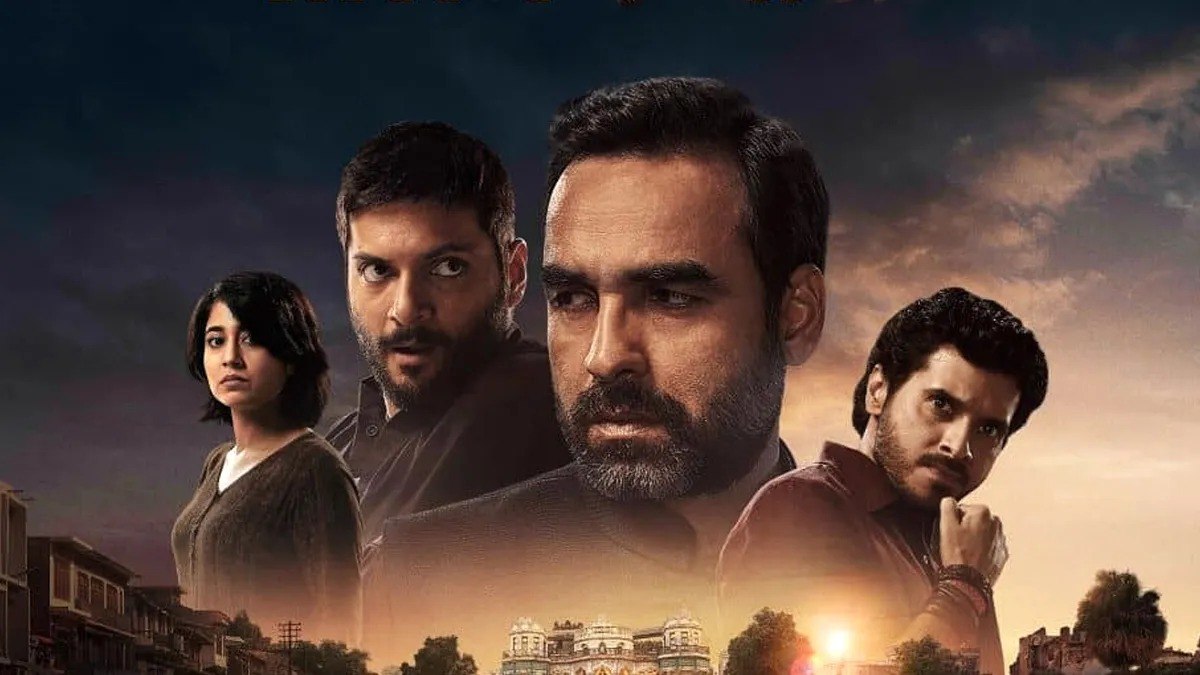
The digital landscape of Indian entertainment is once again abuzz with the release of the trailer for "Mirzapur: The Movie." This cinematic extension of the wildly popular web series promises to plunge audiences back into the ruthless heartland of Uttar Pradesh, where power is seized through brute force and maintained by fear. The trailer, featuring an ensemble cast led by Pankaj Tripathi, Ali Fazal, and Divyenndu, signals an escalation of the long-standing battle for the coveted throne of Mirzapur.
From its opening moments, the trailer establishes the grim philosophy that underpins the world of Mirzapur. Pankaj Tripathi, reprising his iconic role as Kaleen Bhaiya, articulates the chilling truth of his dominion: "Gaddi na toh virasat se milti hai na siyasat se milti hai... toh sirf aur sirf baahubal se, aur tikti hai dar pe. Jis din is par baithe, samjho maut se tumhara rishta pakka ho gaya." This declaration, translating to "The throne is gained neither through inheritance nor through politics; it is earned solely through muscle power and sustained by fear. The day you sit on it, consider your bond with death sealed," sets a foreboding tone for the impending conflict.
Kaleen Bhaiya’s authority is absolute, and he reminds everyone that true leaders command, not execute, the violence. His pronouncements underscore the deep-seated power dynamics that have defined the series, where control is a fragile commodity constantly under threat. The trailer effectively showcases his unwavering resolve and the cold logic that governs his actions, even when dealing with his own kin.
Meanwhile, the volatile Munna Bhaiya, portrayed by Divyenndu, continues his relentless quest for recognition and power. He openly challenges his father, demanding to be acknowledged as the "Prince of Mirzapur" and questioning why he is sidelined from crucial dealings. Munna’s reckless behavior and his perception of his father as a suffocating presence, akin to a python, highlight the toxic familial dynamics that fuel much of the narrative’s tension. His defiant declaration, "Jalwa hai hamara!" at the trailer’s close, encapsulates his unbridled ambition.
On the opposing side, Ali Fazal’s Guddu Pandit attempts to carve out his own empire, seeking a path away from the relentless cycle of violence. However, the gravitational pull of Mirzapur’s throne proves too strong to escape. He is joined by Jitendra Kumar as Bablu Pandit, who serves as the strategic mind behind their burgeoning operations, adding a layer of calculated planning to Guddu’s raw strength. Their alliance represents a formidable challenge to Kaleen Bhaiya’s established order.
The entry of Ravi Kishan as Babban Babua introduces another formidable player into the already complex web of alliances and rivalries. His presence is poised to further intensify the gang war, adding new dimensions to the power struggle. The trailer is replete with intense action sequences, tense stand-offs, and explicit threats, all underscoring the brutal lengths to which characters will go to claim or retain control of Mirzapur.
Amidst the male-dominated power plays, the female characters are far from passive observers. Rasika Dugal’s Beena Tripathi, Shweta Tripathi’s Gajgamani "Golu" Gupta, and Shriya Pilgaonkar’s Sweety Gupta are seen caught in the crossfire, their lives inextricably linked to the escalating conflict. Their roles often provide crucial emotional depth and, at times, unexpected strategic interventions, proving that power in Mirzapur is not solely wielded by men.
The Legacy of Mirzapur’s Universe
The "Mirzapur" series first captivated audiences with its gritty portrayal of crime, politics, and family feuds in the Purvanchal region of Uttar Pradesh. Launched on a major streaming platform, it quickly became a cultural phenomenon, lauded for its authentic depiction of rural gangland dynamics, its sharp dialogues, and its compelling character arcs. The show’s success paved the way for a new wave of regional crime dramas, demonstrating the immense appetite for stories rooted in specific Indian locales and their unique socio-political landscapes.
The transition from a highly successful web series to a feature film is a significant step, reflecting the growing trend of expanding popular digital franchises into different formats. This move not only caters to the existing fan base but also aims to introduce the Mirzapur universe to a broader cinematic audience. The film format allows for a grander scale of storytelling, potentially offering more elaborate action sequences and a deeper exploration of the characters’ motivations and the region’s complexities.
The series has been praised for its meticulous attention to detail, from the local dialect and customs to the intricate power structures that govern the region. This authenticity has been a cornerstone of its appeal, making the fictional world of Mirzapur feel remarkably real and immersive. The film is expected to maintain this high standard, further cementing the franchise’s reputation for raw, unfiltered storytelling that resonates with a wide demographic.
Editorial Context: The Enduring Appeal of Power Narratives
The continued expansion of the Mirzapur saga into a feature film underscores a significant trend in contemporary Indian entertainment: the enduring fascination with narratives centered on power, ambition, and moral ambiguity. This development is not merely about extending a popular franchise; it reflects a deeper societal engagement with stories that explore the darker facets of human nature and the corrupting influence of unchecked authority.
Over the long term, the success of "Mirzapur: The Movie" could set a precedent for how successful web series are leveraged into cinematic universes, blurring the lines between traditional film and digital streaming content. It signifies a maturation of the Indian streaming industry, where original content is now robust enough to spawn theatrical releases, thereby creating a multi-platform ecosystem for storytelling. This cross-pollination enriches both mediums, offering creators more avenues for narrative exploration and audiences diverse ways to engage with beloved characters and worlds.
Furthermore, the Mirzapur franchise, with its unflinching look at crime and its consequences, contributes to a broader global conversation about the nature of power and justice. Its localized setting provides a unique lens through which universal themes of revenge, loyalty, and survival are examined. As Indian content gains more international recognition, "Mirzapur: The Movie" stands as a testament to the power of regional storytelling to transcend geographical boundaries and resonate with a global audience, solidifying India’s position as a significant contributor to the world of compelling crime dramas.
TL;DR
- "Mirzapur: The Movie" trailer has been released, continuing the intense power struggle for the throne of Mirzapur.
- Pankaj Tripathi’s Kaleen Bhaiya reiterates his philosophy that power is earned through brute force and maintained by fear.
- Divyenndu’s Munna Bhaiya aggressively seeks recognition as the "Prince of Mirzapur," clashing with his father.
- Ali Fazal’s Guddu Pandit, supported by Jitendra Kumar’s Bablu Pandit, plans to build his own empire, challenging the established order.
- Ravi Kishan joins the cast as Babban Babua, adding a new layer of intensity to the escalating gang war.
- Female leads like Beena Tripathi, Golu Gupta, and Sweety Gupta are also central to the unfolding drama, caught in the crossfire.