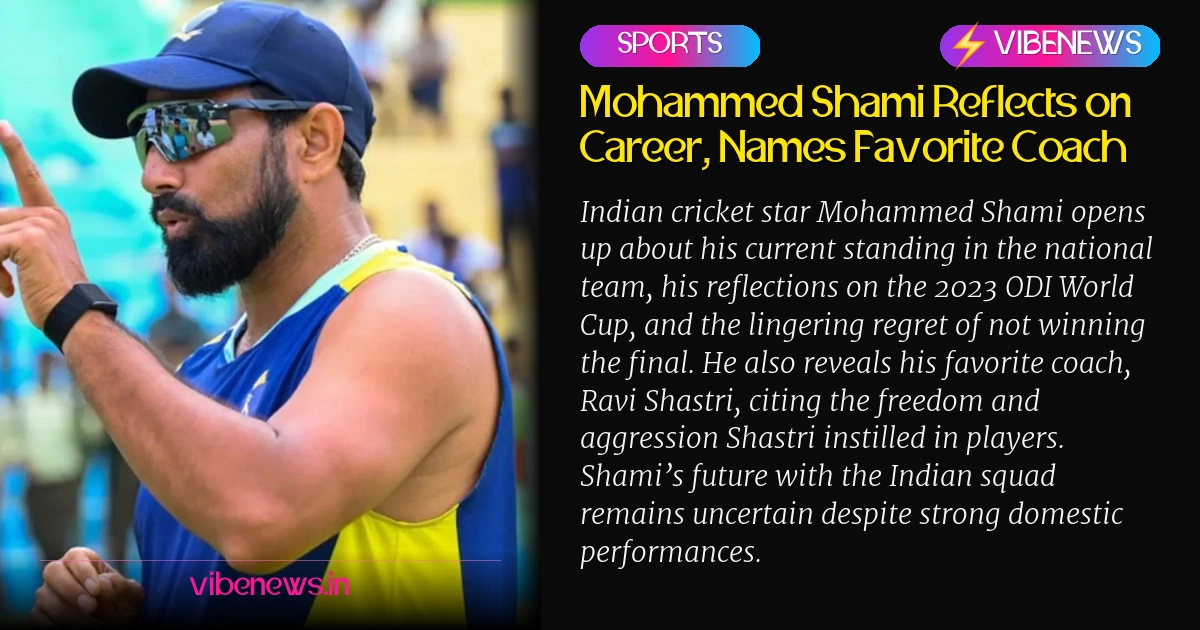
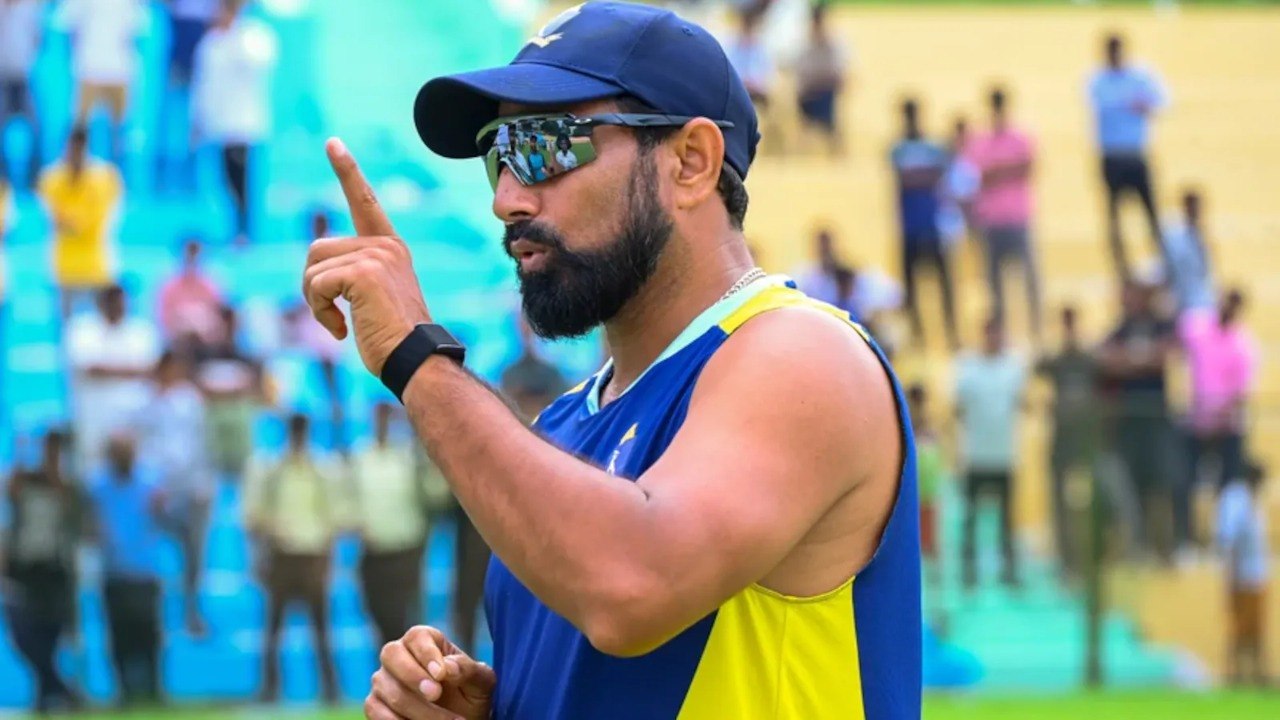
Mohammed Shami, a name synonymous with India’s pace attack, finds himself at a critical juncture in his illustrious career. Despite a record-breaking performance at the 2023 ODI World Cup, where he emerged as the tournament’s leading wicket-taker, his future with the national team appears increasingly uncertain. Recent comments from the veteran pacer shed light on his current mindset, his coaching preferences, and the lingering emotional impact of past campaigns.
Shami’s last international appearance in an ODI was in March 2025, with his last Test match dating back to 2023. This prolonged absence from the national squad raises questions, especially given his consistent performances in domestic cricket. The landscape of Indian fast bowling is highly competitive, with a new generation of talent vying for spots, making the path back for established players like Shami increasingly challenging. His current situation highlights the demanding nature of elite sports, where even exceptional past achievements do not guarantee future selections.
The Influence of Coaching Philosophies
In a recent interaction, Shami was prompted to name his favourite coach among those he has played under. While acknowledging the contributions of Rahul Dravid and Anil Kumble, and briefly mentioning Gautam Gambhir, his unequivocal choice was Ravi Shastri. Shami articulated his preference by stating, "If I have to choose one out of these four, I would choose Ravi bhai. Because of that freedom... that aggression you see in a player when they go out to fight and play a match, you can see that from the outside [with his coaching]."
This insight underscores the profound impact a coach’s philosophy can have on a player’s performance and mental approach to the game. Shastri’s tenure as head coach was often characterized by a no-holds-barred approach, encouraging players to express themselves aggressively and without fear, a style that clearly resonated with Shami.
Echoes of the 2023 World Cup Campaign
The memory of the 2023 ODI World Cup remains vivid for Shami, albeit tinged with a significant regret. He scalped an astonishing 24 wickets in just seven matches, a feat unmatched by any bowler in a single edition of the tournament. Despite his individual brilliance and India’s dominant run through the league stage, the team ultimately fell short in the final against Australia.
Shami openly shared his feelings, stating, "This thing is printed in my mind like a picture because there is only one regret in my mind, that we should have won the final, that’s it. These [records] don’t matter to me at all." This sentiment reflects the ultimate goal of any team sportsperson – collective triumph over individual accolades.
The ‘What If’ of Missed Opportunities
Beyond the immediate disappointment of the final, Shami also reflected on the broader context of his career in ICC events. He expressed a recurring thought about the matches he missed, which could have significantly altered his overall statistics. "Sometimes I feel that when I look at the whole picture of the World Cups, or sometimes when a reel or a list comes up in front of me showing ‘he played this many matches, took this many wickets,’ then the matches I missed in ICC events come to my mind. That picture is always in my mind that, man, I missed three, four, or five matches every year in every event... if you look at the World Cup. So I was thinking, man, if I had played these, I would be sitting right at the very top."
This introspection reveals a common human tendency to ponder alternative scenarios, especially when one is at the pinnacle of their profession. It speaks to the fine margins that define legacies in elite sports.
The Path Forward for a Seasoned Pacer
Shami’s candid remarks paint a picture of a player grappling with the twilight of a remarkable career. While his domestic performances continue to be strong, the selectors’ focus often shifts towards younger talent with an eye on future cycles, such as the 2027 World Cup. The challenge for Shami lies not just in maintaining his fitness and form, but also in demonstrating a unique value proposition that outweighs the potential of emerging fast bowlers. His experience, ability to perform under pressure, and proven track record in major tournaments are undeniable assets, but the dynamics of team selection are complex and multifaceted.
Editorial Context
Mohammed Shami’s current situation and his reflections offer a poignant look into the life of an elite athlete navigating the latter stages of their career. His comments are significant for several reasons. Firstly, they highlight the relentless pressure and competition within Indian cricket, where even a World Cup hero can find themselves on the fringes. This underscores the depth of talent available and the difficult choices selectors face.
Secondly, his praise for Ravi Shastri provides valuable insight into effective coaching methodologies, particularly the importance of fostering player freedom and aggression, which can be a blueprint for future coaching setups. Lastly, Shami’s lingering regret over the 2023 World Cup final, despite his personal heroics, speaks volumes about the collective ethos in team sports and the psychological burden of near misses. Over the long term, Shami’s journey will serve as a case study on player management, the transition of generations in sports, and the enduring quest for ultimate team glory, even when individual brilliance shines brightest. His story is a reminder that even for the most accomplished, the journey is fraught with challenges, introspection, and the constant battle against time and competition.
TL;DR
- Mohammed Shami’s future with the Indian cricket team appears uncertain despite his record-breaking 24 wickets in the 2023 ODI World Cup.
- He last played an international ODI in March 2025 and a Test match in 2023, despite consistent domestic performances.
- Shami named Ravi Shastri as his favorite coach, crediting him for instilling freedom and aggression in players.
- He expressed deep regret over India’s loss in the 2023 World Cup final, prioritizing team victory over individual records.
- Shami reflected on missed matches in past ICC events, pondering how they might have impacted his overall career statistics.