Netflix’s new drama The Body lands on the service today, and the first critical read is blunt: an eight-hour series with plenty of ideas and very little follow-through. The Hollywood Reporter’s review calls it neither heavenly nor hellish, which is a polite way of saying the show never commits to being anything worth remembering.
The premise has real pull. The girls of St. Marks Catholic High School are no saints. They drink, dance, hook up and lie their way through the weekends, and during one pseudo-ritual they invoke Satan as a joke and drop molly. That stunt kicks off a chain of events that threatens to swallow their town whole. The show is set in the fall of 2004, and the period styling, from velour tracksuits to Motorola flip phones, is meant to make viewers feel the era.
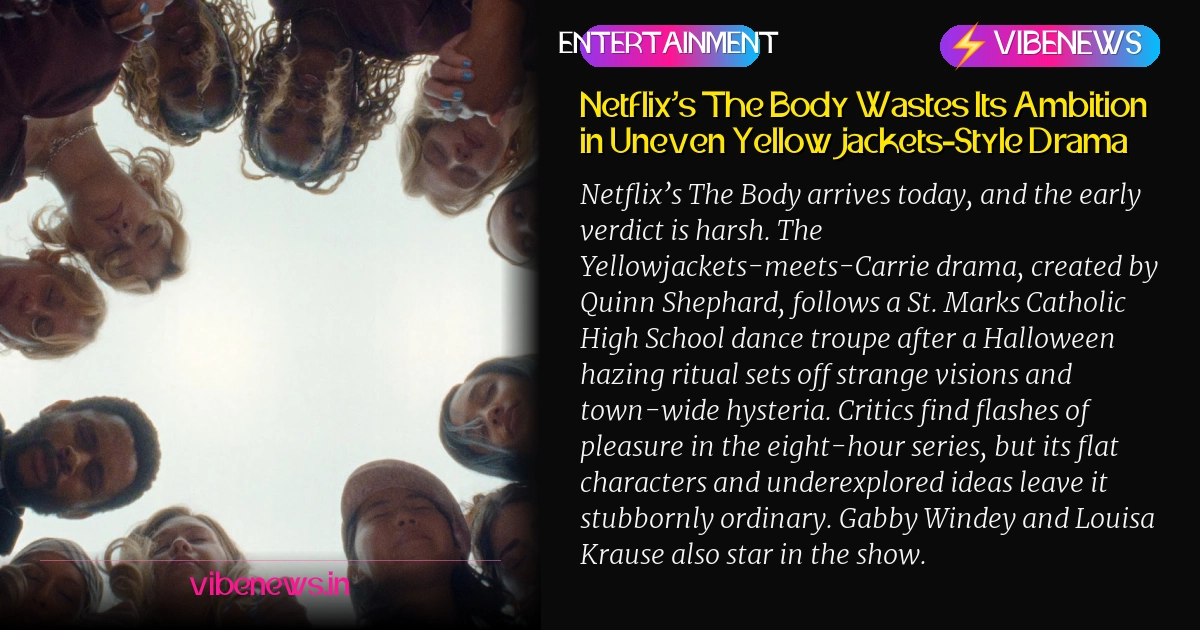
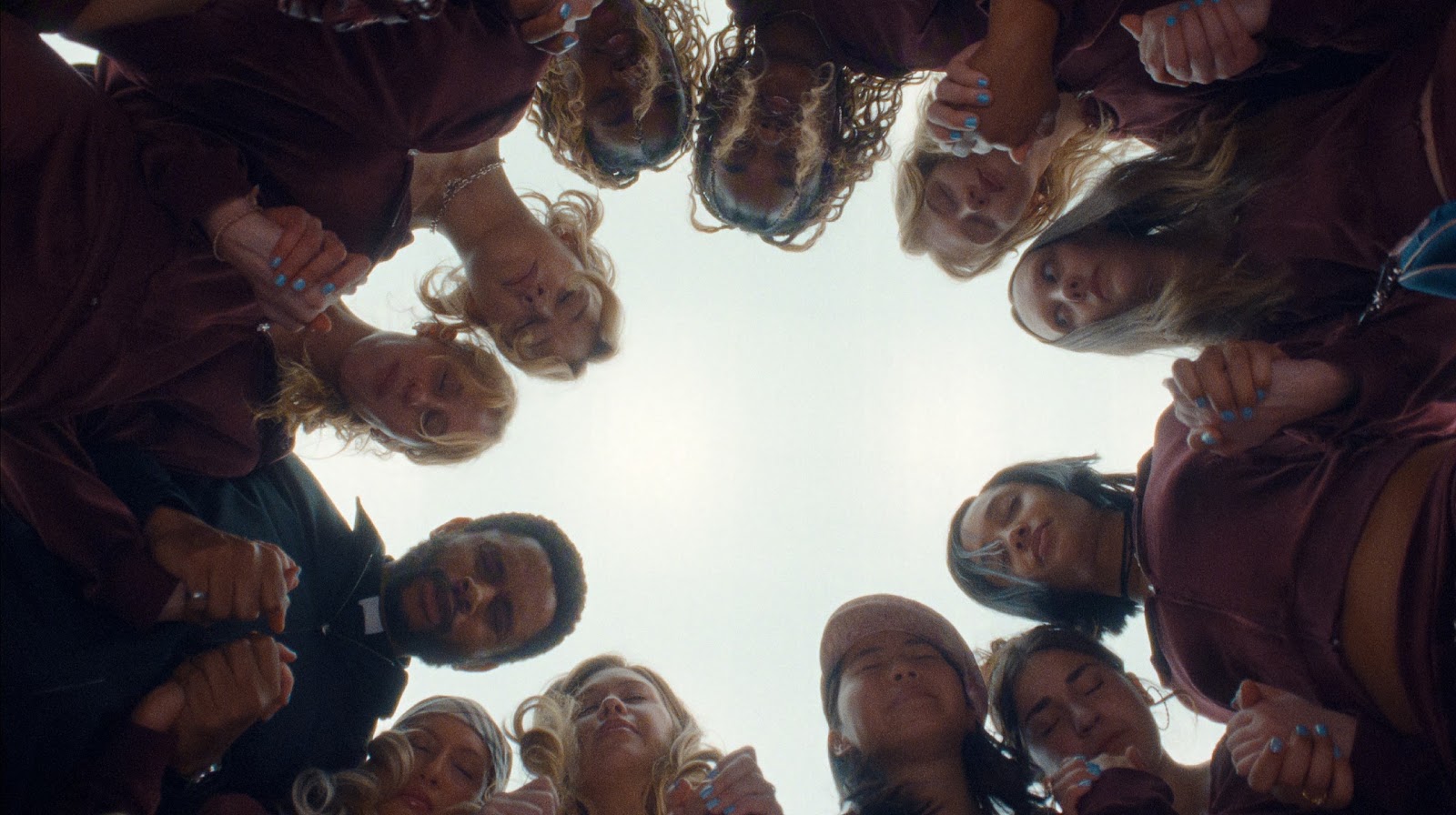
The story centers on the Lions, the school’s all-female dance troupe, which is holding tryouts with its season in trouble. A key member has been injured weeks before regionals. A new girl gets chosen for induction, and after a Halloween hazing ritual goes badly wrong, the team begins experiencing visions and unexplained events. Those events grow into a community-wide panic whose cause could be divine, demonic or purely psychological. The show never settles that question, and the reviewer argues it never gives viewers a reason to care much either way.
The strongest element is the villain. Geena Meszaros plays Lisbeth, a recent transfer with an awkward manner and a deliberately unflattering look, achieved by bleaching the eyebrows of a conventionally attractive actor. She lives in a shabby, church-funded house with a strict fundamentalist mother, Catherine, played by Louisa Krause. Anya, one of the co-captains played by Kristina Bogic, invites Lisbeth to a party out of sympathy, and that gesture gets her into trouble. The review praises Meszaros for making Lisbeth unsettling even when she does very little, whether she is chatting in a cloying singsong or fluttering her fingers around a Bible.
That praise does not extend to the rest of the cast. Here the reviewer’s frustration becomes clear. Bogic and Sara Boustany share an easy chemistry as best friends who might be more to each other if the fear of being queer in a hostile culture did not hold them back. Jackson Kelly stands out as Leo, Lisbeth’s younger brother, whose wide-eyed sincerity contrasts with the carelessness around him. Gabby Windey, known from The Traitors and The Bachelor, has a brief role as the team’s indifferent coach, Shauna, and the reviewer says her easy charm still lands.
The writing is where the show falters. Despite its long runtime, The Body struggles to give its ensemble more than basic narrative jobs. The result is characters who are easy to follow but hard to care about. One storyline pairing the prickly Elise with the sincere Leo looks promising, then gets dropped once it has served its purpose. Father Franklin, played by Nnamdi Asomugha, is the school priest and Grace’s uncle, and his search for the truth creates tension. Yet the review says it reveals little about how the crisis changes his faith.
The show also plays with the line between religious imagery and sexual imagery. The girls’ Halloween costumes include a ‘slutty angel’ and a ‘slutty God,’ and classical paintings of nude saints in ecstasy echo the same theme. The reviewer’s complaint is that the series notices this connection and then stops. It points at the idea without pushing into anything darker, stranger or more surprising.
The period references follow the same pattern. Characters flip between The Simple Life and coverage of the Iraq War, and Donald Trump makes a brief appearance as host of The Apprentice. The reviewer says the references are too vague and too scattered to amount to more than a ‘Hey, remember this?’ moment. The time period looks chosen mainly for nostalgic appeal, and the show seems to want it to carry more weight than it does.
That gap between ambition and execution is the central frustration. The review’s closing line ties the show’s themes to its shortcomings: religion promises that life can mean more than it appears to, and the show makes the same promise without delivering on it. The reviewer’s advice is pointed. If you are looking for transcendence, you are better off in the pews. The Body offers a few minor blessings and several disappointing shortcomings, and it remains firmly rooted in the ordinary world.
They’re spread too thin over eight hours gifted with more ambition than effectiveness.
For Netflix subscribers deciding whether to press play today, the review suggests the show is worth a look mainly for its villain and a few strong performances. Anyone expecting a sharp, scary or daring take on faith, youth and sin will likely find the premise more exciting than the series itself.
TL;DR
- Netflix’s The Body premieres today, and the early critical verdict is that its ambition outruns its execution.
- The Yellowjackets-meets-Carrie premise follows a Catholic high school dance troupe after a Halloween hazing ritual goes disastrously wrong.
- Geena Meszaros’s villain Lisbeth is the show’s strongest asset, according to the review.
- The review says the supporting characters are flat and several storylines are dropped before they pay off.
- The show references 2004 pop culture and religious imagery but rarely follows those ideas into darker territory.
- The Hollywood Reporter’s critic rates it neither heavenly nor hellish.