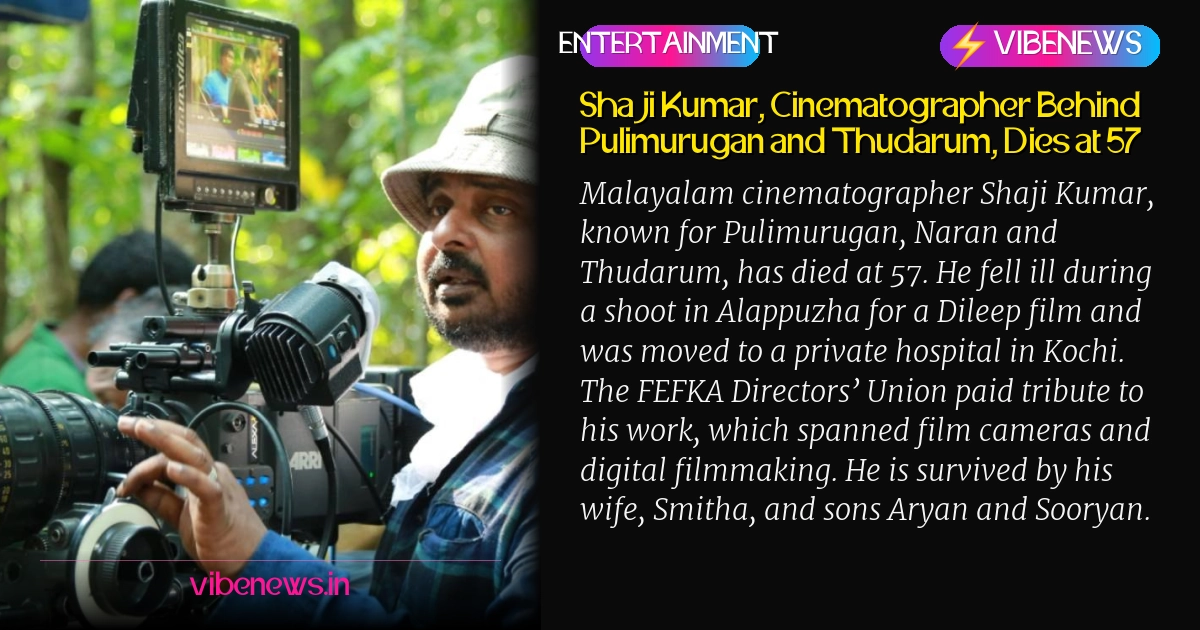
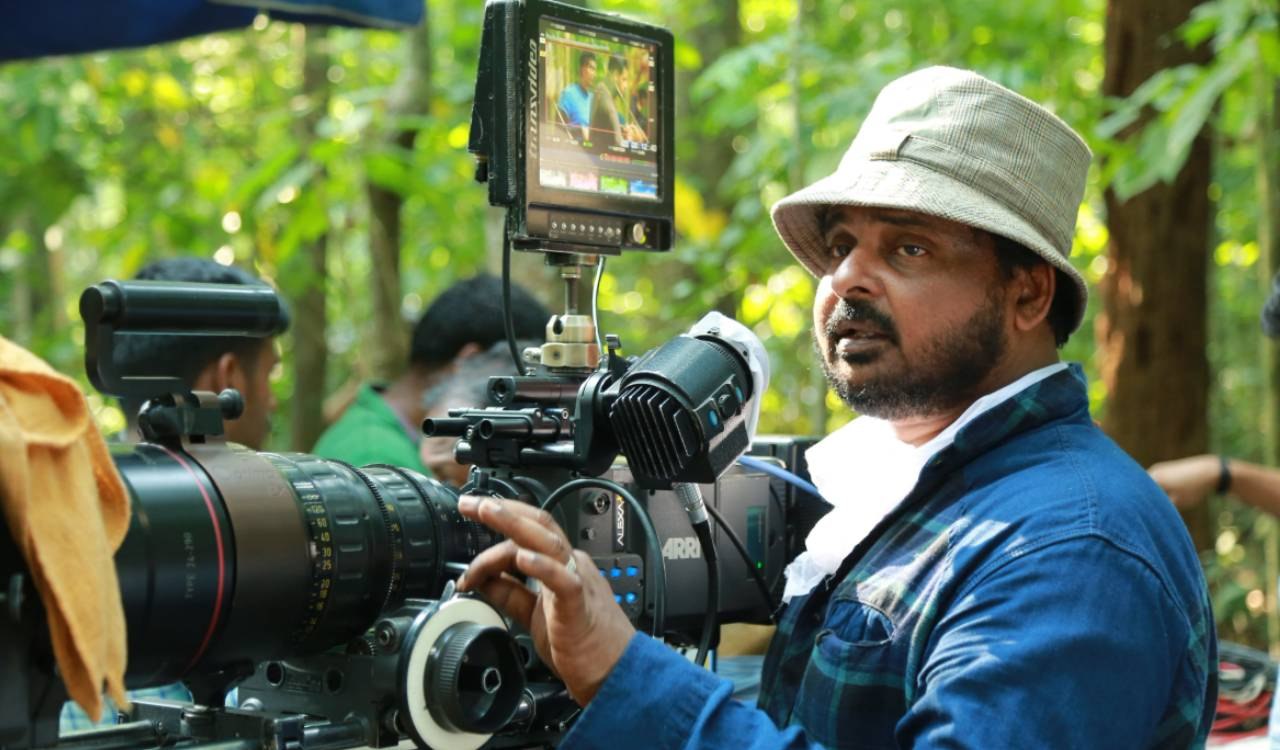
Malayalam cinematographer Shaji Kumar has died at the age of 57, film industry sources said in Kochi on Tuesday. The man who lit and framed some of the biggest Malayalam hits of the last two decades had collapsed into a health crisis far from home, in a hotel room in Alappuzha, and the industry is still absorbing the loss.
Kumar was in Alappuzha to shoot an upcoming film starring Dileep. On Saturday night, he began feeling physical discomfort in his hotel room. He told the film’s director, Ullas Krishna, about it, and was first taken to a nearby hospital. He was later shifted to a private hospital in Kochi.
His condition improved after admission, and he was able to speak normally. Then his health deteriorated again on Sunday night, sources said. News of his death followed on Tuesday, and it hit the film community hard, because his name was attached to some of its most recognisable images.
The FEFKA Directors’ Union condoled his death and paid tribute to his contributions to Malayalam cinema. Tributes of this kind tend to come from people who worked beside a man for years, and this one reflects how widely his craft was respected across the industry.
Kumar was a disciple of veteran cinematographer Vipin Mohan. He started out working on several films before establishing himself as an independent cinematographer. Over the years, he became one of the familiar names behind the visuals of many successful Malayalam films, and audiences who never looked up his name still knew the look of his work.
He began his career in the era of film cameras, when lighting and framing had to be right the first time. Kumar built a reputation for his command of lighting, colour composition and framing. Those skills did not go out of date when the industry moved to digital. He adapted to digital filmmaking, kept pace with changing technology, and took on new styles of visual storytelling. That range is a large part of why directors across generations kept calling him.
He worked with several leading directors, including Joshiy, Shaji Kailas, V M Vinu, M Padmakumar and Vaishakh. He also collaborated with younger filmmakers, among them Tharun Moorthy. The mix tells you something about his reach. He moved between established names and newer voices without losing the thread of his own style.
Recent work and the films that defined him
His most recent cinematography assignments included Athimanoharam, starring Mohanlal and directed by Tharun Moorthy, and Suresh Gopi’s Ottakomban. Both were still part of his working life when he died.
His filmography is long and varied. It includes Naran, Pulimurugan, Ramaleela, Odiyan, Madhura Raja, Ittymaani: Made in China, Night Drive, Pathonpatham Noottandu, Bandra, Once Upon a Time in Kochi and Thudarum. Pulimurugan, Naran and Thudarum were blockbusters, and they are the titles most people will associate with him. Lighting a Mohanlal-starrer for a mass audience and then moving on to a quieter film is not an easy switch, and his list shows he managed it more than once.
As the Malayalam film industry remembers him, the following line captures his place in its history:
A leading cinematographer who successfully adapted from film to digital filmmaking.
Kumar was born in Thiruvananthapuram, but he had been living in Perumbavoor for several years. He is survived by his wife, Smitha, and his sons, Aryan and Sooryan. The family’s grief is now the most personal part of this story, and the film industry that worked with him is left to mourn a colleague whose name was often on the screen and whose craft was felt in every frame.
TL;DR
- Malayalam cinematographer Shaji Kumar died at 57, film industry sources said on Tuesday.
- He fell ill at his hotel room in Alappuzha during a shoot for an upcoming Dileep film.
- Kumar was known for Pulimurugan, Naran and Thudarum, and for his skill in lighting and framing.
- He adapted from film cameras to digital filmmaking, working with Joshiy, Shaji Kailas and Tharun Moorthy.
- The FEFKA Directors’ Union condoled his death and paid tribute to his contribution to Malayalam cinema.
- He is survived by his wife, Smitha, and sons, Aryan and Sooryan.