Paul Bettany delivers the strongest performance of his VisionQuest run in Episode 7, “Immolation,” playing multiple versions of Vision as the Disney+ series drags the character into the wreckage of his own mind. Spoilers ahead. For most of the season, James Spader’s Ultron has owned the screen. This week, Bettany takes it back.
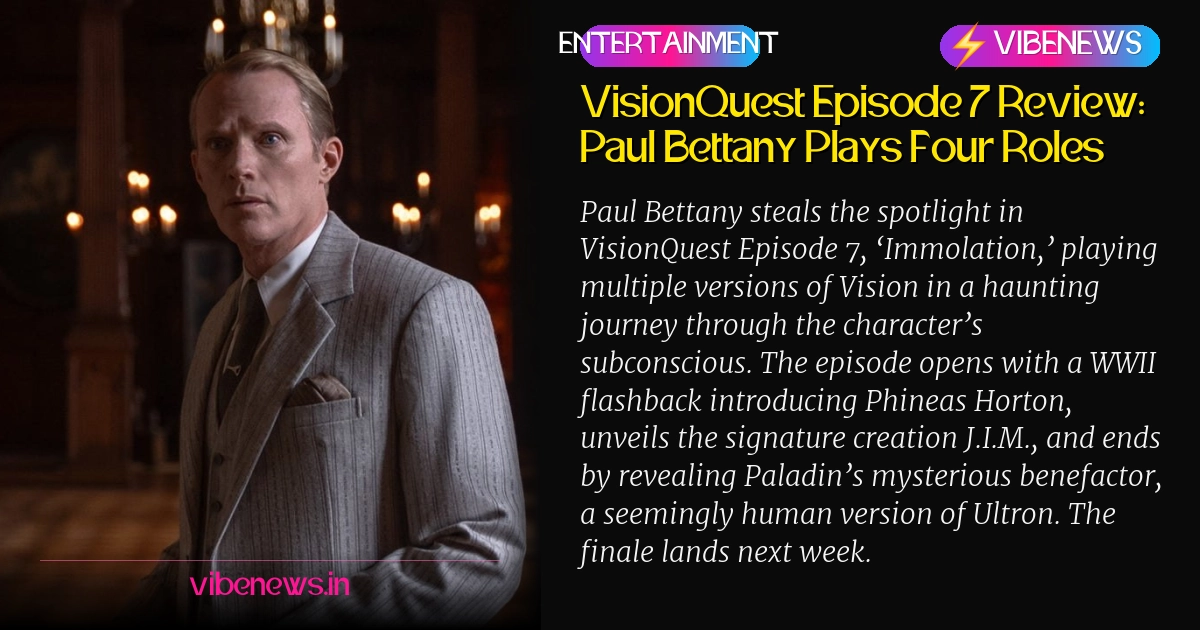
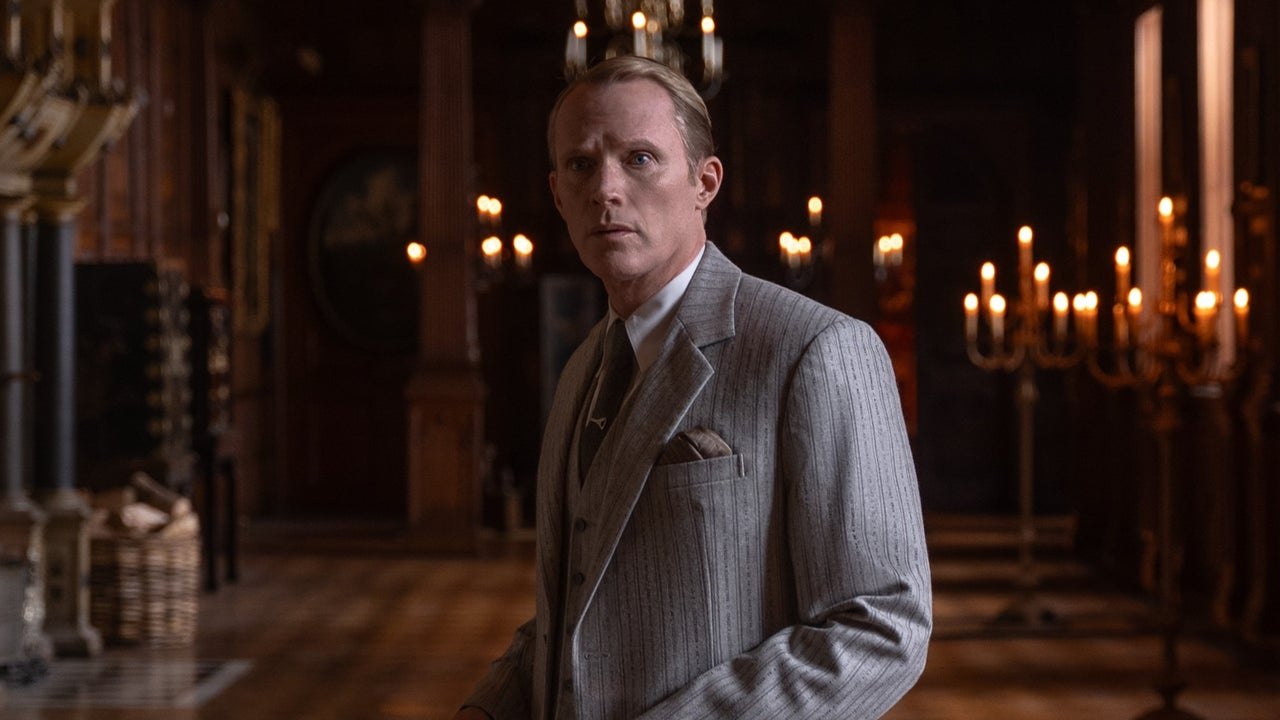
The episode opens with a WWII-era flashback, and it finally puts the elusive Phineas Horton on screen in the flesh. Horton is played by Bettany. That single casting reveal sets the tone for everything that follows. There is a palpable sense of haunted suffering coming off Horton in that opening scene, and it hangs over the rest of the hour.
A mind turned into a maze
From there, the show forces Vision to look inward. He has been suppressing emotions and memories since he first climbed off the operating table at S.W.O.R.D., and this episode makes him confront every one of them. If VisionQuest is built around a classic vision quest, this is the point where the character goes looking for enlightenment the hard way.
The way the series frames Vision’s descent is where things start to get unsettling. He keeps circling the same hallways, and each loop adds another layer of dread and psychological unease. The result feels a bit like the MCU taking a swing at the style of Hideo Kojima’s P.T., with the corridors doing the work of a horror set piece. The show also keeps finding visual ways to represent the complex digital processes running through the minds of Vision, Ultron, and Jocasta, and that continues to be one of the most inventive parts of the series.
The clash of Visions
Midway through the journey, Bettany switches roles again and plays the classic, pre-Infinity War Vision. The result is a tense clash between two versions of the same man. The performances are not wildly different from one another, but there is a subtle distinction in how Bettany plays the older, wiser, more emotionally well-adjusted Vision. That restraint makes the confrontation work, because the audience can feel how far apart these two versions of the character have drifted.
The journey reaches its peak when White Vision gets to the root of his subconscious. There he finds not only the digitized remains of Horton, but also Horton’s signature creation, J.I.M. Fans who have not thought about Captain America: The First Avenger in years will get a jolt here. The original Human Torch shows up as an actual character rather than a background prop. The episode never names him as such, but the connection lands anyway.
Bettany goes all in. This is where he starts chewing scenery, and it is a joy to watch. He takes what is essentially four variations of one character and gives each its own vibe and cadence. As White Vision, he finally digs into the emotion of the role and lets loose everything the character has kept bottled up for years. It is the kind of performance that makes a viewer rewind to catch a single line.
“This episode is truly Bettany’s finest hour on the series so far.”
Where the episode loses momentum
Not every thread carries the same weight. The Ultron and Jocasta storyline runs in parallel with Vision’s journey, but the show does not spend enough time with those characters for their story to hit as hard. It wraps up too abruptly, and the payoff feels thin next to the emotional weight of Vision’s arc.
Meanwhile, the action in Paladin’s hideout, led by Todd Stashwick’s character, adds some drama and tension to Vision’s journey. It does the job, but it sits clearly in second place. The real substance of “Immolation” is inside Vision’s head, and the hideout scenes feel like a side road by comparison.
The twist nobody saw coming
The episode closes on a hook that will keep viewers up. Paladin’s elusive benefactor finally appears, and it is not Phineas Horton. It is not J.I.M. either, which many viewers were likely expecting. Instead, the benefactor looks like a seemingly human version of Ultron. That reveal changes the stakes for the rest of the season, and it raises an obvious question. Who exactly is this, and what does this version of Ultron want?
The answer will have to wait. The series finale arrives next week, and the episode’s final image leaves little doubt that the story is heading toward a major reveal. For a show that has spent much of its run inside one man’s head, the ending suggests the real danger may be coming from outside it.
The verdict
After weeks in which Spader’s Ultron has hogged the spotlight, Bettany’s work in “Immolation” is a reminder that he can hold his own when the script gives him room. He plays no fewer than four roles, and he uses each one to deepen a story about guilt, memory, and identity. The side plots do not match that intensity, but the main storyline is strong enough to carry the episode.
TL;DR
- Paul Bettany plays multiple versions of Vision in VisionQuest Episode 7, “Immolation,” including Phineas Horton in a WWII-era flashback.
- The episode sends Vision deep into his subconscious, where he meets Horton’s digitized remains and his creation, J.I.M.
- Bettany’s performance as the older, classic Vision and the emotional White Vision is described as his finest hour on the series so far.
- The Ultron and Jocasta storyline feels rushed, while the Paladin hideout plot serves as secondary drama.
- Paladin’s mysterious benefactor is revealed as a seemingly human version of Ultron, not Horton or J.I.M.
- The series finale arrives next week.