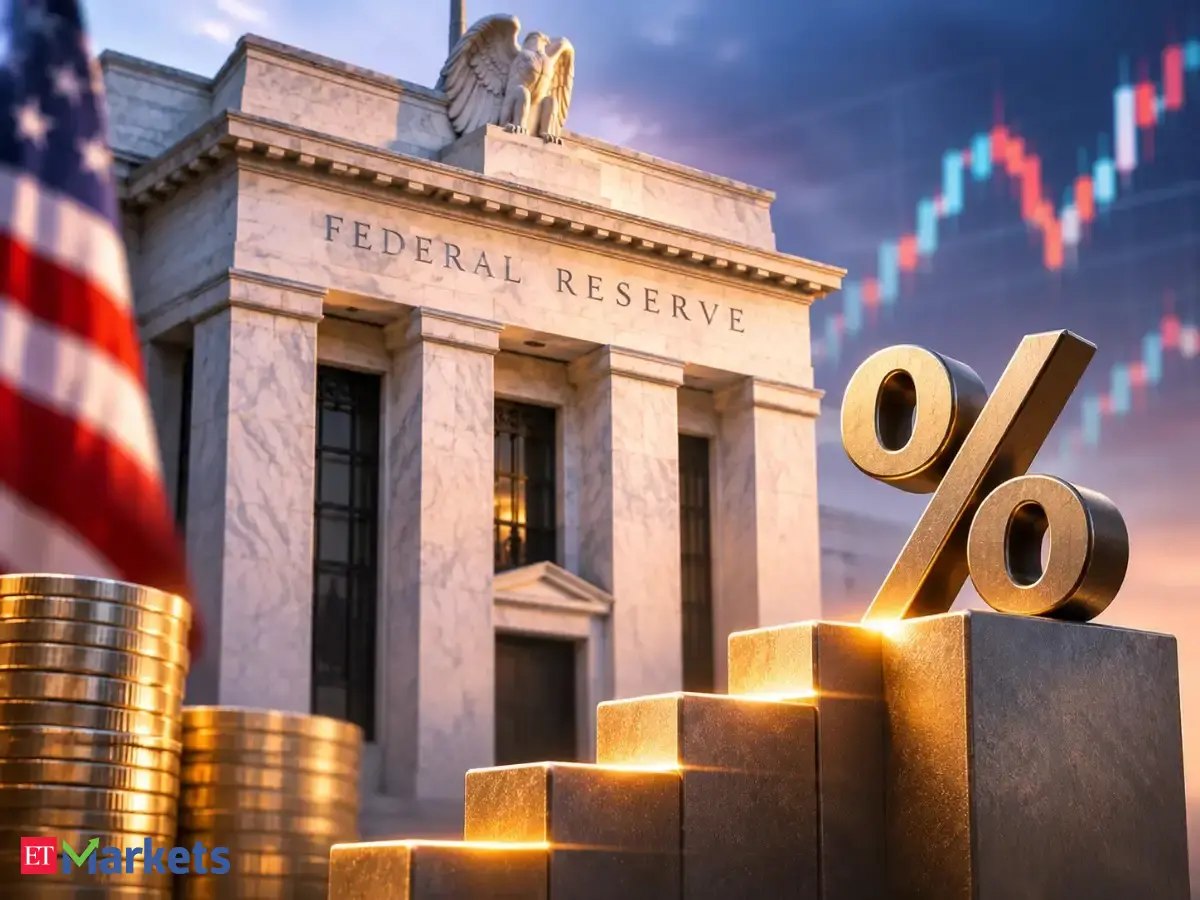
Two Federal Reserve policymakers want the central bank to raise interest rates slowly, and they said so plainly: inflation is still too high and it is not easing. Cleveland Fed President Beth Hammack and Richmond Fed President Thomas Barkin both made the case on Thursday for gradual increases rather than sharp jumps.
Hammack delivered the sharpest line in a speech ahead of an event in Zurich.
"I expect that monetary policy will need to move to a restrictive stance to bring inflation back to 2% in a timely manner," Federal Reserve Bank of Cleveland President Beth Hammack said.
Hammack has been a consistent supporter of higher borrowing costs. She prefers smaller, more frequent adjustments over big moves, arguing that the slower path would be less disruptive to households, businesses and financial markets. She also warned that gradual increases could stop an "inflationary mindset" from taking hold, meaning people and companies start building higher price expectations into everyday decisions.
Barkin agreed on direction and pace. He said inflation remained "too high" and was holding firm rather than falling back. "When it comes to the pace of future rate hikes, gradual makes sense," he said.
The split inside the Fed. The comments came days after the Fed kept its benchmark rate in the 3.75% to 4.00% range. That decision was not unanimous. Hammack, along with Fed Governor Lisa Cook, voted in favour of a rate increase. The vote shows that policymakers are divided over how hard to push against inflation, even as they agree that prices are the main problem.
What markets expect next. Financial markets broadly expect another increase in December, though expectations beyond that are far less certain. Futures traders have pulled back their bets slightly. The probability of a December hike has dropped to around 70%, down from more than 80% on Wednesday. That shift matters because it shows traders are reading the Fed’s internal disagreement and adjusting their own forecasts in real time.
Why this matters for your money. Anyone with a mortgage, a variable-rate loan, a bond fund or a retirement account should watch the pace of these hikes closely. Borrowing costs tend to move with the benchmark rate, and the gap between a gradual path and a sudden one can change monthly payments, the value of fixed-income holdings and how much cash savers can earn. Retirees drawing down portfolios face extra risk if rates climb quickly while stock prices wobble. For investors, the message from Hammack and Barkin is that the Fed intends to keep tightening, but in measured steps rather than shocks. That gives households some room to plan, though it offers no promise of relief soon.
AI spending and the election shift. The Fed’s decision is also tangled up with politics and technology. Remarks came as Democrats won control of Congress and made gains in state-level elections. Those results could influence the inflation outlook. Local voter opposition to data centres and permitting challenges could slow AI infrastructure spending, which would ease demand for equipment and related resources.
Evercore ISI analysts told clients on Wednesday that AI capital expenditure could slow over the next year or two. If that happens, demand and supply could stay in balance without many more rate increases. TD Securities expects the Fed to raise rates by another 50 basis points by early next year. However, the brokerage said a resolution to the Iran war or a slowdown in AI investment could reduce the need for further tightening after March.
The jobs report is the next test. Friday’s US jobs report is expected to give policymakers another read on the economy. Economists are forecasting 65,000 additional jobs in October, following a gain of 29,000 in September. A strong print could strengthen the case for another hike in December. A weak one could give doves more room to argue that the Fed should wait before moving again.
For now, the message from the two regional presidents is consistent. The Fed is not finished, and it is not in a hurry to shock the economy. Inflation is the reason, and the cost of getting it wrong is spread across borrowers, savers and investors alike. Watch Friday’s numbers and the December meeting closely, because that is where the next move will be decided.
TL;DR
- Fed Presidents Beth Hammack and Thomas Barkin both favor gradual interest rate increases.
- Hammack says monetary policy must turn restrictive to bring inflation back to 2% in a timely manner.
- The Fed kept its benchmark rate at 3.75% to 4.00% last week, with Hammack and Lisa Cook voting for a hike.
- Futures traders see the odds of a December hike near 70%, down from above 80%.
- Friday’s jobs report is forecast to show 65,000 October gains after 29,000 in September.