Cyclone Murasu killed eight people and caused an estimated loss of Rs 1,918.55 crore in Andhra Pradesh, according to a preliminary damage assessment by state officials. The storm crossed the coast on Tuesday, and the damage is still being counted as floodwaters recede across several districts.
Five of the dead were in Bapatla district, two in Guntur district and one in Palnadu district. The official figures do not describe how the deaths occurred, but the toll has already shaken communities that were still recovering from the storm’s immediate impact on homes and farmland.
Farmers absorb the heaviest blow
The fields took the worst of it. Cyclone Murasu damaged crops across 1,43,122 hectares, affecting 1,86,063 farmers. Horticultural crops were hit across 6,749 hectares, impacting 12,586 farmers. For many of them, the loss arrives at the worst possible time, with no clear picture of what can still be salvaged.
Officials told Chief Minister N. Chandrababu Naidu on Thursday that it would take 48 to 72 hours to assess the extent of crop damage accurately. That assessment can only begin once floodwaters pull back far enough for teams to walk the fields.
The cyclone also damaged 983 houses, 346 boats and 220 fishing nets. Those numbers point to a double hit for coastal households, where a damaged boat or net can mean lost income long after the water drains away.
The Chief Minister’s directive
The Chief Minister reviewed the post-cyclone situation and asked officials about the damage across several departments, including Agriculture, Electricity, Municipal Administration and Panchayat Raj. He also went through the relief and restoration measures already under way.
The Chief Minister directed officials to ensure that farmers and the public do not face any hardships, as two consecutive cyclones have now affected the state.
He stressed three priorities: restoring electricity supply, repairing roads and ensuring uninterrupted drinking water supply. He also announced that he would personally visit cyclone-affected areas on Friday to assess conditions on the ground.
Power comes back in stages
Officials said restoration of the power supply is moving quickly. Under the APCPDCL jurisdiction, 871 of the 1,103 affected 11 kV feeders have been restored, leaving 232 still to be brought back online. Of the 3,946 damaged 11 kV electricity poles, 1,493 have been restored so far.
Those figures mean more than half the poles remain unrepaired. For residents in the affected areas, that gap translates into hours without power while crews work through the backlog.
Roads, trees and telecom networks
The Roads and Buildings Department reported damage to 760.10 kilometres of major district roads and state highways. All 206 locations where trees had fallen have been cleared. Under the Panchayat Raj Engineering Department, 74 rural roads were damaged, with losses across 204.14 kilometres. The estimated cost of restoring those roads is Rs 92.08 crore.
Telecom services are largely back. As of Thursday, 30,518 of the 31,428 telecom towers across the state had resumed operations, restoring 97.1 per cent of services. Restoration work is still pending at a few locations in Bapatla, Prakasam and West Godavari districts.
Villages, drains and water flows
The Panchayat Raj Department reported that 59 mandals and 649 gram panchayats were affected. All 336 identified drainage blockages have been cleared. Officials are continuously monitoring flood flows and the status of major reservoirs and canals.
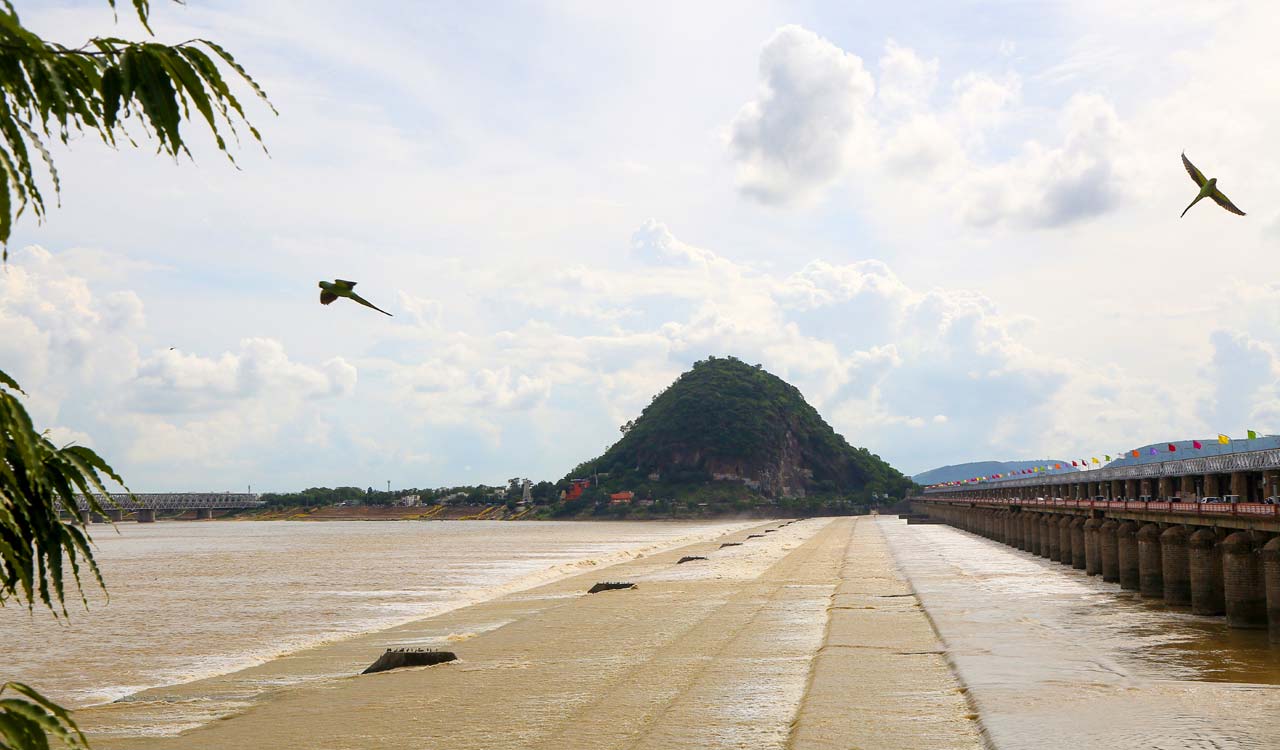
At Prakasam Barrage, inflow and outflow are being maintained at 43,500 cusecs, with 60 of the 70 gates kept open. The Budameru Diversion Channel is carrying 6,047 cusecs. The inflow into Tammileru has dropped from 26,000 cusecs to 10,200 cusecs, a sign that the pressure on the system is easing, though the water has not yet fully receded.
Rescue teams and warnings
A total of 11 SDRF teams, 13 NDRF teams and 390 fire personnel took part in cyclone relief and rescue operations. Around 5.87 crore warning messages were sent to the public to ensure timely alerts and preparedness, a figure that underlines how wide the state’s alert network had to reach.
The state government has released Rs 37 crore to the districts for immediate relief and assistance. Officials say restoration of electricity infrastructure, roads, drinking water systems and other essential services is progressing at a rapid pace, with the aim of returning the affected areas to normal at the earliest.
What this means for Andhra Pradesh
The disaster lands on a state that has now been hit by two consecutive cyclones. That repetition is what worries officials most. The Chief Minister has framed the response around keeping farmers and ordinary residents from facing further hardship, and the coming days will show whether the restoration pace holds in districts still waiting on power poles, roads and telecom links.
For a state whose economy leans heavily on agriculture and coastal livelihoods, the Rs 1,918.55 crore estimate is a stark measure of what one storm can take. The next 48 to 72 hours of crop assessment will determine how much of that figure becomes a final tally, and how many families are left waiting for compensation while they rebuild.
TL;DR
- Cyclone Murasu killed eight people and caused an estimated Rs 1,918.55 crore loss in Andhra Pradesh.
- Crops across 1,43,122 hectares were damaged, affecting 1,86,063 farmers.
- Five deaths were recorded in Bapatla, two in Guntur and one in Palnadu district.
- The cyclone also damaged 983 houses, 346 boats and 220 fishing nets.
- 30,518 of 31,428 telecom towers have resumed operations, restoring 97.1 per cent of services.
- The state government has released Rs 37 crore for immediate relief and assistance.