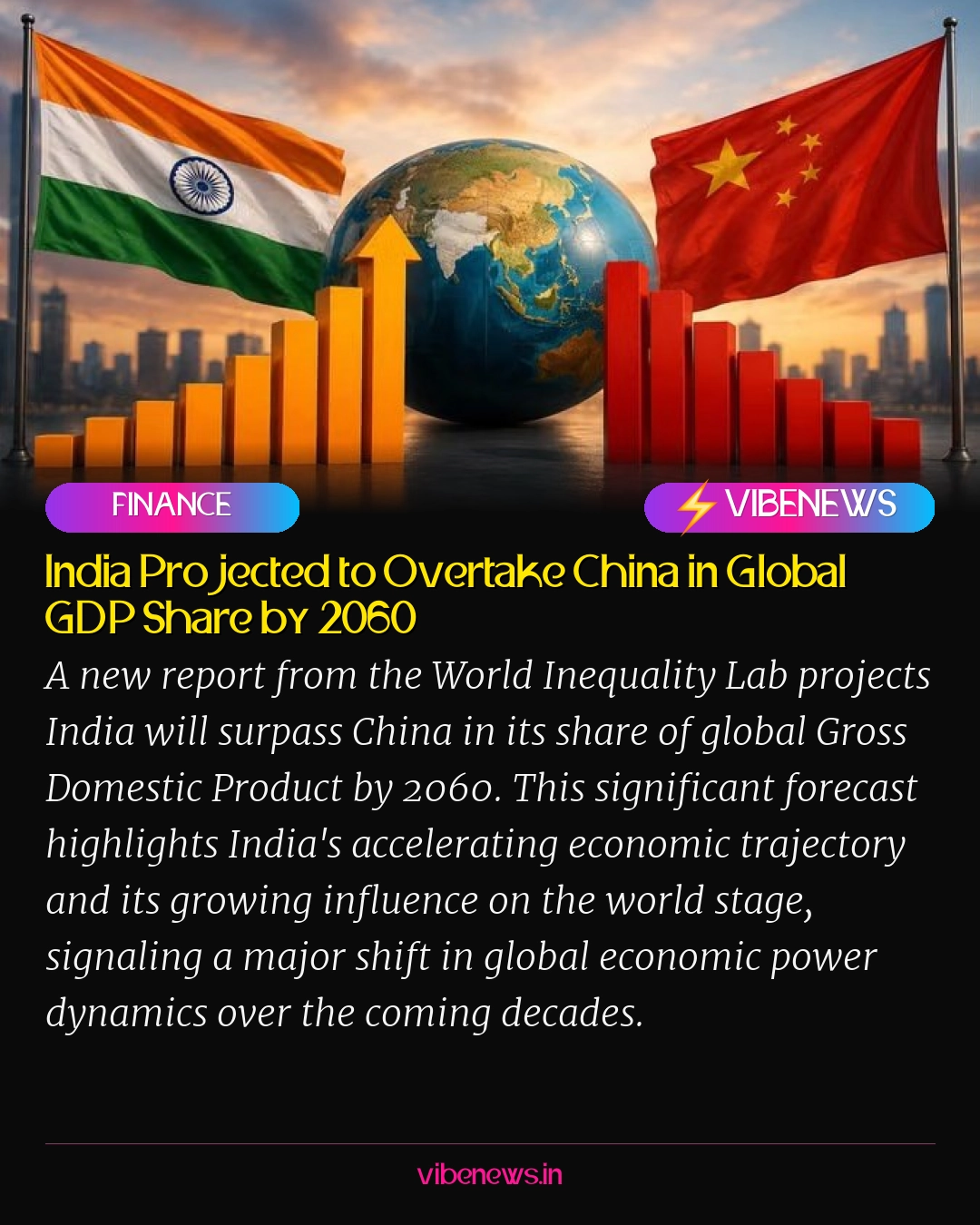
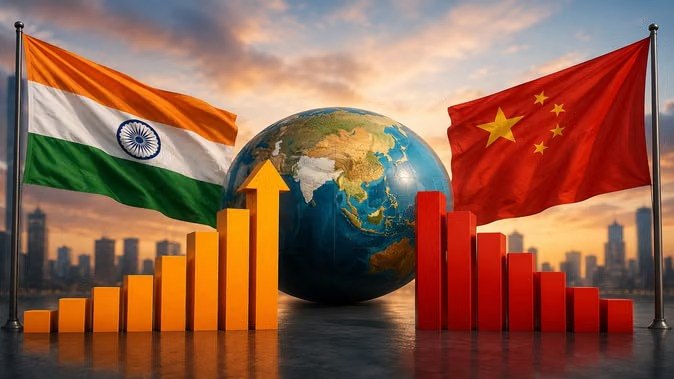
India is set to become a larger contributor to global Gross Domestic Product (GDP) than China by 2060, according to a significant projection from the World Inequality Lab (WIL) at the Paris School of Economics (PSE). This forecast underscores a profound reordering of the global economic landscape, positioning India as a dominant force in the latter half of the century.
The WIL report specifically points to India's sustained growth momentum and demographic advantages as key drivers behind this anticipated shift. While China has experienced decades of rapid expansion, the projections suggest a relative deceleration in its growth, allowing India to eventually close the gap and then pull ahead in terms of its overall contribution to the world's economic output.
The World Inequality Lab, based at the Paris School of Economics, is a respected research institution focused on global inequality and economic trends, lending credibility to these long-term forecasts. Historically, China's economic ascent over the past few decades has been a defining feature of the global economy. However, India's more recent acceleration, fueled by economic reforms, a burgeoning middle class, and a young, expanding workforce, positions it uniquely for future growth. This contrasts with potential structural challenges China faces, such as an aging population and shifts in its economic model.
This projection is not merely an academic exercise; it carries immense geopolitical and economic implications. A larger share of global GDP translates directly into greater economic leverage, increased influence in international institutions, and potentially a significant shift in global supply chains and investment patterns. For India, it signifies the realization of its long-held aspirations to be a major global economic power. For the world, it means adapting to a new economic axis, with India playing an increasingly central role.
While the report does not detail specific reactions, such a forecast will undoubtedly fuel discussions among policymakers, economists, and investors about future strategies. It could encourage more foreign direct investment into India and prompt other nations to reassess their economic partnerships and strategic alliances. The projection also implicitly challenges the current narrative of China's seemingly unstoppable economic ascent, suggesting a more nuanced and competitive future.
The path to 2060 is long and fraught with potential challenges, including geopolitical instability, climate change, and domestic policy hurdles. However, the WIL report provides a compelling vision of India's potential. Achieving this milestone will require consistent policy implementation, continued investment in infrastructure and human capital, and adept navigation of complex global dynamics. The forecast serves as both a testament to India's current trajectory and a strategic roadmap for its future economic ambitions on the world stage.
TL;DR
- India is projected to surpass China in its share of global GDP by 2060.
- The forecast comes from the World Inequality Lab (WIL) at the Paris School of Economics (PSE).
- This shift signifies a major reordering of the global economic landscape.
- India's sustained growth and demographic advantages are key drivers for this projection.
- The report suggests a relative deceleration in China's growth compared to India's acceleration.
- The projection has significant geopolitical and economic implications for global power dynamics.
- Achieving this milestone requires consistent policy and continued investment from India.