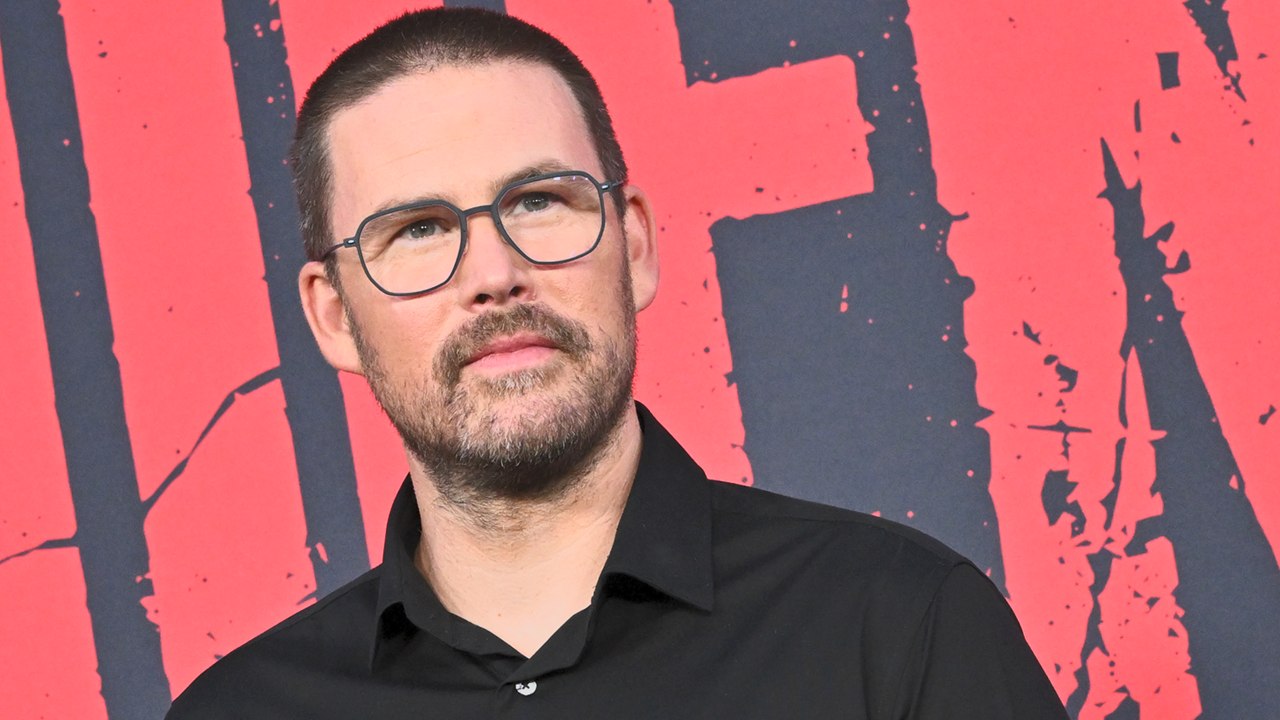
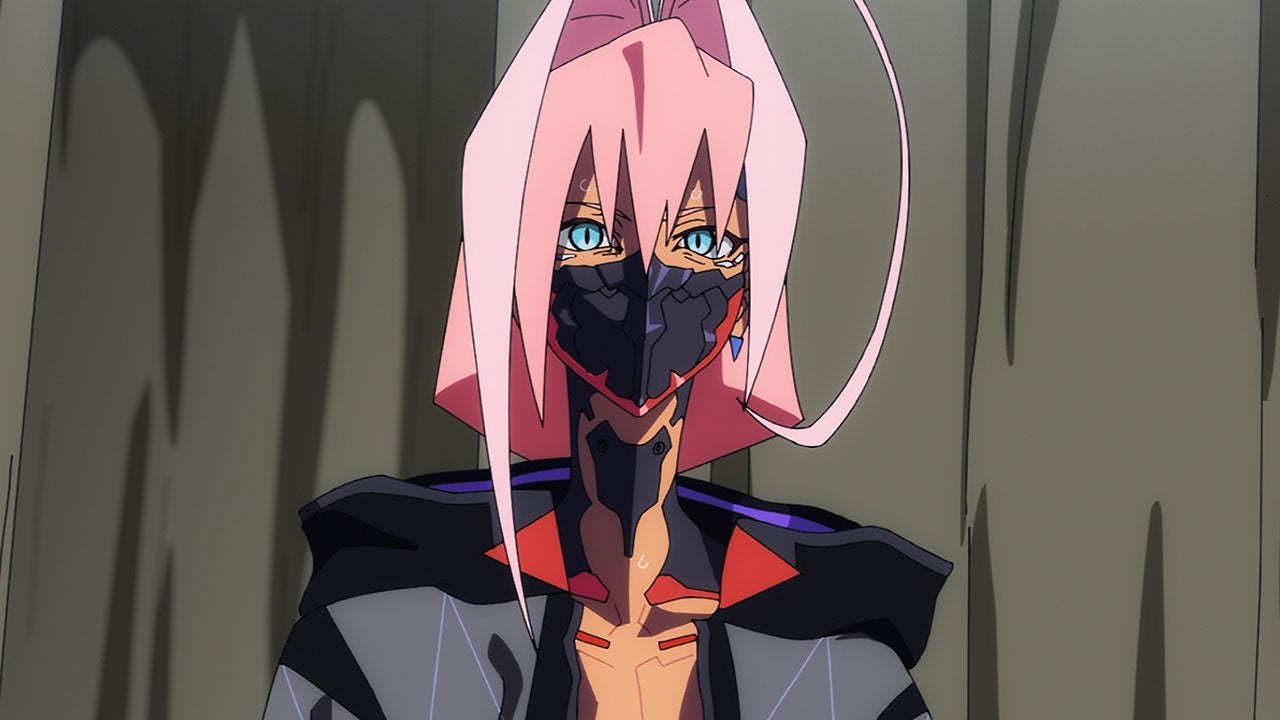
Edgerunners showrunner Bartosz Sztybor says CD Projekt will not set a canon ending for Cyberpunk 2077, and that decision shapes everything the Netflix anime does next. Sztybor, who writes, produces and runs the show, spoke at the Lucca Comics and Games festival and gave fans a clear answer on the question they keep asking: is there one official way the game ends?
The answer is no. “We don’t want to set a canon ending,” he said. The team held a lot of conversations with the lore team to find a way to satisfy all the endings, and to decide what the state of the world looks like after the game. The result is a deliberately blurred picture.
That blur matters because of the fan hunt that started after Season 2. Eagle-eyed viewers spotted a wall of images in a scene set in the data archive, and one of them looked like it could be female V. Sztybor did not confirm it. The image was left for interpretation, and he pointed to the dialogue in that scene as the more important part. Fans have been picking apart the frame ever since, and that is exactly the kind of debate he seems happy to keep alive.
Sztybor was just as clear that the show is not built around Easter eggs. He rejected the term outright. In his view, the goal is to make standalone stories that work on their own. A reader should be able to pick up one comic and get a complete emotional payoff without needing three other comics and two TV shows to understand why a character is a villain.
Still, he admits he likes the hidden connections. He pointed to Sal Bigelow, who appears in Edgerunners 2 and was, by his account, five years earlier in the comic book Cyberpunk: Big City Dreams. He framed it as a rule he follows: those links go in “only if there’s a reason.” The placement is not about pleasing fans. It is about building a bigger narrative that feels like it exists beyond the screen.
The fixer who fans can connect the dots on
The clearest example he gave was Arthur Cormac. The fixer appeared in Edgerunners 1, then turned up in the comic book You Have My Word, and later had a cameo in another comic book. Those three appearances happened at different points in the timeline. Sztybor estimated that only 20 or 30 fans caught the link in the comic, and he said that is exactly the kind of discovery he wants.
That philosophy explains his approach to canon. Sztybor said the canon was fixed before the game, which is why Edgerunners 1, several comic books and board games could be built around a known world state. The post-game period is different. There is one important detail that is firm: Arasaka is weakened. Beyond that, he said, there is no super detailed canon. That gives the team room to show Night City in new ways, but it also means no single ending is treated as official.“It doesn’t make any of the endings canon,” he said in effect, while noting that whatever choices players made in the game could lead to that outcome.
The implication for Edgerunners 2 is significant. The show can point toward possibilities, but it does not have to confirm one. Sztybor said the team is careful not to be too straightforward in the scene fans asked about. Instead, it offers suggestions that may reveal the state of the world in more comic books and other material down the line. The clues are meant to be sewn into a wider web rather than resolved in a single episode.
That approach is also the reason the team says it prefers a franchise model to a sequel model. Sztybor said that for both The Witcher and Cyberpunk, the goal is to create standalone stories where the audience can enjoy the work without knowing everything else. The Easter eggs and connections are there to show that the world exists, not to demand homework.
What it means for Season 3
Season 3 was the other question hanging over the interview, and Sztybor’s answer was careful. He said he was already thinking about more seasons while writing Season 1, because he did not answer every question the first season raised. The dream of more seasons was always there. But he stressed that any future season depends on a perfect story and the right people to deliver it.
Studio Trigger played a central role in that timeline. After Season 1, the studio said it was too tired to continue. The team reconnected with the studio at Lucca right after Season 1 was released, and the studio said it was no longer that tired and might be willing to do more. Sztybor said he had ideas and presented a pitch two months later. The studio was impressed, and that is how Season 2 happened. He said the same logic applies to Season 3.
Crucially, neither CDPR nor Sztybor wanted a classic sequel. Sztybor said they wanted to do something different. That is why Season 2 was pitched as a new kind of follow-up rather than a repeat of Season 1. It also explains why the creative team will not move forward without a director or studio that can carry the vision. Sztybor was blunt about the risk: if there is no studio or director with a vision like Ikarashi, it does not make sense. The team does not want to make something that is mediocre or not good enough.
He does have stories in mind, he said. But he framed Season 2 as the completion of Season 1, and he believes the two seasons already work as a package. That makes any Season 3 announcement a question of timing and quality, not a plot that is waiting to be revealed.
The wider Cyberpunk map
The interview also sits against a bigger picture. Cyberpunk 2 is in development, though where and when it takes place has not been announced. A live-action Cyberpunk 2077 movie is also in the works. According to CD Projekt, that film will not retrace the steps of the game. That gives the franchise several places to expand, and it raises the stakes for how each piece treats canon.
For fans, the message from Sztybor is that the ambiguity is intentional. The studio is not trying to close the book on the game’s endings. It is trying to make sure each new story can stand alone, while still rewarding the people who connect the threads. The open questions are the point.
That is why the most memorable line from the interview may be the simplest one. Sztybor described his method this way:
“You don’t give them answers. You just give them questions and they can connect things.”
For a franchise built on a game with multiple endings and a fanbase that loves to argue over them, that line works as both a creative philosophy and a warning. The next big reveal may never arrive as a single announcement. It may arrive as a dialogue line, a frame on a wall or a comic panel that only a few people spot at first.
TL;DR
- Edgerunners showrunner Bartosz Sztybor says CD Projekt will not set a canon ending for Cyberpunk 2077.
- Fans think a data archive scene in Season 2 shows female V, but Sztybor says the image is left for interpretation.
- The only firm post-game canon detail is that Arasaka is weakened.
- Sztybor says standalone stories are the goal, with connections added only when there is a reason.
- Season 3 depends on a perfect story and the right people, and no decision has been made.
- Cyberpunk 2 is in development, and a live-action Cyberpunk 2077 movie is in the works.