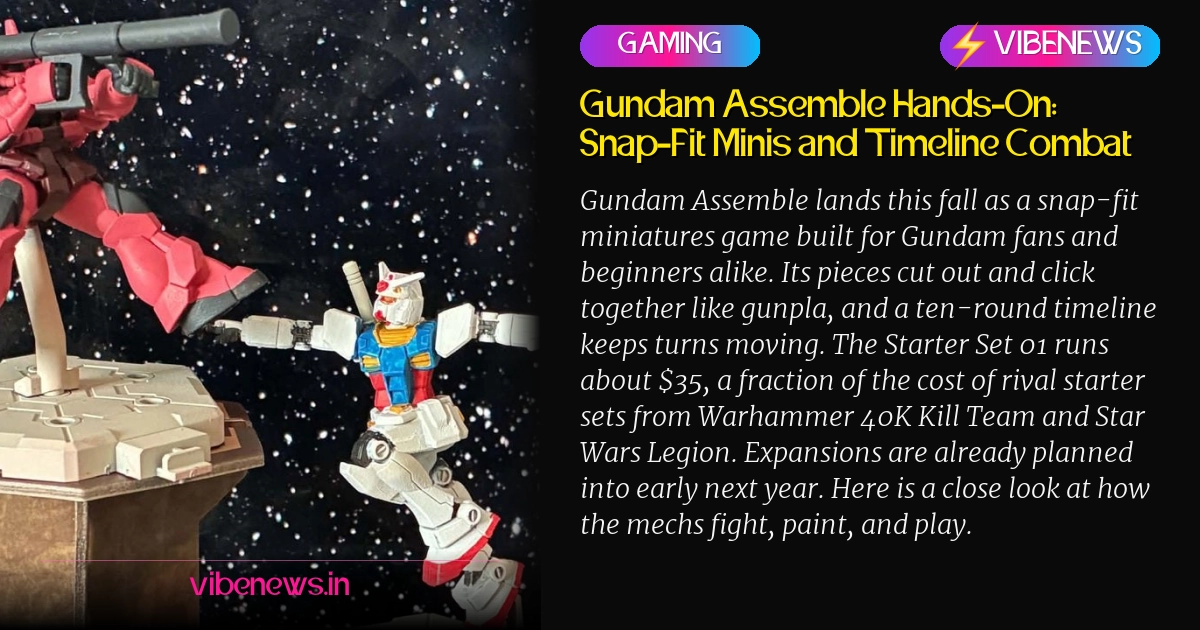
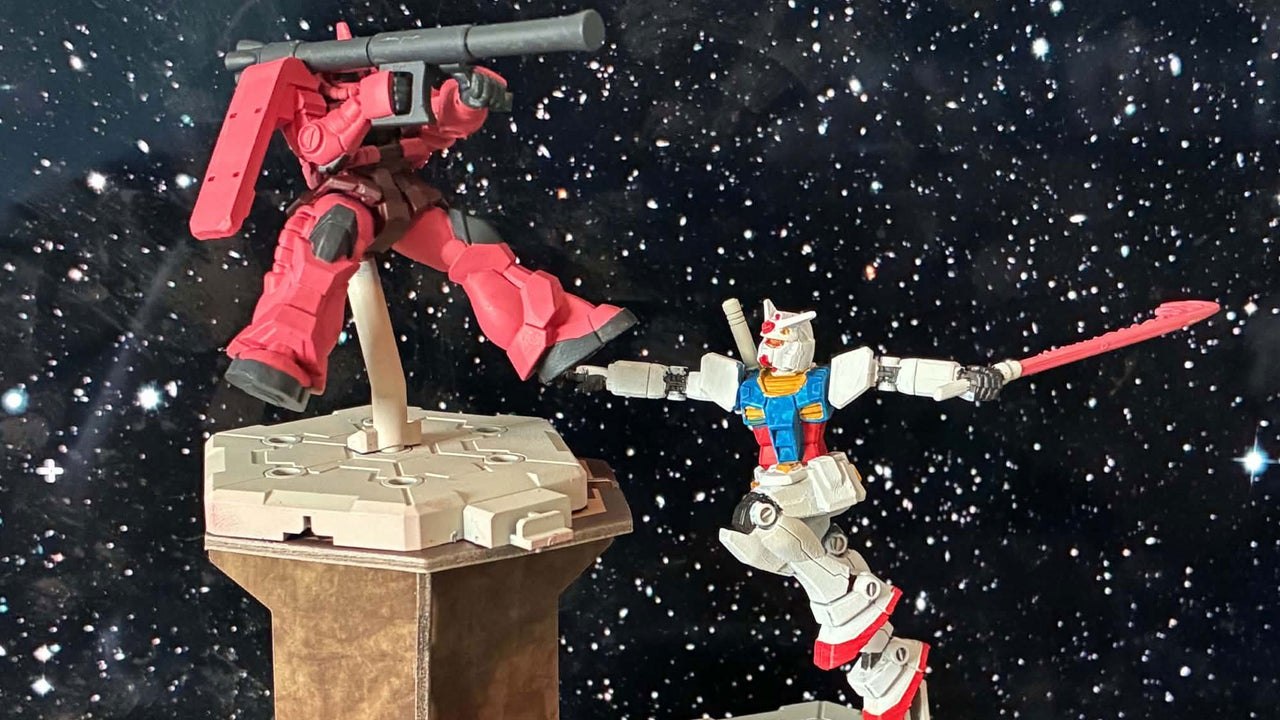
Gundam Assemble, a new miniatures tabletop game from the Mobile Suit Gundam franchise, arrives for the first time this fall, with more expansion packs and sets already prepared to release into early next year. The game was revealed alongside the Gundam Card Game as a visual companion, so fans got two tabletop teases in one announcement.
After spending a good chunk of time with the starter set, we can report that Gundam Assemble is shaping up as a fun, bite-size brawl. Compared to some of the other miniature games on the market right now, it feels lighter and quicker to get into. The real question for most players is whether they can get the models built and painted without losing a weekend to it.
Building without the usual headaches
Building is often the biggest barrier to entry for miniature wargames, and Gundam Assemble tackles it head-on. Like the gunpla the series is known for, the pieces are cut out and snapped into place. The parts are much smaller than regular gunpla, but the process is simplified, needing only a handful of pieces to complete a mini Gundam unit. Use proper cutting tools, because these are miniatures and there is less room for error.
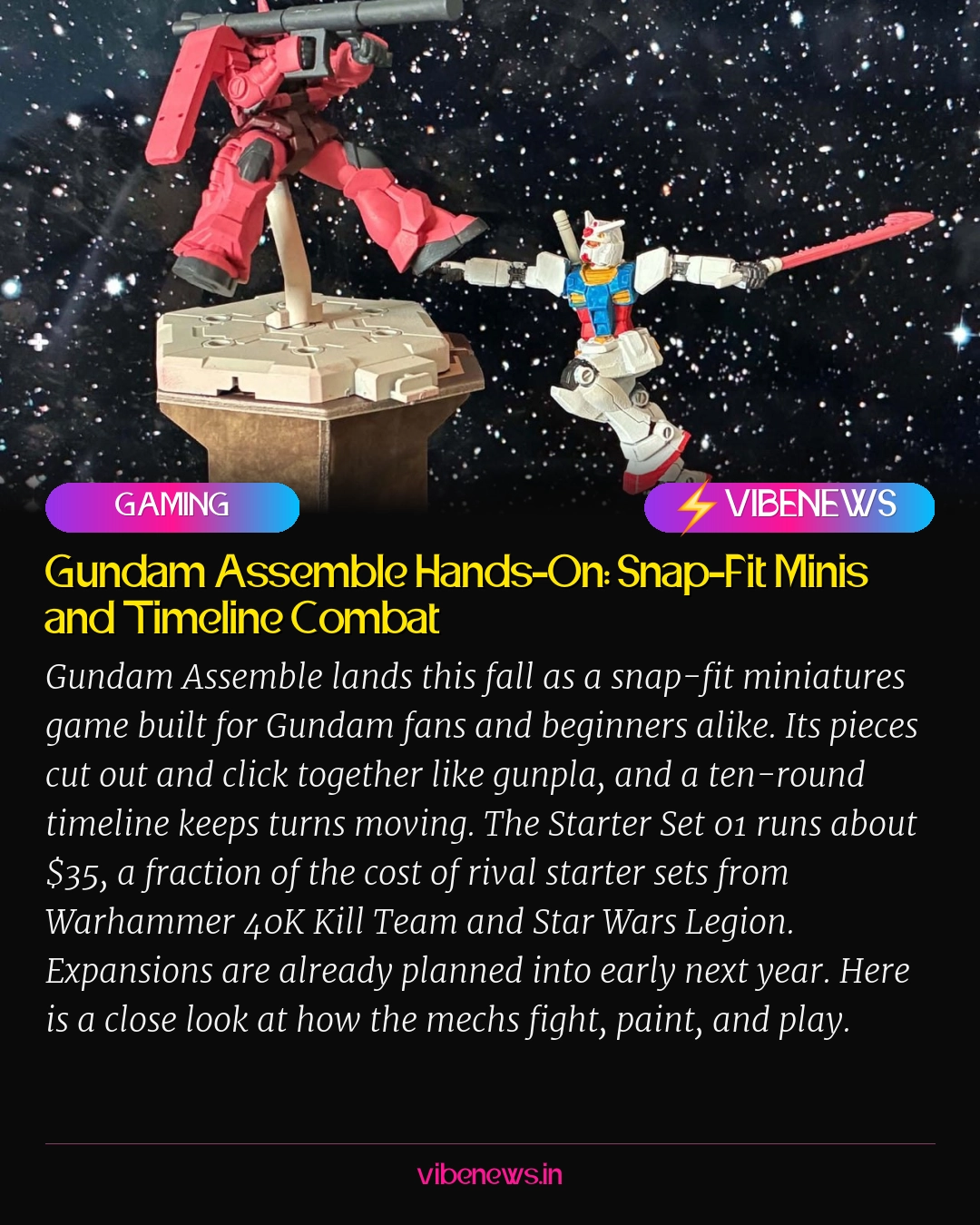
The finished models look good too, with a decent amount of detail for miniature versions of mechs fans already know. The tradeoff is customization. Like other modern miniatures, assembly is easier because you snap parts together as instructed, but you lose the personal touch that some players want. Instead, different releases offer different variants or poses. The RX-78-2 Gundam in the starter set swings a beam saber, while the version in the Paint Pack brandishes a beam rifle. That is less appealing for players who want to tinker, but it helps beginners and impatient players get to painting and playing faster.
Painting is tiny work, but the mechs are forgiving
Painting miniatures is not for the faint of heart, and Gundam Assemble does not make it easier. The weapons and mech head pieces are full of tiny details, and perfectionists could end up spending more time painting than playing. The good news is that Gundam units are fairly straightforward to paint. Their looks are mostly monochrome with embellishments scattered across them, and there is no skin or flesh tone to get right, which is often the hardest part of painting figures.
Start with a primer and you can save time, especially on units like the RX-78-2 or the Wing Gundam Zero. The starter set includes a painting guide in its instruction manual for newcomers. You can use the Gundam Assemble Paint Pack, or simply use any water-based acrylic model paint and mix colors as needed. Our reporter’s own Char’s Zaku came together during a dedicated paint day with friends. Skipping paint altogether is also an option, though the extra effort does make for a better experience.
Painting is far easier now than it used to be, and a little research before you start saves a lot of frustration.
Matches that start fast
Gameplay is where Gundam Assemble stands out. Matches run surprisingly smoothly, and the biggest hurdle for many tabletop players is simply finding a group willing to learn complex rules and commit the time and table space. Gundam Assemble lowers that bar. You only need six mech units, rather than a multitude of grunts, to fill out a squad or army on each side.
The feature that keeps turns flowing is the Gundam Assemble timeline. It runs ten rounds to a phase. Each player slots their mech unit tokens into specific spots to track whose turn is next. The Gundam Vidar has a timeline start number of one, while the RX-78-2 starts at two, so the Vidar takes its turn first. As units act, their tokens move down the timeline, and a unit that takes a costly action may wait a long time before it can act again. Seeing who is next adds a layer of strategy similar to turn-based tactics games like XCOM or Star Wars Zero Company. Keeping the timeline beside the map, away from the battlefield, also helps avoid token clutter.
A typical game plays through two phases, or 20 rounds, with players chasing victory points. Points come from rescuing or destroying garrisons, defeating a mech unit, or holding objective points at the end of each phase. Each turn offers four kinds of options: advance, a primary action, command abilities, and tactics cards.
Movement, actions, and the dice
Advancing is simple movement. Units can move up to three hexes in any direction, though climbing a level of terrain costs two hexes of movement. Going down a level carries no penalty, and units with a Hover ability ignore terrain penalties altogether.
Primary actions move the unit’s token down the timeline. They include attack, dash, energize, and rescue. Attacks carry specific timeline costs printed on the unit cards. The RX-78-2’s Beam Saber, for example, has a timeline cost of three, so the token drops three rounds after the attack. The other three primary actions normally cost two. Dash moves a unit two hexes further, and Char’s Zaku can also deal damage during a dash with his Char Kick ability. Energize gives a unit an energy token for abilities later in the game. Rescue lets units recover friendly garrison tokens for victory points, and some units, like the RX-78-2, gain strength for every garrison rescued.
Command abilities are printed on each unit card and usually cost energy or require a specific condition. Tactics cards can be played once per turn before being discarded. Players start with three and draw more after each phase. They can repair a mech, use a new attack, or counter an enemy unit. It sounds like a lot for one turn, but in practice players mostly advance and take a primary action, because the options on the battlefield thin out quickly.
Combat is quick. Games are typically 3v3 mech units, so the battlefield is not crowded, and units deploy and spread toward objectives in the opening turns. When an enemy is in range, a unit can choose one of its two printed attacks or a tactics card attack. Each attack has a strength number that sets how many ten-sided dice to roll. A four or higher is a hit for one damage. Nines and tens are critical hits that trigger the attack’s crit effect, which can add damage or impose a penalty.
There are no defensive rolls like saving throws. Instead, defense comes from Shield tokens, which units can pick up by chance or gain through a command ability or tactics card. Each token nullifies one hit, then flips over and stays exhausted until the start of that unit’s next turn. In one example, the Gundam Barbatos Lupus Rex’s Tail Blade aims for six damage against the Gundam Vidar, which has two Shield tokens. The Vidar takes four instead, and both tokens flip. If another attack comes in before those tokens reactivate, they will not block it. Along with abilities and tactics cards that reduce damage, this keeps rolls fast. There is no need to track faction bonuses or whether a unit is concealed or aiming, as in other miniature wargames.
When a mech is defeated, the winning player gains the victory points listed on the enemy card. The defeated unit’s timeline token then moves two spaces ahead before it can redeploy after repairs. Upgrades and energy stay with the unit until it returns.
The price of entry
Miniatures are expensive, and the cost of choosing which units to collect can be overwhelming. Gundam Assemble is noticeably kinder to the wallet. The Starter Set 01 costs about $35, which is not much more than a HG gunpla kit, depending on the model. A Warhammer 40K Kill Team starter runs about $118, and a Star Wars Legion starter about $99. A Deluxe Starter Set costs about $100 and contains double the minis of a regular starter. Expansion packs featuring fan favorites run about $40.
The overall design balances objective-based scoring with the option to attack enemy units outright for their victory points. Managing both approaches with your units’ abilities is what separates the better tactician. Between builds that gunpla fans already know, quick combat, and straightforward timeline management, the game is slightly more beginner-friendly than other starter sets in the miniature wargame space.
It’s the balance of managing both strategies to your units’ best abilities that determines who is the better tactician.
For Gundam fans curious about a tabletop experience, or players hoping to try miniature games for the first time, the entry price and build time make Gundam Assemble a strong candidate to test this fall.
TL;DR
- Gundam Assemble is a new miniatures tabletop game, available for the first time this fall.
- It was revealed alongside the Gundam Card Game as a visual companion.
- Units are cut out and snapped together, similar to gunpla, needing only a handful of parts each.
- A ten-round timeline tracks turns, and each mech’s token moves down it after actions.
- The Starter Set 01 costs about $35, versus about $118 for a Warhammer 40K Kill Team starter.
- More expansion packs and sets are planned into early next year.