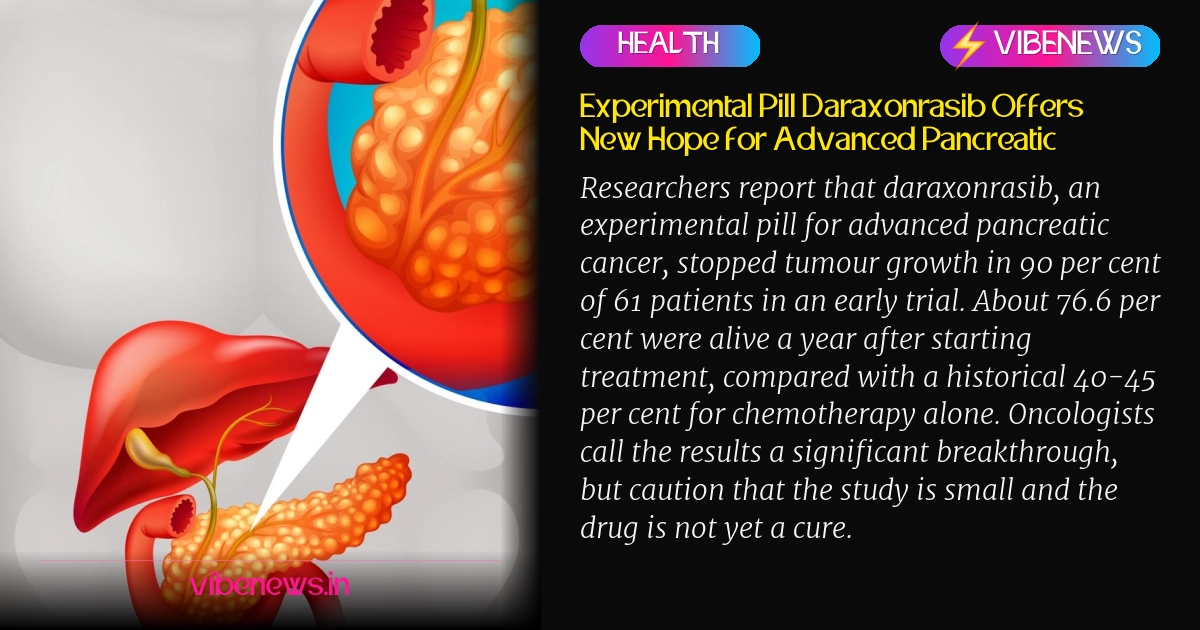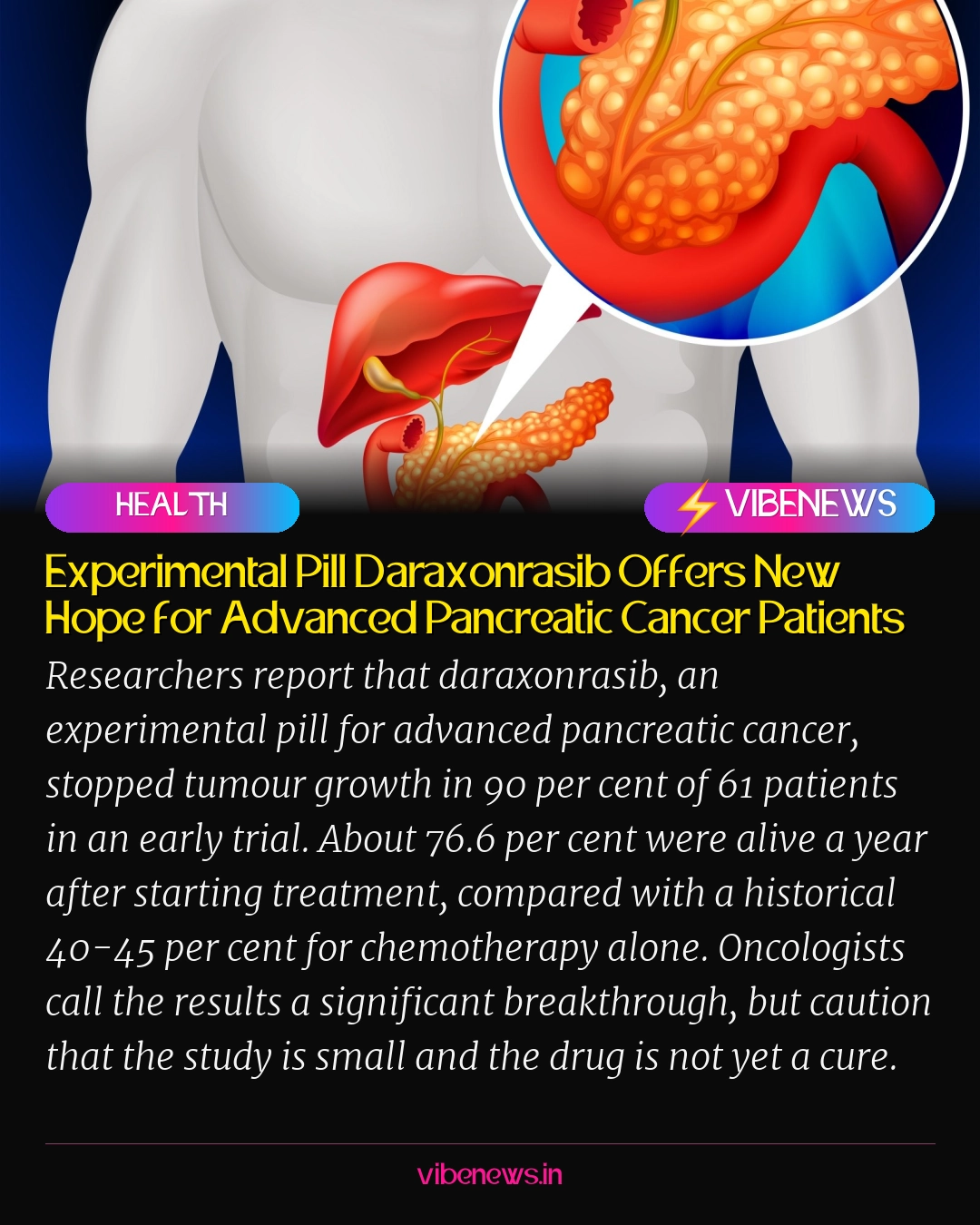
An experimental pill called daraxonrasib has shown encouraging early results in patients with advanced pancreatic cancer, according to trial findings that oncologists say could give patients more time. In a trial involving 61 patients whose cancer had spread to other organs, the drug stopped tumour growth in 90 per cent of participants.
Tumours shrank or disappeared in over 60 per cent of patients. In nearly 8 per cent, tumours became undetectable on CT scans. Researchers have stressed that the drug cannot yet be considered a cure, and longer studies are still needed.
How the Drug Targets Pancreatic Cancer
Most pancreatic cancers carry alterations in the KRAS gene, which send continuous signals that push cancer cells to grow and survive. Daraxonrasib is designed to block those faulty signals.
Dr Parveen Jain, Senior Consultant and HOD–Medical Oncology at Aakash Healthcare, said the drug works differently from standard chemotherapy. Conventional chemotherapy attacks rapidly dividing cells, including some healthy ones. Targeted therapies aim at the specific molecular pathways that keep a tumour alive.
“Daraxonrasib is important because it targets the mechanism that sustains the tumour itself rather than the fast-dividing cells around it that some chemotherapies do,” Dr Jain said. He added that targeted treatment also raises questions about side effects and the possibility that cancer cells could develop resistance.
Why the Results Matter for Patients
Metastatic pancreatic cancer, which has spread to organs such as the liver and lungs, is difficult to treat. Dr Jain said about 90.2 per cent of patients in the trial achieved disease control, meaning their cancer either shrank or stopped growing. Around 60.7 per cent saw measurable tumour shrinkage, and 8.2 per cent had complete radiological responses with no visible cancer on scans.
The reported one-year survival rate of 76.6 per cent compares with historical survival figures for patients on chemotherapy alone, which the trial data place at 40-45 per cent.
“The findings provide a new hope, but more evidence will be needed before we can make a definitive judgement on its use in routine cancer treatment,” Dr Jain said.
What Still Needs to Be Proven
Dr Jain cautioned against treating the survival figure as proof that the drug extends life. The study is small, and it compares results with historical chemotherapy figures rather than two randomised groups. Subsequent trials are examining daraxonrasib in combination with chemotherapy drugs such as gemcitabine and nab-paclitaxel.
Larger randomised phase III trials will be needed to show whether the treatment improves overall survival or progression-free survival compared with standard chemotherapy. Long-term safety, treatment resistance, quality of life and the patient groups most likely to benefit also still need assessment.
Does an undetectable tumour mean the patient is cured?
No, according to Dr Jain. He said a CT scan showing no tumour is a good sign, but radiological methods can miss individual cells or small clumps that may be left behind. These cells could eventually multiply and cause the cancer to return, which is especially concerning in pancreatic cancer because it can spread early. He said such responses could be seen as markers of deep tumour regression rather than cure.
Can daraxonrasib become a standard treatment?
Not yet. Dr Jain said more evidence is needed before the drug can be judged for routine cancer treatment. Long-term follow-up will show whether the responses last and whether the treatment can lead to durable remission.
Key Facts
The trial included 61 patients whose cancer had spread to other organs.Daraxonrasib stopped tumour growth in 90 per cent of participants.About 76.6 per cent of participants were alive a year after starting treatment.Historical one-year survival with chemotherapy alone is cited as 40-45 per cent.Researchers say the drug is not yet a cure and larger studies are needed.Disclaimer: This article is based on public domain information and expert comments. Always consult your health practitioner before starting any treatment.
TL;DR
- Daraxonrasib, an experimental pill, stopped tumour growth in 90 per cent of 61 patients with advanced pancreatic cancer in an early trial.
- About 76.6 per cent of participants were alive a year after starting treatment.
- Historical one-year survival with chemotherapy alone is cited at 40-45 per cent.
- Tumours became undetectable on CT scans in nearly 8 per cent of patients.
- Experts say the drug is not yet a cure and the study is too small to prove a survival benefit.
- Larger randomised phase III trials are needed before routine use.