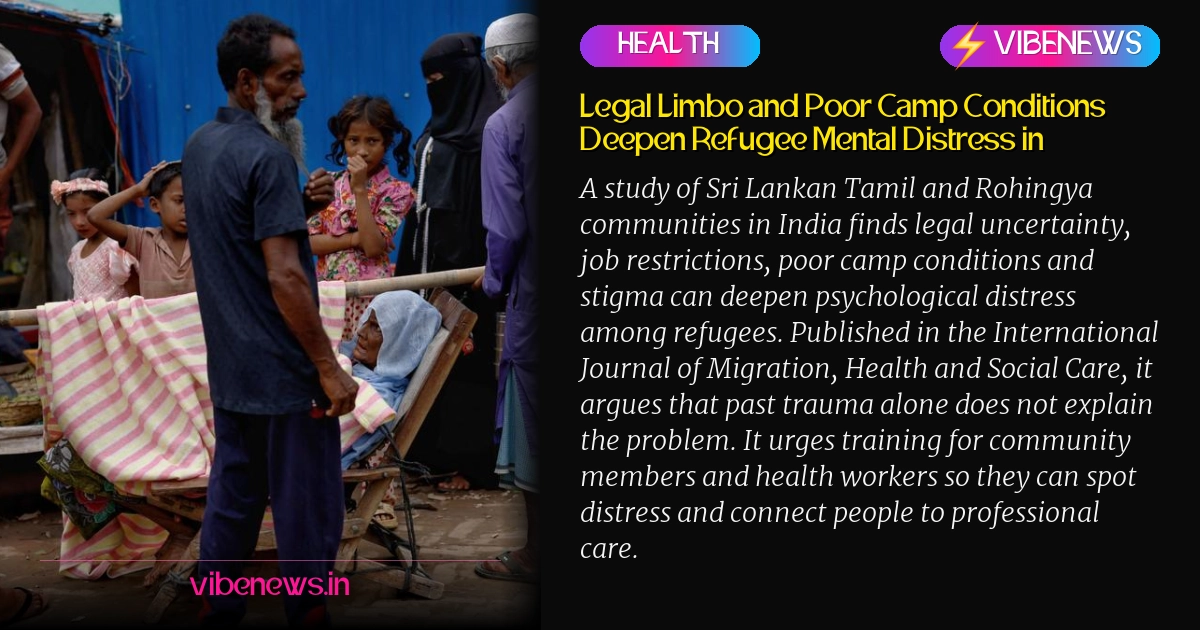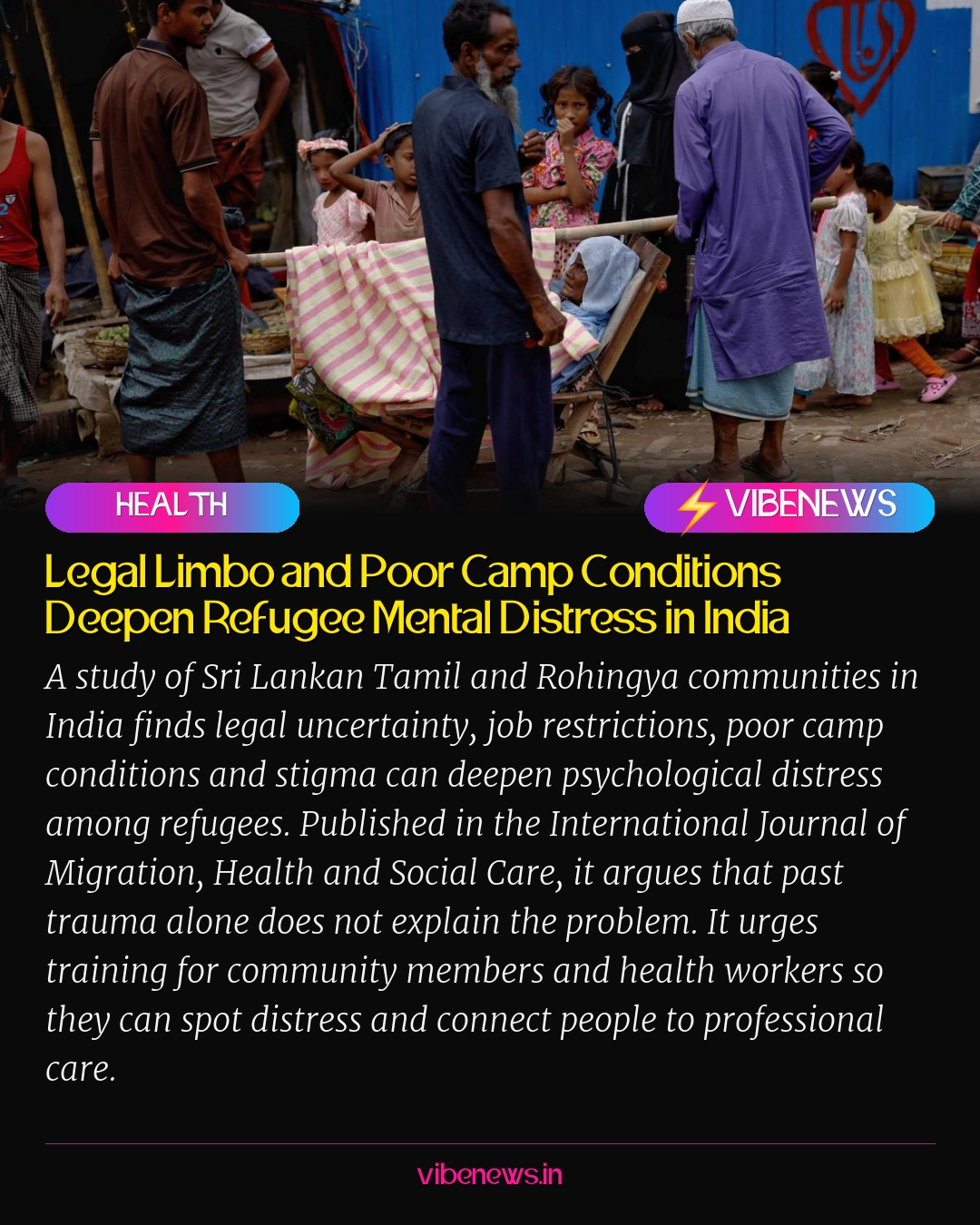
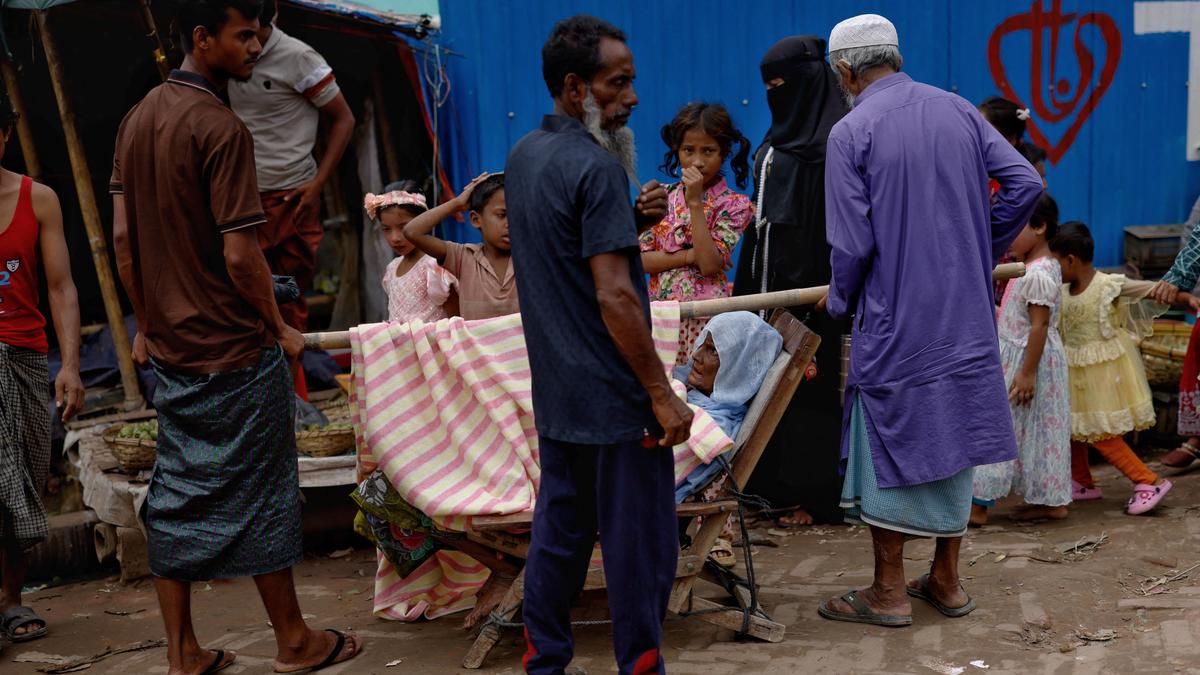
A study of Sri Lankan Tamil and Rohingya refugees in India has found that legal uncertainty, restrictions on work, poor camp conditions and social isolation can intensify mental distress. The research was published in the International Journal of Migration, Health and Social Care, and it calls for community members and health workers to be trained to recognise psychological distress early.
What the study found
The researchers said mental health problems in refugee communities are tied to more than the violence and forced displacement people have already lived through. Conditions in host countries play a major role too. The study names prolonged legal uncertainty, limits on employment, poor living conditions in camps, stigma and barriers to healthcare as factors that can make distress worse.
The work is titled ‘Building mental health capacity in protracted refugee situations: Empirical pointers from Sri Lankan Tamil and Rohingya populations in India.’ It looks at the mental health concerns most common in these groups and the obstacles that stop people from getting care.
Why the gap in care matters
The study’s central argument is that the support system around refugees is often thin. Treatment alone cannot close the gap if people live in limbo for years, cannot earn a living and face stigma when they seek help. The authors point to the need for trauma-informed support that works at the community level, not only inside clinics.
What the researchers recommend
The study calls for training community members and health workers in three things: recognising psychological distress, providing basic support, and facilitating access to professional mental health services. The recommendations focus on the people who are already close to refugees every day, rather than on specialists alone.
Key Facts
The study examined Sri Lankan Tamil and Rohingya communities in India.It was published in the International Journal of Migration, Health and Social Care.Factors named include legal uncertainty, employment restrictions, poor camp conditions, stigma and barriers to healthcare.The study recommends training community members and health workers to recognise distress and provide basic support.The paper was published on November 21, 2026.Who is affected by these findings?
The study focuses on Sri Lankan Tamil and Rohingya populations living in India as refugees in protracted situations.
Does the study only look at past trauma?
No. According to the study, mental health concerns are linked not only to past trauma, violence and forced displacement, but also to legal uncertainty, limited work opportunities, poor living conditions and social isolation in host countries.
Building mental health capacity in protracted refugee situations: Empirical pointers from Sri Lankan Tamil and Rohingya populations in India
TL;DR
- Study links legal uncertainty and job curbs to worsening mental distress among refugees in India.
- Sri Lankan Tamil and Rohingya communities are the focus of the research, published in the International Journal of Migration, Health and Social Care.
- Past trauma is only part of the picture, with camp conditions, stigma and healthcare barriers also playing a role.
- Researchers call for training community members and health workers to spot distress and provide basic support.
- The study urges better facilitated access to professional mental health services for displaced people.