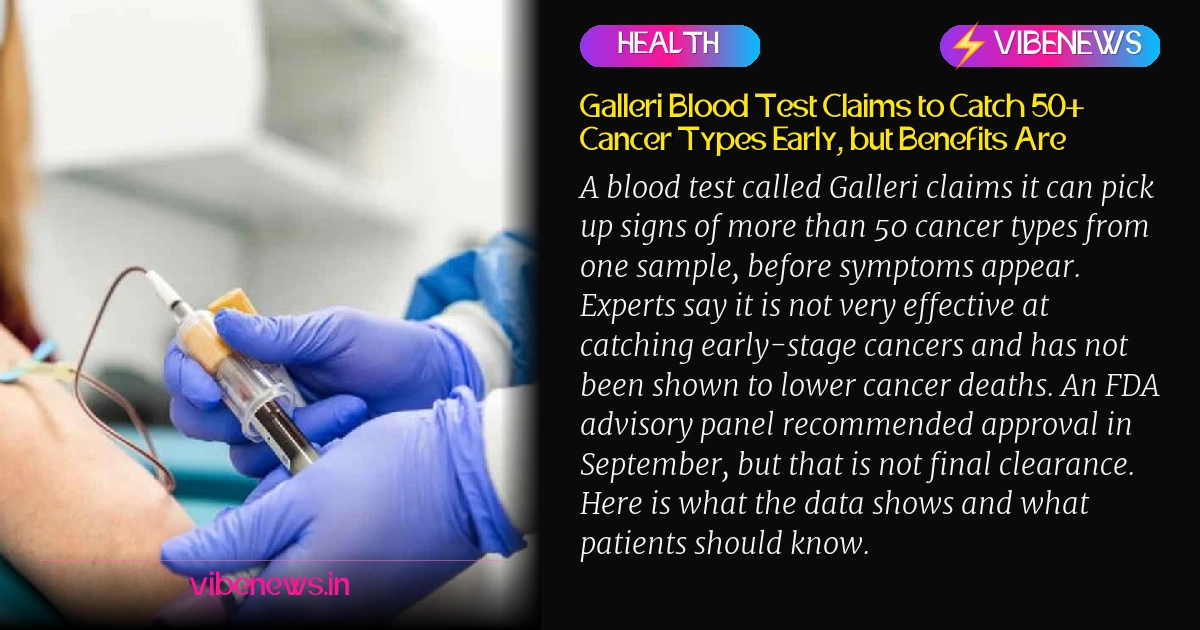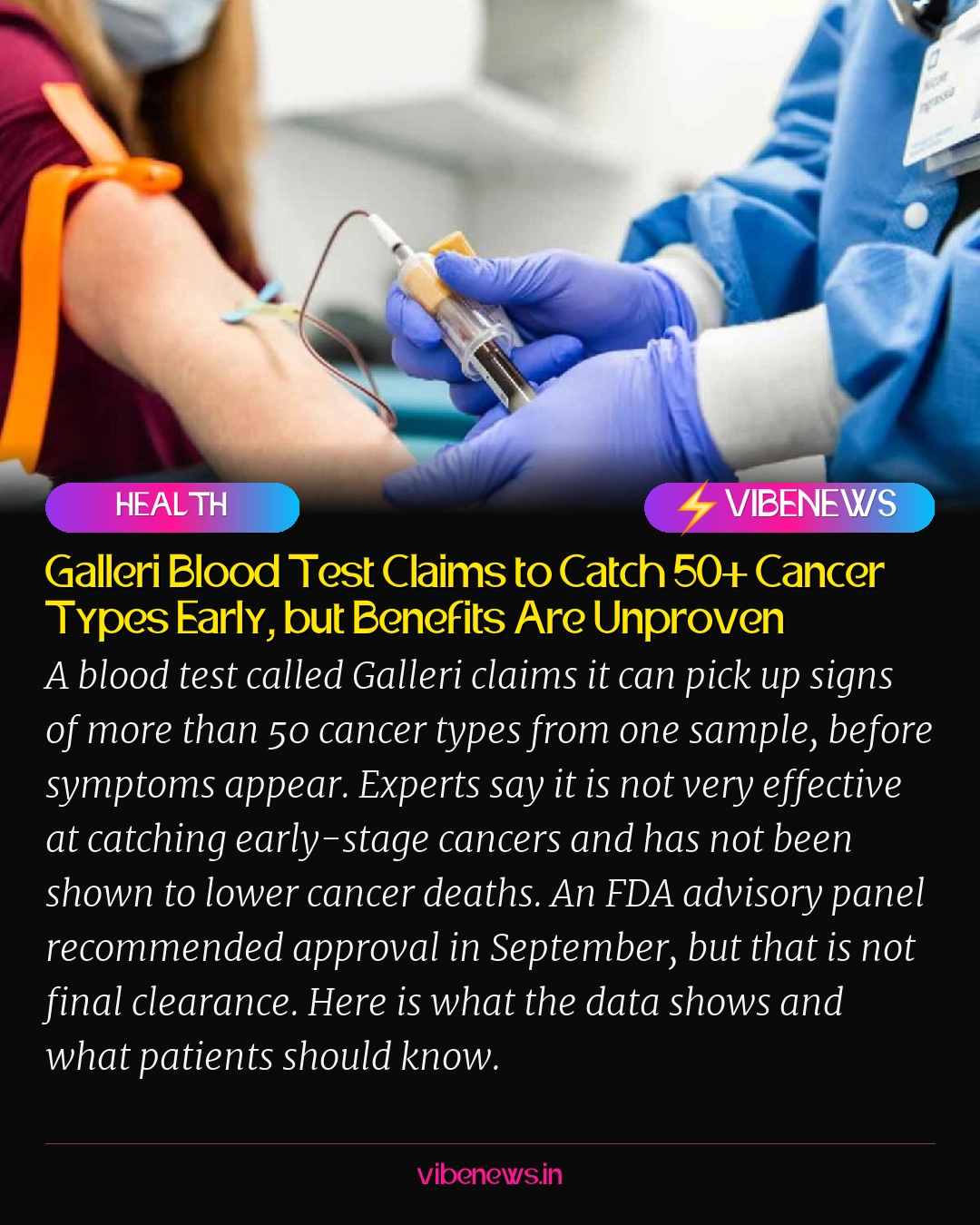

A blood test called Galleri claims it can detect signs of more than 50 types of cancer from a single blood sample, and it can do so before any symptoms appear. The claim is attracting growing interest, but the reported findings and expert reactions point to a far more cautious picture.
How the Test Works
The Galleri test looks at small pieces of DNA that cancer cells release into the blood. It searches for specific methylation marks, which are chemical tags sitting on those DNA fragments. Using machine learning methods, the test then gives a result showing whether cancer signals are present.
The test is also said to estimate the organ where a cancer may have started. That detail matters for doctors, because knowing the likely origin helps them decide what to check next.
What the Study Numbers Show
In one study, 32,000 people took the test. Of them, 173 were diagnosed with cancer. The test correctly predicted the cancer type in 91% of those cases. Researchers reported that false positive results were around 0.5%.
The picture changes when the window gets wider. Over three years of testing, the test detected cancers across all stages less than 31% of the time. That means roughly 69% of cases were missed. For early-stage cancers, the detection rate was just 21%, which means about 80% of those cases slipped through.
That gap is the core problem. The test has been promoted as a way to find cancer before it spreads, yet it struggled most in exactly that early window.
The FDA Advisory Panel Decision
A advisory panel of the US Food and Drug Administration recommended approval of the test on September 23. Panel members unanimously recommended the test as safe, according to the report. The panel’s vote, however, is not final approval.
Panel members did not agree on how well the test works. They also suggested removing the phrase early-stage cancer detection from the test’s description. Their concern was clear: the test’s benefits had not been proven, even though it was designed to catch cancers early and reduce the risk of death.
Experts say clarity is still needed on the test’s benefits and risks before it can be widely trusted.
The research also set a goal of reducing the number of cancers diagnosed at advanced stages within three years. According to the report, the test did not reach that goal.
What Happens After a Positive Result
A positive result does not end the process. It usually leads to more tests, and sometimes a biopsy. In one study, 0.6% of people needed invasive tests after their results.
Those follow-up steps carry their own burden. Patients may face anxiety, additional appointments and procedures, all while the benefit of early detection remains unproven, according to experts cited in the report.
Cost and Insurance Questions
In the United States, the test currently costs $949. There is no guarantee that government health insurance or other insurers will cover the cost. Anyone considering the test will need to check coverage before going ahead.
Why a Negative Result Is Not the Whole Answer
A negative result should not be treated as proof that cancer is absent. Experts say people should not fully rely on it.
Doctors continue to recommend established screenings for colorectal, breast, cervical and lung cancers. Those tests have been shown to detect cancer at an early stage and reduce the risk of dying from the disease. Experts warn that new tests should not replace them.
Anyone thinking about the Galleri test should talk with a doctor before deciding. The report makes clear that the choice depends on individual circumstances, and that the evidence on benefits and risks is still being built.
TL;DR
- The Galleri blood test claims to detect more than 50 cancer types from one blood sample, before symptoms appear.
- In one study of 32,000 people, 173 were diagnosed with cancer, and 91% had their cancer type correctly predicted.
- Over three years, the test detected cancers across all stages less than 31% of the time, and only 21% of early-stage cancers.
- Researchers reported false positive results of around 0.5%, but a positive result usually leads to more testing.
- An FDA advisory panel recommended the test in September, but that recommendation is not final approval.
- The test costs $949 in the US, and insurance coverage is not guaranteed.