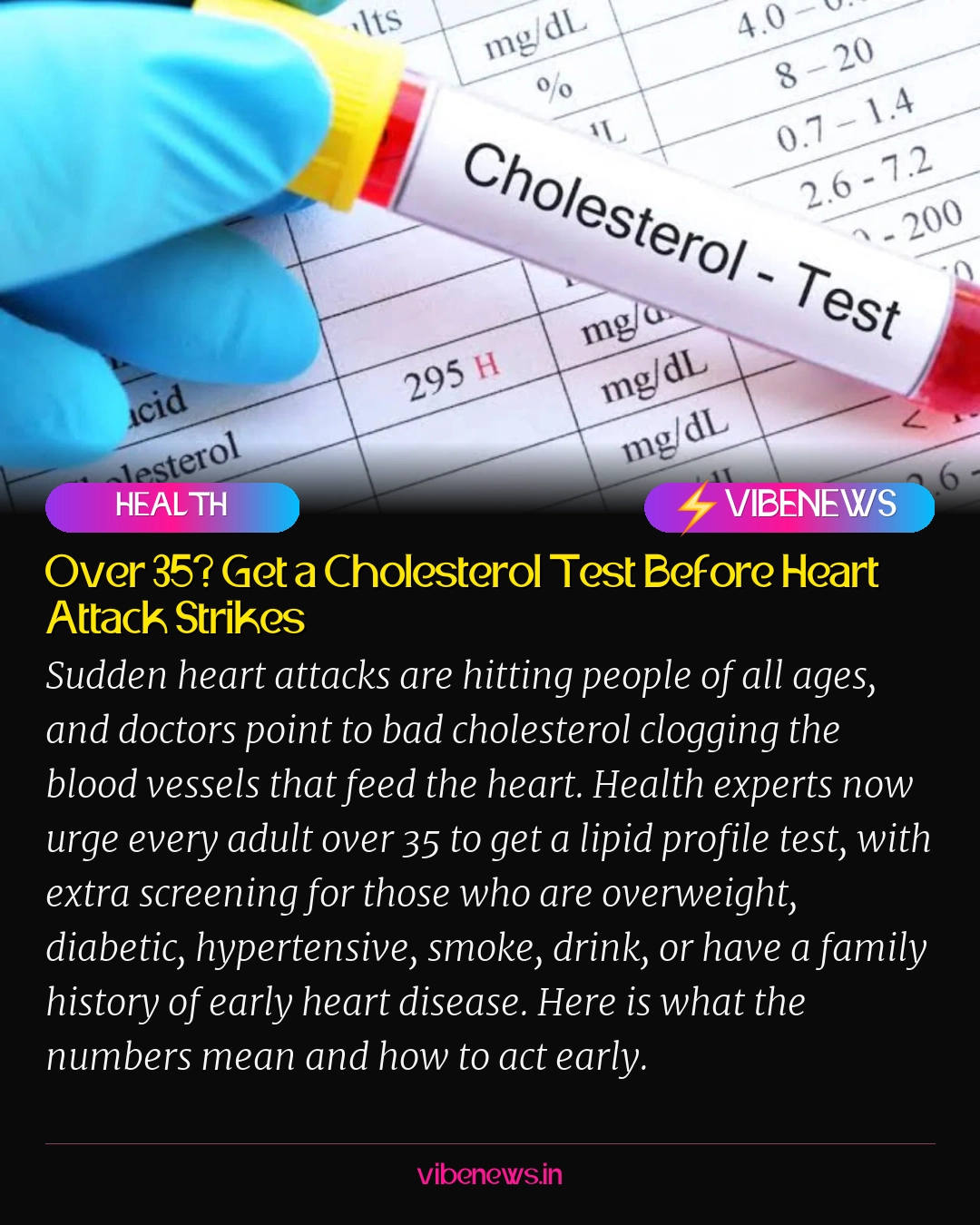
Doctors are urging every adult over 35 to get a cholesterol test now, as sudden heart attacks and cardiac arrests strike more people across age groups than they did in past years.
Medical experts link the rise to changing lifestyles. Lack of physical activity, eating habits and mental stress are pushing heart problems into younger age groups, and many of those affected never expected to be at risk.
The core mechanism is simple. Bad cholesterol builds up inside blood vessels and blocks the pathways that carry blood to the heart. That blockage is the main driver behind sudden cardiac arrests, which is why clinicians stress catching the problem before symptoms appear.
Why the 35 mark matters
International health organizations, including the American Heart Association and the National Heart, Lung, and Blood Institute, say adults over 35 should get tested. The advice is not limited to people who already feel unwell. Silent buildup can progress for years before it becomes an emergency.
Dr. Tarun Kumar, professor in the cardiology department at Moolchand Hospital in Delhi, said heart disease rates among young people are now far higher than before. Prevention, he said, is the most effective path, and that is why he recommends screening early.
Keeping cholesterol under control is the most important thing for heart health. Since prevention is the best path, everyone over 35 should get a lipid profile test to know the fat levels in their body.
Dr. Kumar added that electrocardiogram (ECG) and blood sugar tests can also be done as needed. The lipid profile is the starting point, because it shows exactly where cholesterol stands.
Who should get tested first
Even without symptoms, people in the following groups should check their cholesterol regularly. Doctors flag these as the highest-priority cases.
Overweight adults, especially those carrying excess fat around the belly, are at higher risk.
People with diabetes, whose blood sugar levels run high, need regular monitoring.
Those with high blood pressure or long-term kidney problems are also on the priority list.
Anyone with a family history of early heart attacks or heart problems among blood relatives should be tested.
Smokers and people who drink alcohol regularly face faster damage to their blood vessels.
People who sit for hours at work and those under heavy, constant stress round out the list.
Reading the numbers on your report
When the blood test report comes back, the key figures matter. Total cholesterol below 200 mg/dL is the target. A reading between 200 and 239 mg/dL is considered borderline, and 240 mg/dL or higher is classed as high risk.
Bad cholesterol, known as LDL, should be below 100 mg/dL, because it is the type that causes blockages in blood vessels. Good cholesterol, known as HDL, protects the heart and should be above 40 mg/dL. For women, the protective level is above 50 mg/dL.
Triglycerides, another type of blood fat, should ideally be below 150 mg/dL.
What to change right now
Exercise is the first lever. Doctors recommend at least 30 to 45 minutes of brisk walking, jogging or any other aerobic activity every day.
Diet comes next. Heavily fried foods and dishes loaded with spices should be cut back sharply. Processed foods, packaged snacks and bakery items often contain trans fat, which raises bad cholesterol quickly.
Build meals around fiber. Fresh vegetables, leafy greens, oats and fruit help bring cholesterol down and should become a regular part of the diet.
Healthy fats have a place too. Reduce the amount of cooking oil used at home, and include nuts in appropriate amounts instead.
High cholesterol is a silent killer. It often gives no warning until the damage is serious. Catching it on time through a simple blood test, and making the right lifestyle changes, can protect the heart from a sudden attack.
TL;DR
- Heart attacks are striking people of all ages, and bad cholesterol is the main driver behind sudden cardiac arrests.
- Doctors urge every adult over 35 to get a lipid profile test, even without symptoms.
- Overweight people, diabetics, those with high BP or kidney disease, and smokers are top priority for screening.
- Total cholesterol should be below 200 mg/dL, LDL below 100 mg/dL, and triglycerides below 150 mg/dL.
- Daily brisk walking or aerobic exercise for 30 to 45 minutes is a key first step.
- Cut deep-fried food, processed snacks, and trans fats, and eat more fiber-rich vegetables, oats, and fruit.