
Doctors are warning that some cancer treatments that save lives can also strain the heart, and patients should get cardiac checks before, during and after therapy. Cancer care has improved sharply, with chemotherapy, targeted drugs, immunotherapy and radiation helping many patients live longer and return to normal life after treatment. But experts say controlling the cancer is only part of the job. The heart needs watching too.
Some treatments can affect the heart muscle, blood pressure or heartbeat. The level of risk depends on which drugs are used, how much of them is given, how they are combined, and the patient’s underlying health.
Chemotherapy drugs that can weaken the heart
Doxorubicin and epirubicin are chemotherapy drugs used in treating breast cancer, lymphoma and other cancers. In some patients, they weaken the heart muscle and reduce its ability to pump blood. The danger grows as the total dose increases.
Targeted therapies and blood pressure
Trastuzumab, used in HER2-positive breast cancer, can affect heart function in some patients. Other targeted therapies may raise blood pressure, which adds another layer of strain that doctors need to track.
Immunotherapy and rare but urgent inflammation
Immune-system based treatments rarely cause inflammation in the heart muscle. This is not a minor side effect. It is a condition that requires emergency medical help.
Radiation to the chest
Radiation directed at the chest can also affect the heart in some people. Certain problems do not show up until years after treatment has ended, which is why the question of heart health cannot be closed the day therapy finishes.
Who faces higher risk
Patients with diabetes, high blood pressure, obesity, or a history of heart problems need closer monitoring. Experts stress that not every cancer patient will develop heart problems. The goal is not to frighten people away from life-saving treatment. The goal is to catch changes early.
What testing looks like
Before treatment starts, doctors may order ECG and echo tests, along with blood tests that point to stress or damage in the heart muscle, depending on each patient’s need. Heart function is then checked regularly while treatment continues.
Early detection is the main purpose of these tests. They give doctors a chance to act before damage becomes serious, and they help decide whether a patient needs protective medication or a change in plan.
Why cancer doctors and heart doctors must work together
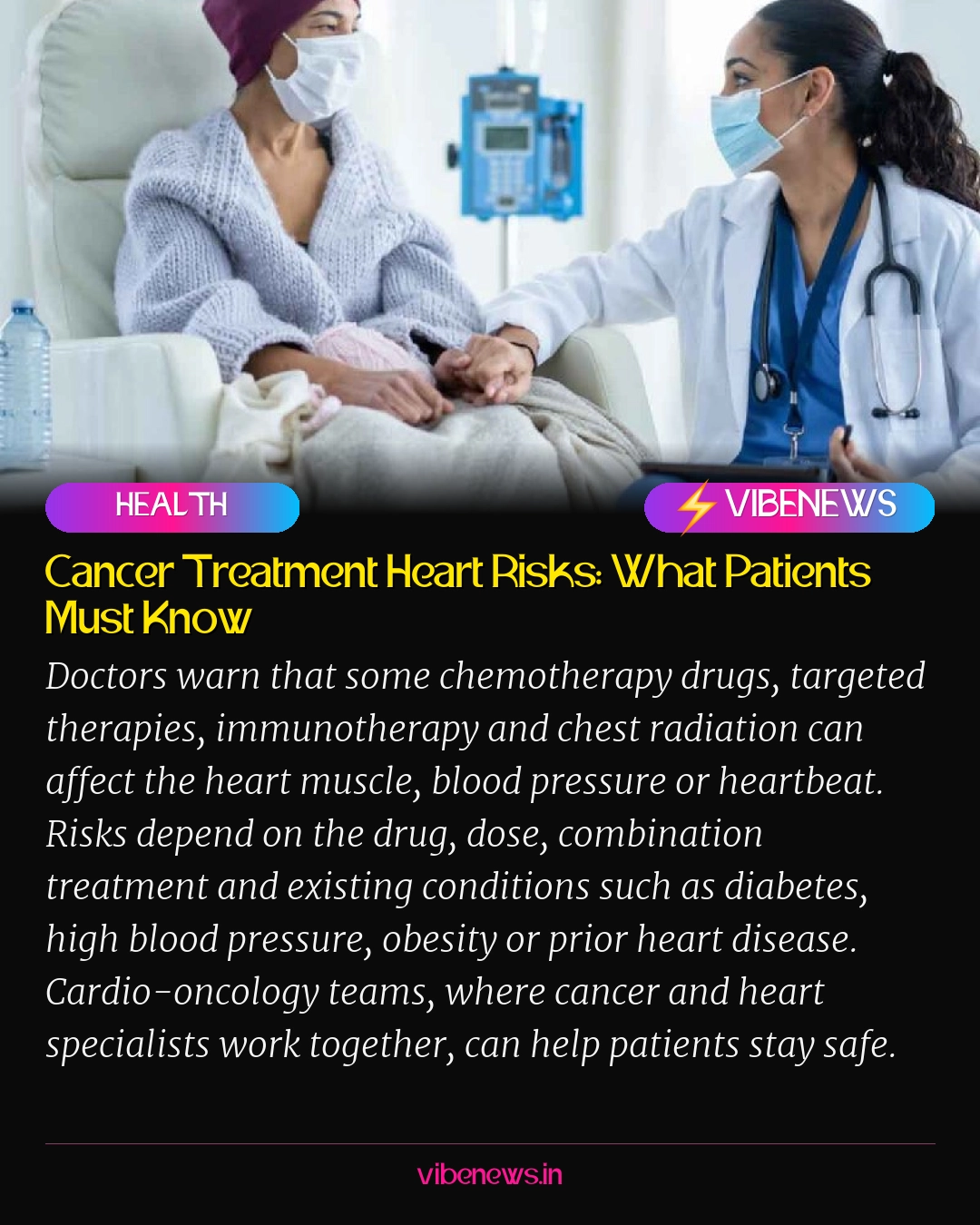
Managing heart health during cancer care depends on close teamwork. The specialty is called cardio-oncology, a model in which cancer doctors and cardiologists coordinate care. Cancer specialists assess which treatments are needed to control the disease. Heart specialists identify cardiovascular risks and help manage problems as they arise.
Symptoms patients should not ignore
Patients should not dismiss shortness of breath, swelling in the feet, unusual fatigue, chest discomfort, a fast or irregular heartbeat, or fainting. These symptoms do not always signal heart disease. But they need a doctor’s attention right away, not later.
Stopping treatment is not automatic
A drop in heart function does not always mean cancer treatment must stop immediately. Depending on the situation, doctors may continue treatment with heart-protective medication and extra monitoring. In other cases, treatment may need to be paused temporarily or changed.
Patients must not stop cancer medicines or change doses on their own. Any change should happen only on medical advice.
Monitoring after treatment ends
Heart care does not end when cancer treatment is finished. Some effects of treatment surface months or years later. Survivors should undergo heart tests suited to their own health condition, and they should keep those appointments.
Patients are advised to ask their doctors which tests they need during treatment, what the results mean, and what the next steps will be. They should also tell doctors about any past health problems and report new symptoms immediately.
Survival is only part of the goal
Experts say the measure of success goes beyond the disease itself. The question is what life looks like afterward.
Beating cancer alone is not the measure of a successful treatment.
Specialists say the aim is for patients to recover, return to daily life, and live long, healthy and happy lives. That means keeping the heart in view from the first appointment onward, not treating it as an afterthought once the cancer is under control.
TL;DR
- Some cancer treatments can strain the heart, and doctors say patients should get cardiac checks before, during and after therapy.
- Chemotherapy drugs such as doxorubicin and epirubicin can weaken the heart muscle, and the risk grows with the total dose.
- Trastuzumab, used in HER2-positive breast cancer, can affect heart function in some patients, and other targeted drugs may raise blood pressure.
- Immunotherapy rarely causes inflammation of the heart muscle, a condition that requires emergency medical care.
- Chest radiation can affect the heart, and some problems appear only years after treatment ends.
- Patients should never stop cancer medicines or change doses without a doctor’s advice.