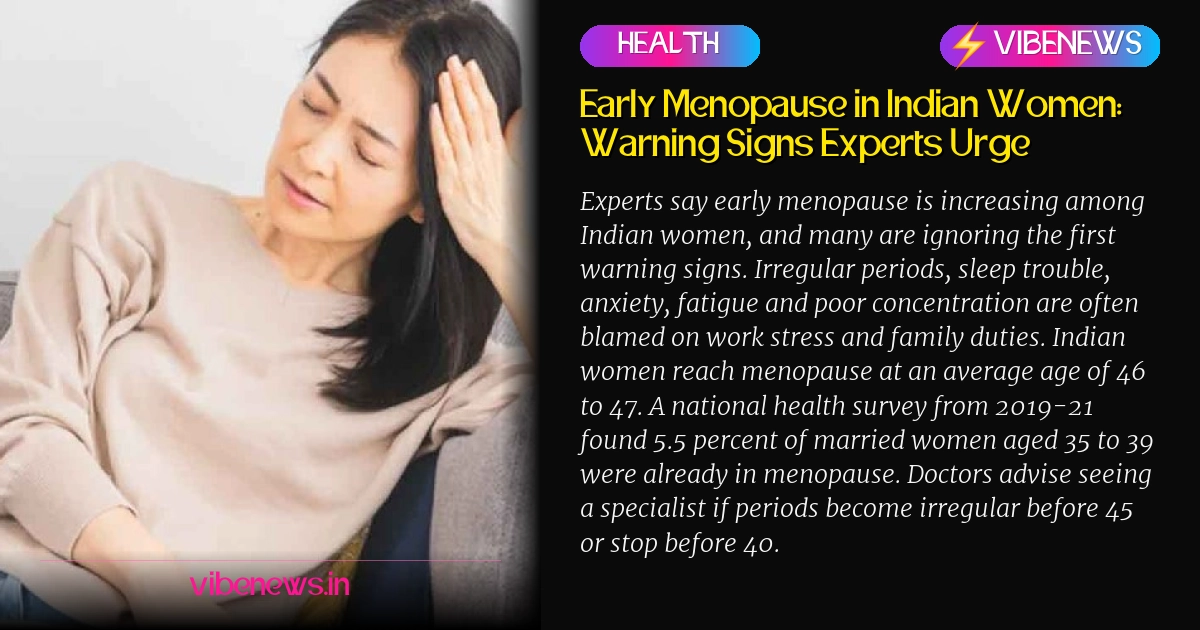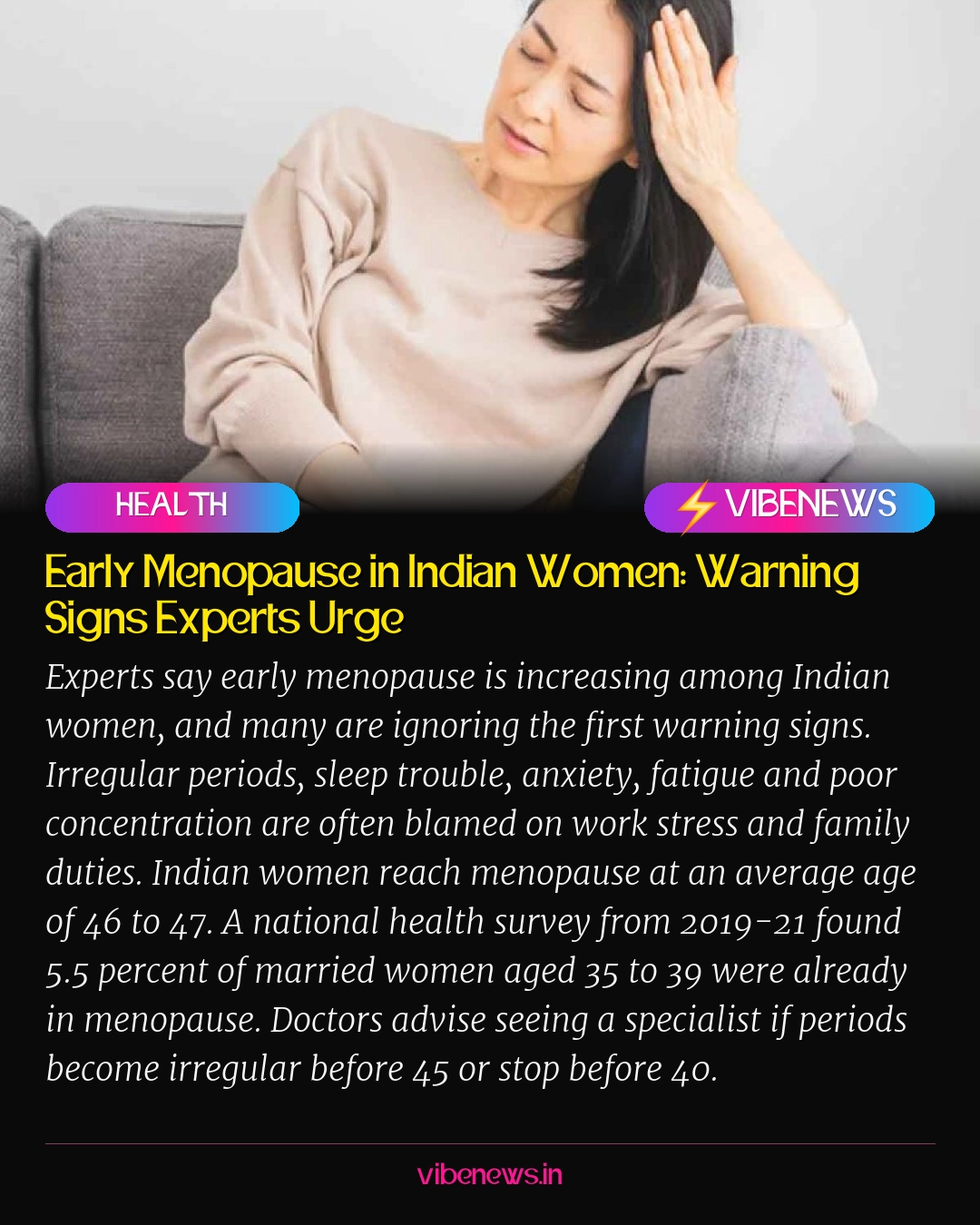

Experts say early menopause is increasing among Indian women, and many are dismissing the first warning signs as ordinary work pressure. The symptoms often appear in the late thirties, when women are at the peak of their careers and managing family responsibilities.
The report, published on October 26, 2026, warns that irregular periods, disturbed sleep, anxiety, fatigue and reduced concentration are commonly brushed aside. Women tend to attribute these problems to busy schedules and household duties. Specialists now say these changes could be signs of the phase that comes before menopause, known medically as perimenopause.
Why the timing matters
The average age of menopause among Indian women falls between 46 and 47. That means many women are facing hormonal changes during the most demanding years of their working lives. Because the signs look like everyday tiredness or stress, they are easy to miss until they begin to interfere with daily life.
National data points to how common the shift already is. According to the National Family Health Survey conducted in 2019-21, 5.5 percent of married women aged 35 to 39 were recorded as being in menopause. The figure underlines why doctors want women in their thirties to pay closer attention to changes in their bodies.
The symptoms women should not ignore
Medical experts list a cluster of symptoms that signal the body may be entering this transition. Irregular menstrual cycles are often the first sign. Others include hot flashes, night sweats, disrupted sleep, mood swings, joint pain and a steady drop in energy.
Experts also caution that these symptoms are not always caused by menopause. Thyroid disorders, pregnancy and other hormonal imbalances can produce similar effects. That is why a proper medical assessment matters more than self-diagnosis. A woman who assumes every symptom is menopause may miss a treatable condition, and a woman who ignores a real hormonal shift may delay care that could protect her health.
Recognising symptoms early and getting medical help can lower the risk of long-term health problems, experts say.
The guidance is clear on timing. Women should consult a doctor if their periods become irregular before the age of 45, or if menstruation stops before 40. Those thresholds give women a practical checkpoint rather than leaving them to wait and see.
What early menopause can damage
Early menopause affects more than the menstrual cycle and fertility. It also has consequences for the bones and the heart. Experts explain that as oestrogen levels fall, the risk of weakened bones rises. Over time, that increases vulnerability to fractures and other bone-related problems.
The effects also reach the workplace. Poor sleep, persistent fatigue and difficulty concentrating can all weaken job performance. For women who are already juggling professional deadlines and household responsibilities, these symptoms can compound quickly. What begins as a private health issue can start to shape a career.
How doctors diagnose and treat it
When a woman visits a doctor, the process starts with a careful review of her symptoms and menstrual history. Doctors then recommend the tests they consider necessary. The approach is individual, and not every patient requires the same course of action.
Some women may need hormone therapy. Experts stress, however, that no one should begin any medication without a doctor’s advice. Self-treatment carries its own risks, and hormone-related decisions depend on a patient’s full medical picture.
Steps women can take now
Experts recommend that women start tracking their menstrual dates from the mid-thirties. Keeping a record of changes in sleep, mood and energy levels can help doctors spot patterns early. Such notes also make medical visits more productive, since women can describe exactly what they have experienced and when.
Lifestyle habits matter as well. Experts advise a balanced diet and adequate calcium intake. Women should consider vitamin D testing if needed. Strength-building exercises help support muscle health, and adequate sleep supports overall recovery. Regular health check-ups round out the list of recommended steps.
The message from specialists is direct. Early detection gives women the best chance to manage the transition and reduce the risk of long-term illness. Waiting until the symptoms become severe can make that job harder. Women who notice changes in their cycle, sleep or energy should not dismiss them as stress. They should speak to a doctor.
TL;DR
- Experts say early menopause is increasing among Indian women, and many are ignoring the first warning signs.
- Indian women reach menopause at an average age of 46 to 47, often during their busiest working years.
- Irregular periods, poor sleep, anxiety, fatigue and low concentration are commonly blamed on work stress and family duties.
- A 2019-21 national health survey recorded 5.5 percent of married women aged 35 to 39 in menopause.
- Doctors advise seeing a specialist if periods turn irregular before 45 or stop before 40.
- Early menopause can weaken bones and affect heart health, as falling oestrogen levels raise risks.