The Aam Aadmi Party on Monday accused the BJP-led Delhi government of manipulating air quality data by shutting down pollution monitoring stations on the night of Diwali, just as the city’s air hit dangerous levels.
Saurabh Bharadwaj, the party’s Delhi president, made the charge in a video posted on X. He did not hold back.
“The government which shuts down air quality monitoring stations on the night of Diwali, the government that does data fraud, how will you trust such a government?”
The timing is what makes the allegation hard to brush aside. Delhiites kept bursting firecrackers well past the 10 p.m. deadline the Supreme Court had set for Deepavali night. According to official data, PM2.5 levels in parts of the city soared to 66 times the World Health Organization’s recommended 24-hour guideline. The readings began to fall only in the early hours of Monday, November 9.
Here is the problem. At the height of the pollution, after the firecrackers went off on Sunday night, data from several monitoring stations run by the Delhi Pollution Control Committee were unavailable for hours. If the stations were dark during the worst of it, the official numbers describe a window the city did not fully measure. The actual spike could have been higher than what got recorded.
That is the core of the AAP’s argument. Bharadwaj went further, saying the government was committing fraud in plain sight.
“The government is doing the fraud openly. We had written to the CAQM and CPCB about the data manipulation. But everyone is silent. This is because everyone is part of this fraud.”
The party’s complaint is not new. Last week, AAP accused the BJP government of manipulating AQI data by spraying water on monitoring stations. It went further than a technical grievance, calling the fudging of air quality numbers not just corruption but life-threatening. The party also wrote to the Commission for Air Quality Management (CAQM) and the Central Pollution Control Board (CPCB), alleging that the Delhi government was manipulating air quality data in the national capital.
Why the monitoring network matters
Air quality numbers are not an abstract statistic. The AQI and the PM2.5 readings are what residents use to decide whether to keep children indoors, whether to step out for a morning walk, and whether to wear a mask. When a monitor goes offline during a spike, the people most affected lose the one signal that tells them how bad things really are. That is why a data gap during a pollution crisis draws so much anger, regardless of the cause.
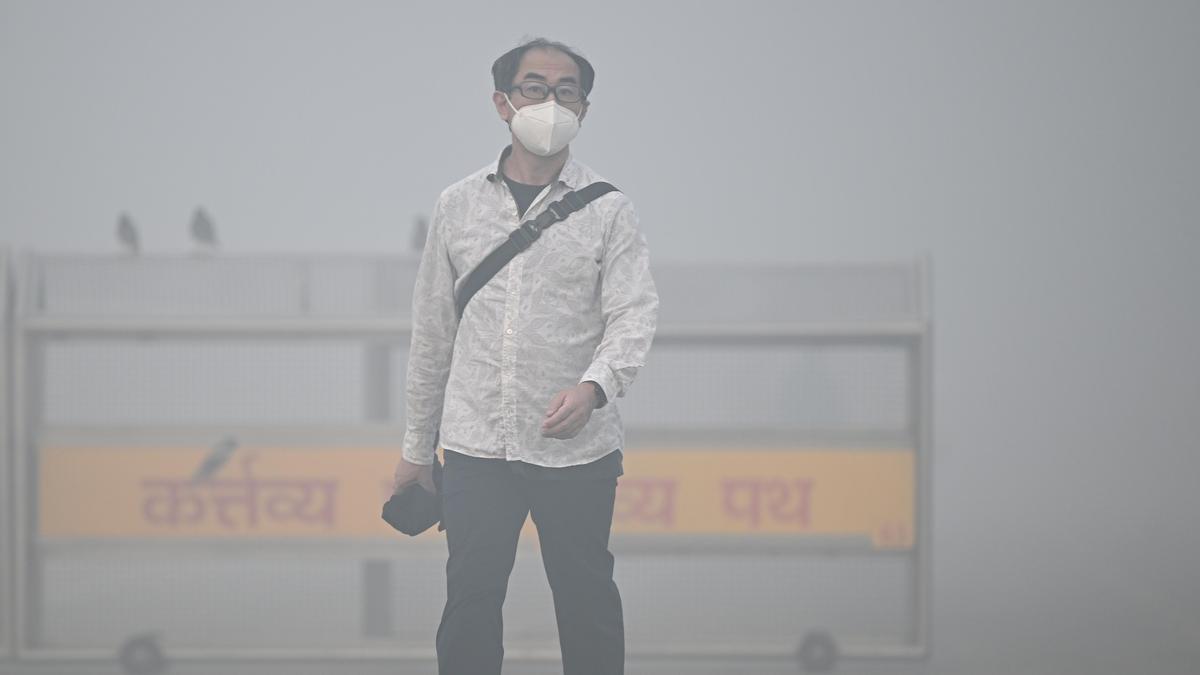
The photograph accompanying the report shows people walking near India Gate, shrouded in thick smog in the early morning after the Deepavali night. It is a reminder of what the numbers are supposed to measure.
What is still unclear
The report does not establish why the stations went offline, or whether the outages were deliberate. It does not confirm that any numbers were altered. The claims come from AAP, and the material available for this report contains no reply from the Delhi government, the CAQM or the CPCB. The party says the central bodies have stayed quiet. Whether they respond, and what the stations’ logs show, will decide whether this stays a political fight or becomes a question of record.
For now, the facts on the table are narrow but serious. Several monitors were unavailable for hours during peak pollution, the official data shows levels far above the WHO guideline, and the opposition party is demanding answers from the agencies responsible for oversight.
TL;DR
- AAP alleges the Delhi government shut down air quality monitors on Diwali night, distorting pollution readings.
- PM2.5 levels in parts of Delhi reportedly hit 66 times the WHO’s 24-hour guideline after firecrackers went off past the Supreme Court’s 10 p.m. deadline.
- Data from several DPCC monitoring stations was unavailable for hours at the peak of pollution on Sunday night.
- AAP Delhi president Saurabh Bharadwaj called the alleged manipulation fraud and said the party has written to CAQM and CPCB.
- The government has not been independently shown to have altered data, and the allegations remain the party’s claims.