Language Policy Shift
CBSE’s new curriculum for Classes 9-12 mandates three languages, with two being Indian languages. English will now be treated as a foreign language. This change promotes multilingualism and cognitive development while reducing over-reliance on English.
Vocational Education Focus
Vocational and skill-based subjects become compulsory for Classes 9 and 10. The aim is to improve employability and connect education with real-world careers. AI and computational thinking will be introduced from Class 3 onwards.
New Books and Approach
New NCERT textbooks are being developed with rigorous review to ensure accuracy and appropriateness. The curriculum emphasises experiential learning, critical thinking, and competency-based assessments over rote memorisation.
Board Exam Implications
Exams will feature diversified question papers testing skills in multiple languages. Assessment will focus more on application and understanding rather than memory. Students will need balanced preparation across languages and subjects.
Alignment with NEP
The changes align with the National Education Policy 2020, promoting flexibility, holistic development, and reduced academic stress. Classrooms are expected to become more dynamic with practical, interdisciplinary learning.
Implementation
The revised framework will be rolled out from the 2026-27 academic session. Schools and teachers will play a key role in smooth transition and supporting students through the changes.
TL;DR
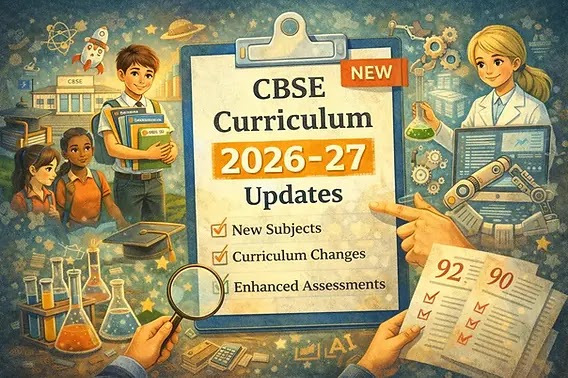
- CBSE new curriculum 2026-27 for Classes 9-12 released.
- Three languages mandatory: two Indian languages, English as foreign language.
- Vocational subjects compulsory in Classes 9-10.
- AI and computational thinking from Class 3.
- New NCERT books under rigorous review for accuracy.
- Shift to competency-based and experiential learning.
- Board exams to focus more on application and skills.
- Aligns with National Education Policy 2020.
- Aims to reduce rote learning and academic stress.
- Implementation from 2026-27 academic session.