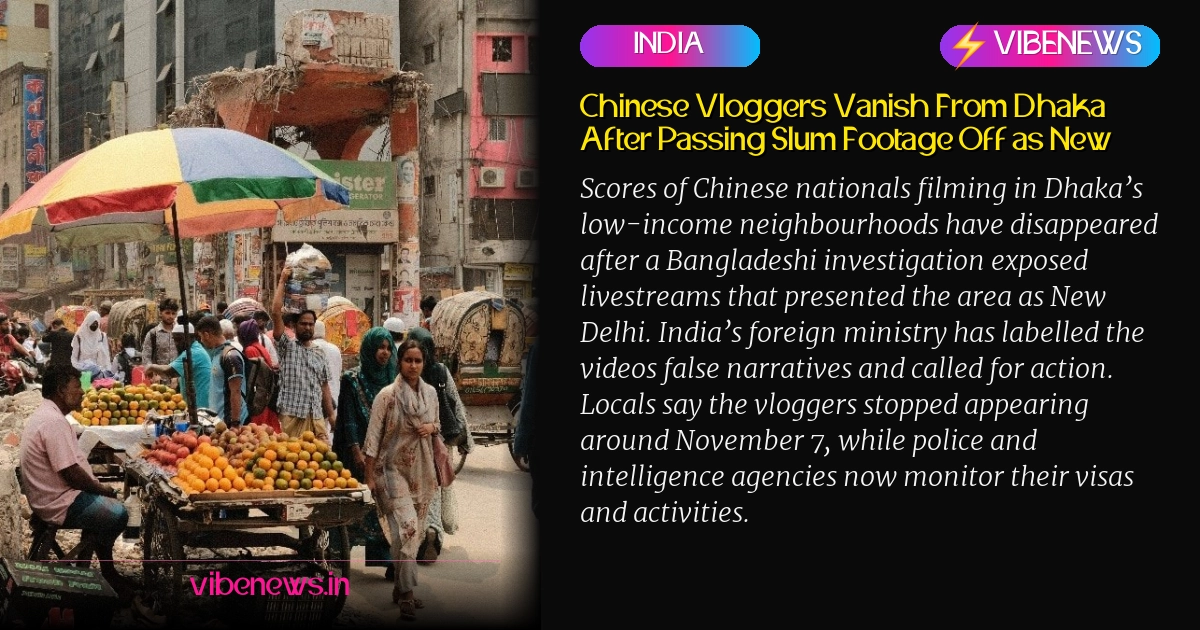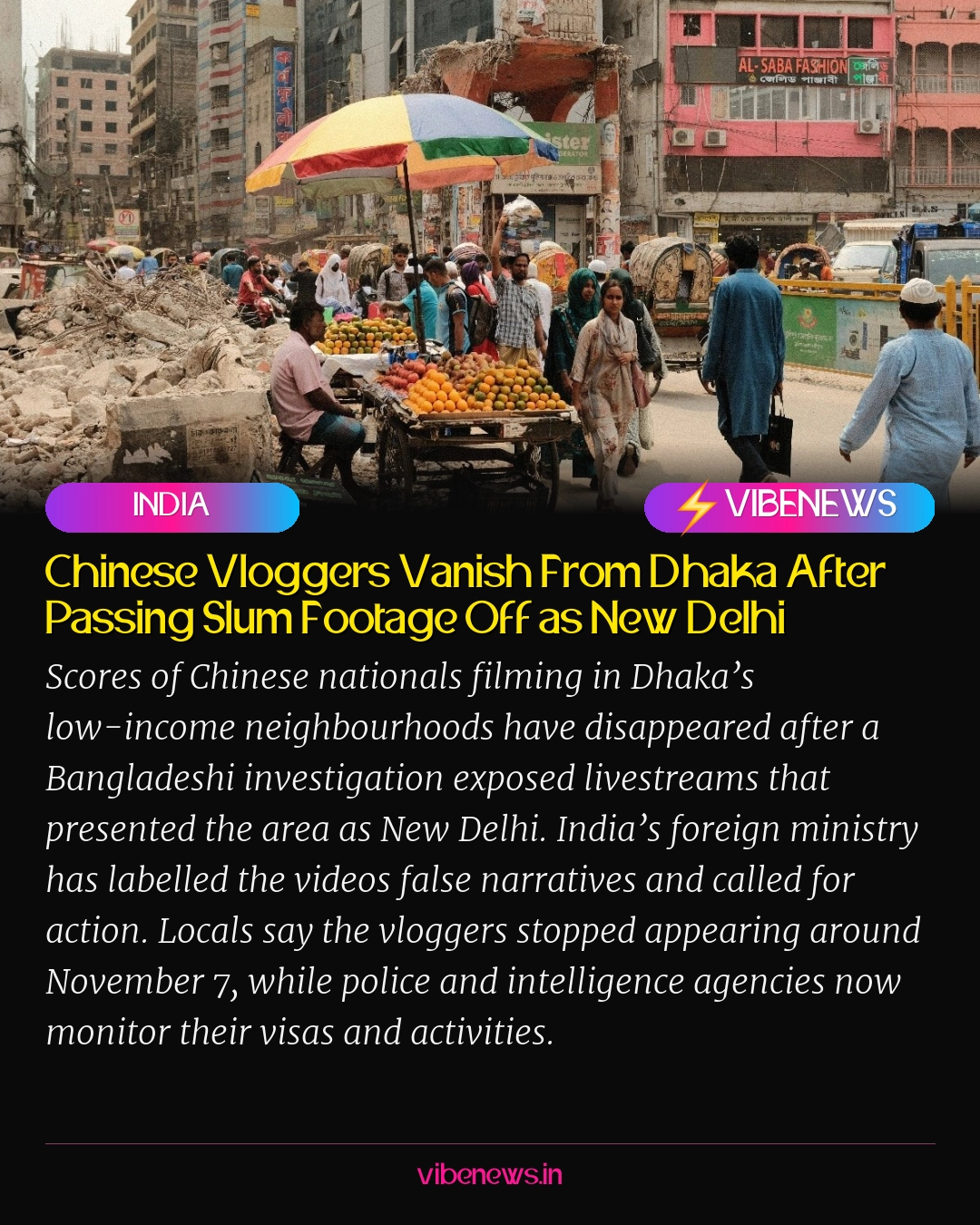
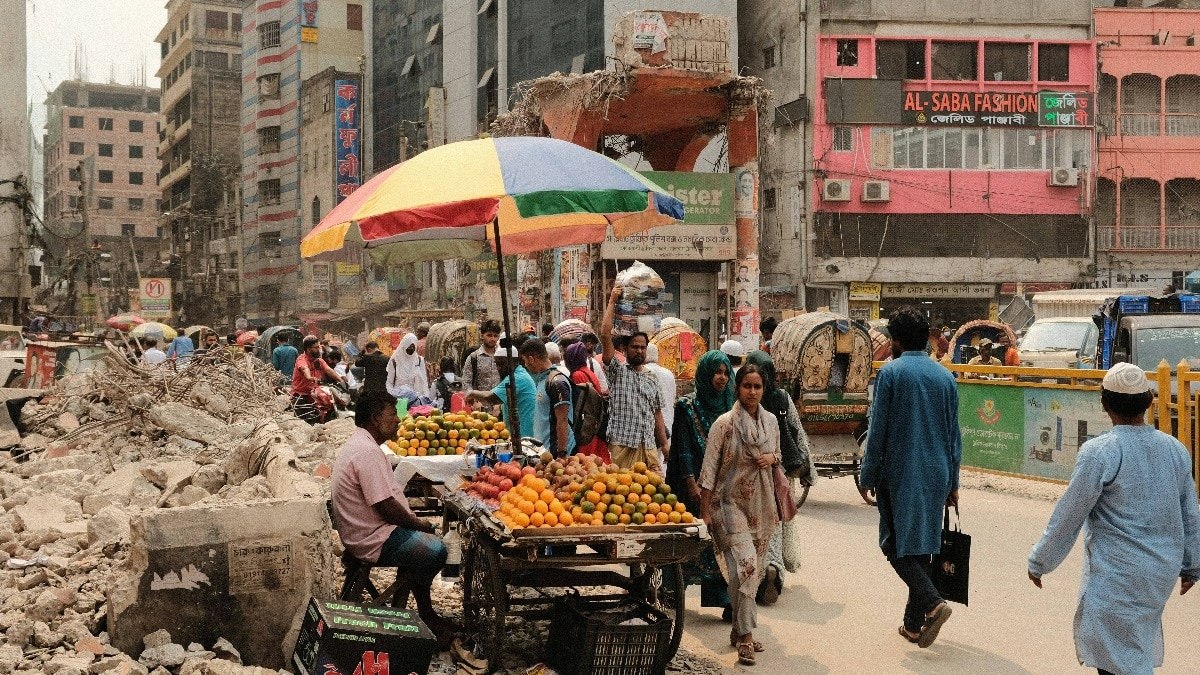
Scores of Chinese nationals who had been livestreaming from Dhaka’s working-class neighbourhoods have disappeared overnight, according to a Bangladeshi newspaper report published on Wednesday, November 11. The vloggers had been filming narrow lanes, shops and homes in Uttara and passing the footage off as scenes from India’s capital.
The newspaper’s correspondents visited the areas named in its earlier reporting, Uttara’s Sector 12 and the adjoining Tekpara, and did not spot any Chinese nationals filming. The report said the vloggers had stopped appearing from November 7, a day after the same outlet published an investigation documenting the activities of more than 150 Chinese nationals.
Residents noticed the change before the reporters did. A rickshaw puller named Imam ul Islam told the newspaper that the bridge had been the group’s base, where they filmed all day and night. “They would film us and the passengers too. I haven’t seen them for some time now. I don’t know if something has happened,” he said. Another resident, Mohammad Selim, had seen several Chinese men and women visiting the neighbourhood every day to film.
What the vloggers were actually filming
The content was not subtle. In the November 6 investigation, the newspaper identified a Chinese woman called Mianmian, who introduced Uttara’s Sector 12 as New Delhi while describing its homes as dirty, underdeveloped and unhygienic. Another Chinese national, Wang Wei, was seen filming at tea stalls in Tekpara. He told viewers that locals were drinking tea made from “cow urine” and “dirty river water.”
The footage was streamed on Chinese platforms, including WeChat and Douyin, and reportedly ran for several months. Earlier reporting by another Bangladeshi outlet in May had already documented Chinese vloggers in Dhaka’s low-income settlements, with videos carrying captions such as “poor,” “dirty” and “slum.” The pattern had been visible for months before the story reached mainstream attention.
India’s response and the diplomatic edge
India’s government did not stay silent. Ministry of External Affairs spokesperson Randhir Jaiswal said the Indian government had taken note of the Bangladeshi media reports and called for appropriate action against those involved. He made the point sharply during a press briefing on November 10, a day after the India Today Digital report had brought the controversy into wider view.
“It is unfortunate that people are using the territory of one country to malign another country.”
Jaiswal went further, saying the peddling of false narratives only undermines the credibility of those who carry it out and of those behind them. “Those who are involved in this and those behind this are both culpable,” he said, urging authorities to act against them.
The political sting is clear. A campaign that uses a poor neighbourhood in one country to mock the living conditions of another puts Dhaka, Delhi and Beijing in an uncomfortable triangle, even though none of the three governments has been shown to have directed the videos.
Bangladesh tightens the screws
Once the reports circulated, Bangladeshi police and intelligence personnel started monitoring the Chinese nationals. Officers checked their visas and passports and questioned why people on tourist visas were doing this kind of filming. Mohammad Khalid Mansur, officer-in-charge of Uttara West police station, told the newspaper that the activity had declined because of the scrutiny. “Due to the activities of law enforcement agencies, such activities by Chinese nationals have decreased. Police and intelligence personnel are monitoring them,” he said.
The crackdown appears to have worked for now, at least on the streets. Whether it has ended the operation is another matter.
Who paid for the streams?
Nobody has answered that question cleanly. The newspaper reported that some Bangladeshis were being paid to assist the vloggers. One Chinese national, identified as Fangyou, reportedly told the paper that the livestreams were part of product-promotion activities, but declined to explain why these particular neighbourhoods had been chosen.
That explanation does not sit comfortably with the content. A product promotion needs an audience and a buyer, and a steady stream of insults about a neighbourhood’s hygiene does not obviously sell anything. Neither the Bangladeshi investigations nor the reporting that followed established whether the vloggers were acting independently or as part of an organised campaign.
Western audiences have long shown a fascination with poverty in South Asia, and India in particular. Poverty tourism, slum vlogging and “Delhi” as a punchline all have a long online history. What makes this episode different is the repackaging. Footage from Dhaka’s poorest lanes was presented as India, and the lens was aimed at people who had no part in the joke.
That is why the question of motive matters. Are these creators chasing a social media trend and the revenue that comes with it, or is this part of a coordinated disinformation effort aimed at India? The available reporting does not settle it, and anyone who claims certainty at this stage is ahead of the evidence.
For now, the streets of Uttara are quieter, and the people who live there say the filming has stopped. The people who were filmed without consent, and then mocked as the backdrop for someone else’s country, have not received an apology or any public accounting. Are these Chinese vloggers gone for good, or have they simply pulled back for a while? Nothing in the reporting so far answers that.
TL;DR
- Scores of Chinese nationals filming in Dhaka’s low-income areas have vanished overnight after Bangladeshi media exposed their livestreams.
- The vloggers had presented Dhaka’s Uttara neighbourhood as New Delhi, calling homes dirty and tea unhygienic.
- India’s foreign ministry said the videos peddle false narratives and called for action against those involved.
- Bangladeshi police and intelligence agencies began checking visas and monitoring the group after the reports.
- No evidence has yet established whether the vloggers acted independently or as part of a coordinated campaign.