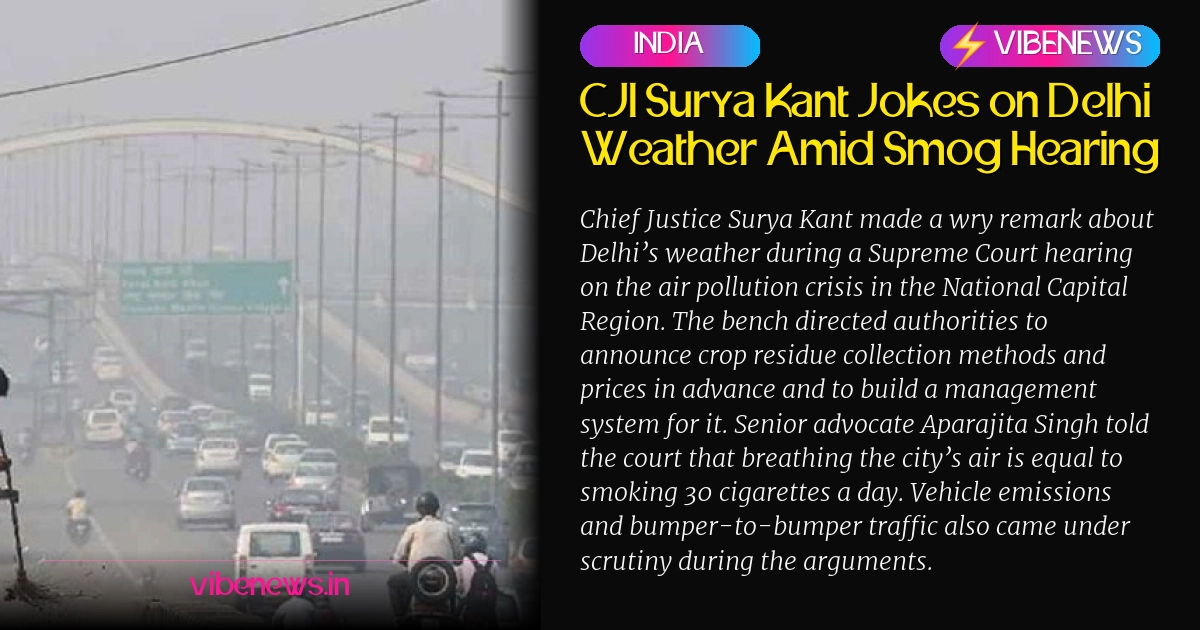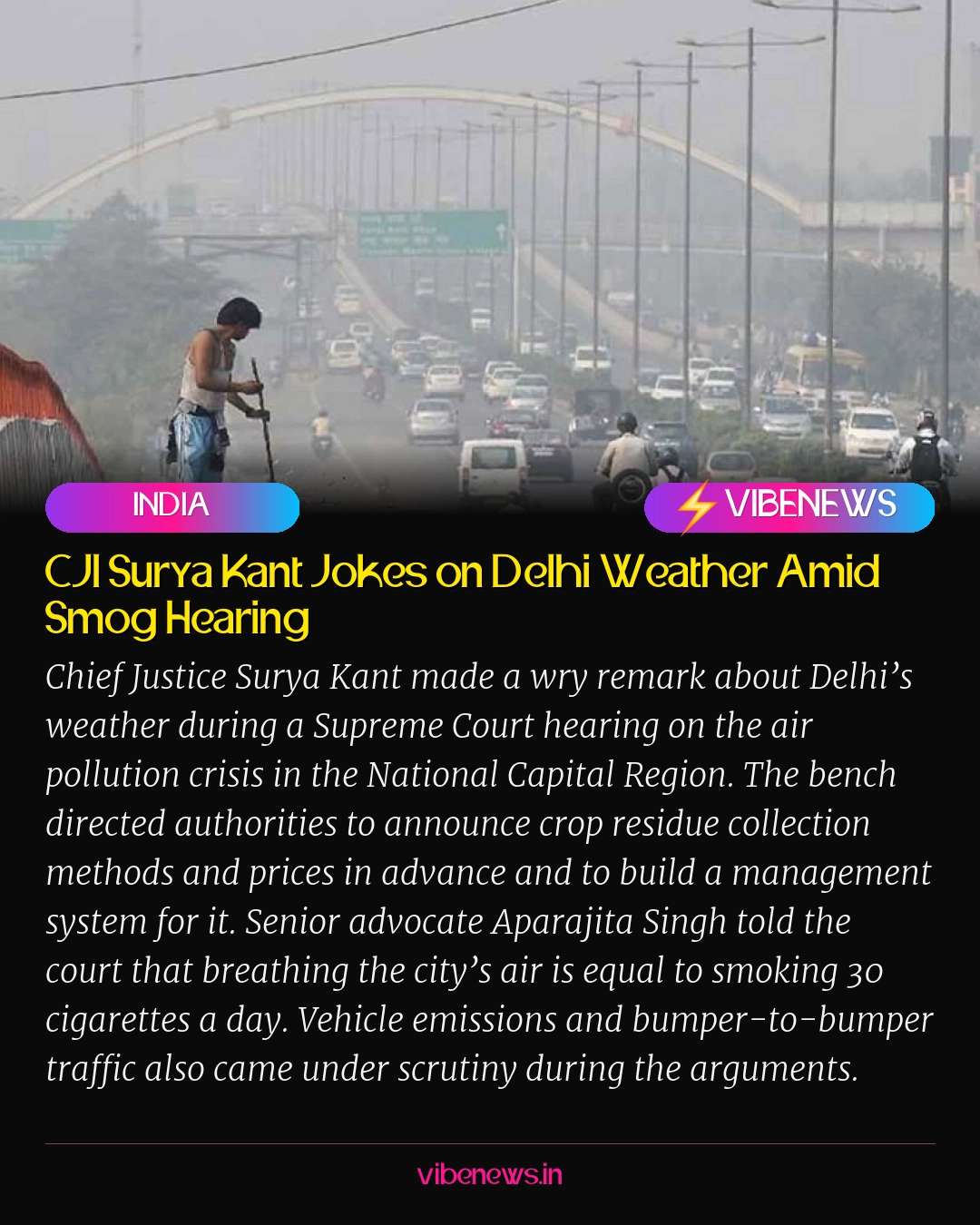
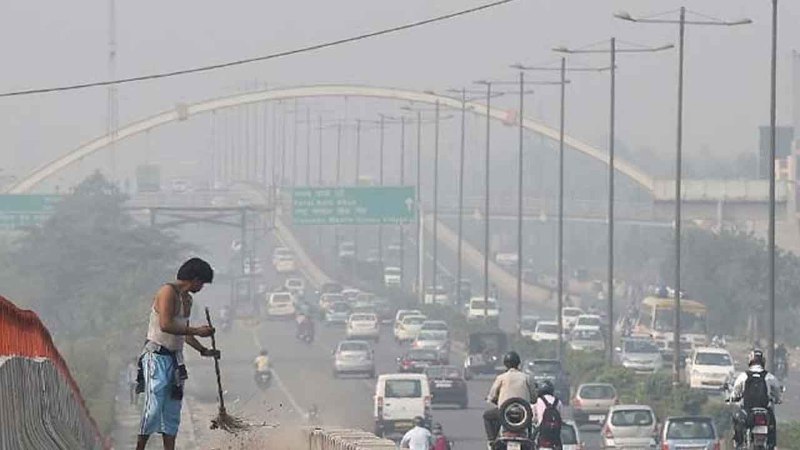
Chief Justice of India Surya Kant made a wry remark about Delhi’s weather during a Supreme Court hearing on the region’s air pollution crisis on Friday, saying he thought everyone was probably enjoying the weather in the capital.
The bench, which also included Justice Joymalya Bagchi and V Mohan, heard arguments on the smog choking the National Capital Region. The court used the hearing to push authorities on how farm waste is handled, and the moment that stood out came when the CJI’s comment hit a room where the air was anything but pleasant.
’I think everyone is probably enjoying the weather in Delhi.’
The remark landed awkwardly because the pollution crisis itself was the subject of the hearing. Senior advocate Aparajita Singh reacted immediately, telling the bench that Delhi’s pollution remains severe. She said it has affected her own throat.
Singh made the point in the starkest terms the hearing produced. Breathing the air in the area, she said, is equal to smoking 30 cigarettes a day. Her comment reframed the courtroom exchange from a light moment into a direct account of what residents are being exposed to.
Crop waste takes center stage
The Supreme Court directed that the method for collecting crop residue, along with its price, should be announced in advance. It also asked for a management system to be built around that collection process. The bench’s focus was practical: if farmers are to stop burning stubble, they need to know in advance how their waste will be picked up and what they will be paid.
The court observed that crop burning appears to have stopped for now, as farmers prepare for the next season. That observation was framed as a positive sign, but it did not settle the larger question of who else contributes to the city’s smog.
Singh told the court that stubble burning accounts for 14 percent of Delhi’s pollution. She also said the city is already heavily polluted to begin with, and that crop burning makes the problem worse on top of that baseline.
Vehicles move into the spotlight
The hearing then turned to transport. The Supreme Court asked the government side what about vehicles and high-end cars, pointing out that a collection system for crop waste had been put in place while traffic emissions remained a major issue.
Singh argued that transportation is the main reason Delhi records such high pollution levels. The CJI agreed that vehicle pollution has become a major problem, noting that traffic on the roads is bumper to bumper.
Rain also featured in the arguments. Those making submissions said rainfall had brought some relief by reducing the pollution level, though the relief was described as limited.
Why the weather line stuck
The CJI’s joke landed because it sat right next to a grim set of facts. A court was hearing about air that one senior advocate compared to a pack-a-day habit, and the presiding judge floated the idea that the city’s residents were enjoying its weather. The contrast was hard to miss, and it made the hearing easy to remember.
What matters now is whether the court’s directions move from the courtroom to the roads and fields. The bench has asked for crop waste collection to be planned in advance, with prices announced ahead of time, and has put vehicle emissions and traffic on the agenda. Those are the points that will determine whether the next hearing sounds different.
For readers following the case, the day’s hearing offered three clear threads: a farm-waste plan that needs to be announced early, a warning that vehicles are a major source of pollution, and a reminder that even a light remark from the bench can reveal how severe the problem feels in the room.
TL;DR
- CJI Surya Kant joked that everyone was probably enjoying Delhi’s weather during a Supreme Court hearing on the NCR air pollution crisis.
- The court directed that crop residue collection methods and prices be announced in advance and that a management system be built.
- Senior advocate Aparajita Singh told the bench that breathing Delhi’s air is equal to smoking 30 cigarettes a day.
- Singer Singh said stubble burning accounts for 14 percent of Delhi’s pollution, while the court noted crop burning appears to have stopped for now.
- The court asked what about vehicles and high-end cars, and the CJI said bumper-to-bumper traffic is a major problem.