Two cyclones that battered coastal Andhra Pradesh within a single week have left coconut growers, farmers and fishing families in the region facing ruin, with thousands of trees flattened, paddy fields wiped out and dozens of boats put out of action.
For generations, coconut palms have been far more than a crop along this coast. They are a source of income, a way of life and, for many families, the only dependable earning they have. That is why the damage now spreading through Dr. B.R. Ambedkar Konaseema and West Godavari districts is hitting so hard.
For generations, coconut trees have been more than just crops for the people in the coastal districts of Dr. B.R. Ambedkar Konaseema, and West Godavari. They have been their livelihood.
Two storms, one week, no time to recover. Andhra Pradesh was struck by two cyclones between October 28 and November 3. The first was a ‘Very Severe’ Cyclonic Storm, named Arnab. The second was a ‘Severe’ Cyclonic Storm, named Murasu. Arnab made landfall on October 28 and 29, when coastal areas of West Godavari and Konaseema were battered by violent gales of around 150 kmph. Murasu then made landfall near Ongole, and the same two districts were hit again when extremely heavy rain pounded them on November 3 and 4.
That back-to-back sequence is what makes this disaster so punishing. Coastal communities had barely begun to assess the first blow when the rain returned and deepened the damage. Fields that were already waterlogged or flattened took a second hit, and orchards that had been battered by the wind were soaked again.
Konaseema bears the heaviest toll in the figures reported. In the district, more than 73,500 coconut trees were uprooted. Paddy was destroyed across 1,18,109 acres. Around 88,000 farmers have been left in tatters, a number that reflects not just the loss of crops but the loss of the season’s income for an entire farming community.
West Godavari has its own grim count. There, 27,397 coconut trees were destroyed, affecting more than 5,000 small and marginal growers. For a small grower, a single palm can represent years of patience. Losing a grove means losing income that does not return for a long time, even after the land is cleared.
The sea-facing communities have not escaped. Dozens of boats were rendered dysfunctional, which means fishing families along the coast cannot go out to earn a living, even as they face the cost of repairing or replacing their vessels. The figures do not say how many boats were lost outright, only that many can no longer be used.
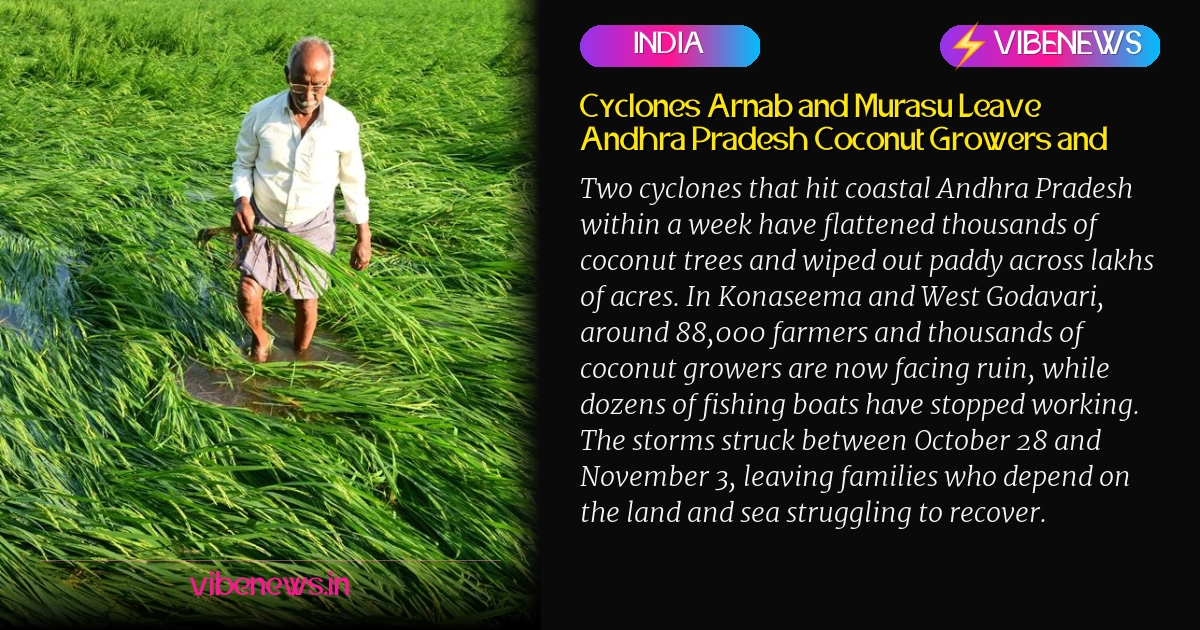
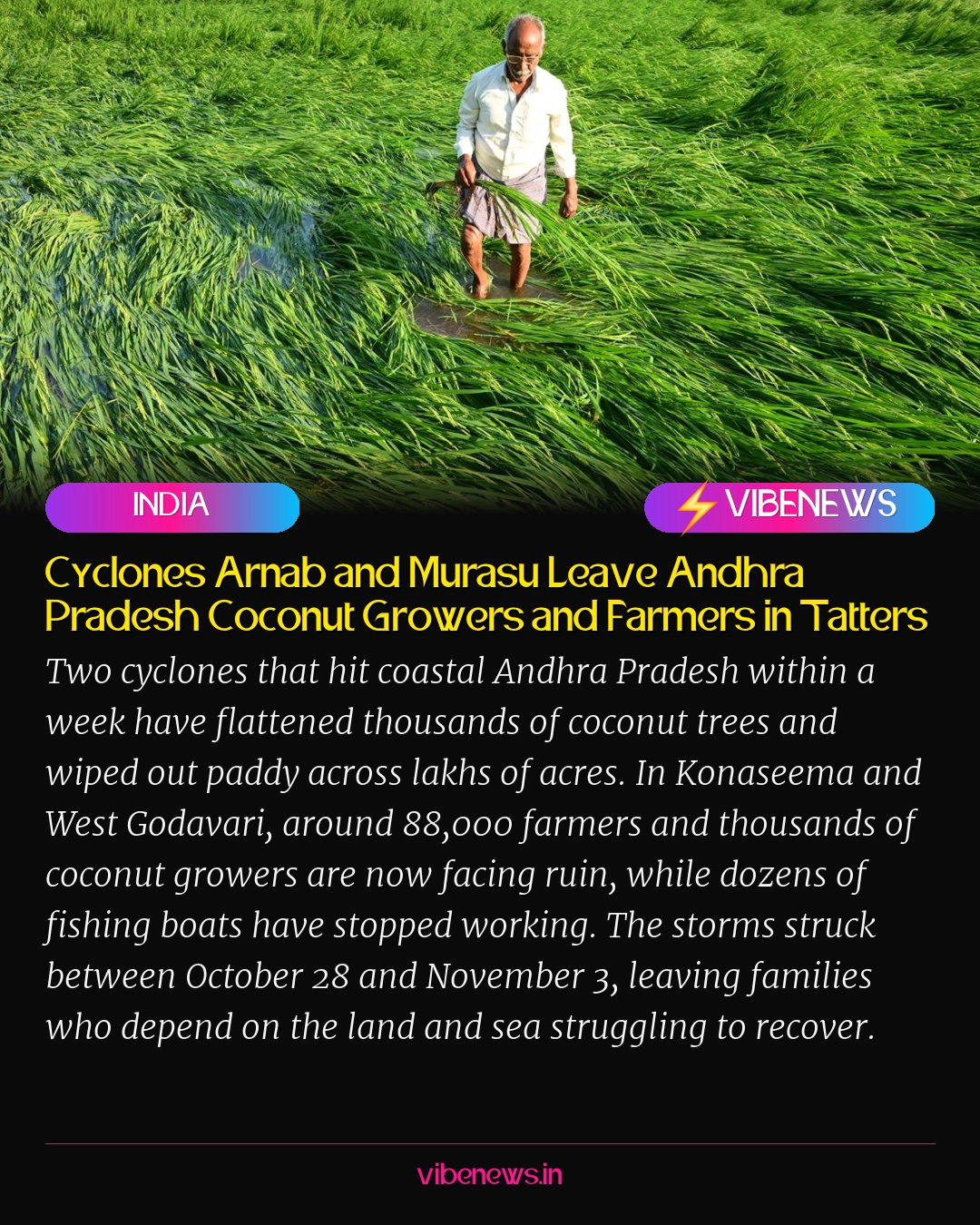
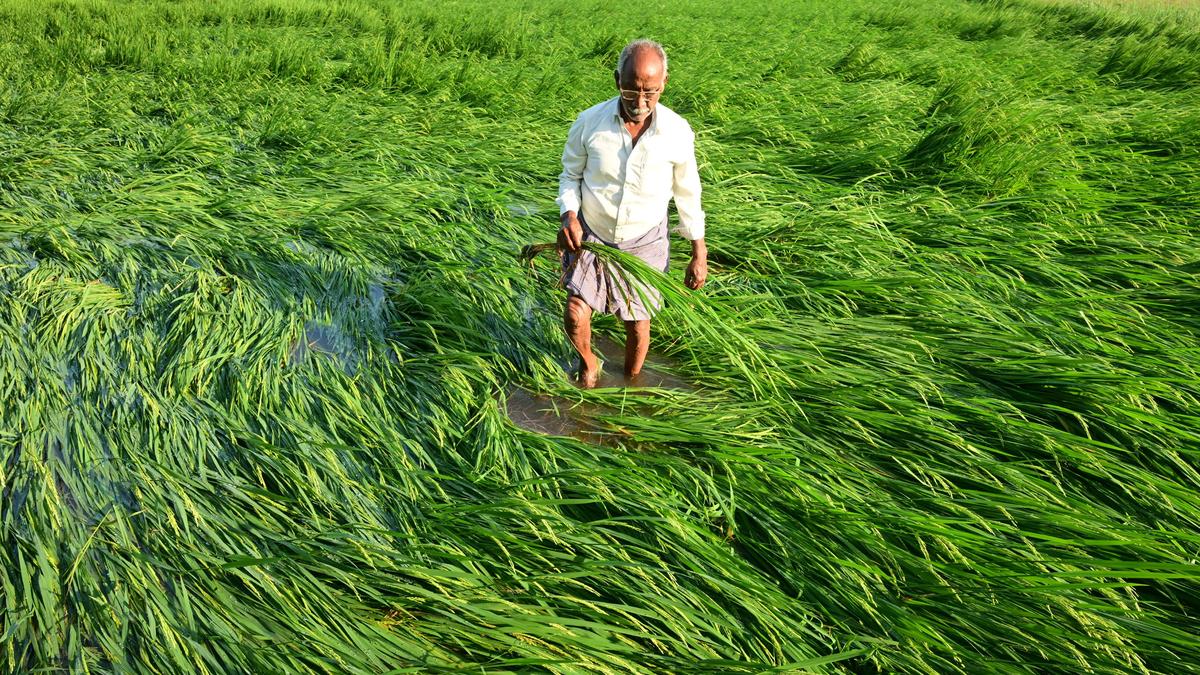
The damage stretches beyond the two worst-hit districts. According to the Andhra Pradesh State Disaster Management Authority, West Godavari, Konaseema and Bapatla were left in ruins. Guntur, East Godavari and Palnadu were also affected. In Guntur, a farmer at Tadepalli mandal was photographed showing his damaged paddy crop after Cyclone Arnab, a image that captures what many farmers across the affected districts are now facing.
Why this matters for Andhra Pradesh. This is not a distant disaster for the state. It hits the core of the coastal economy, where coconut cultivation, paddy farming and fishing sit side by side and often support the same households. When palms fall, paddy drowns and boats stop, the effects ripple through local incomes, daily wages and the businesses that depend on them. The fact that the storms followed one another within a week means that families who were still counting their losses from the first cyclone were already facing the second.
The available reporting makes clear the scale of what has been lost, but it does not give a full picture of what comes next. The figures for Bapatla, Guntur, East Godavari and Palnadu are not detailed in the same way as those for Konaseema and West Godavari, so the full extent of damage in those areas remains uncertain. What is certain is that thousands of families who depend on the coconut groves, paddy fields and sea are now trying to rebuild their livelihoods from a much harder starting point.
TL;DR
- Two cyclones, Arnab and Murasu, struck coastal Andhra Pradesh between October 28 and November 3.
- Konaseema reported over 73,500 coconut trees uprooted and paddy destroyed across 1,18,109 acres.
- Around 88,000 farmers in Konaseema have been left in tatters, according to the reported figures.
- West Godavari saw 27,397 coconut trees destroyed, affecting more than 5,000 small and marginal growers.
- Dozens of fishing boats in the region were rendered dysfunctional, hitting coastal families hard.
- Bapatla, Guntur, East Godavari and Palnadu were also affected, according to the state disaster authority.