Deepinder Goyal says he wants to build as many as 20 generations of Temple, the head-worn wearable his team has been developing, and he admits the goal sounds outlandish. In a recent post on X, the entrepreneur said his team is “delusional enough to think we can build this. And we will.” The first Temple 01 is priced at Rs 85,000 and is set to ship in early 2027. Doctors and health experts, however, have begun asking hard questions about whether the device does what its makers say it does.
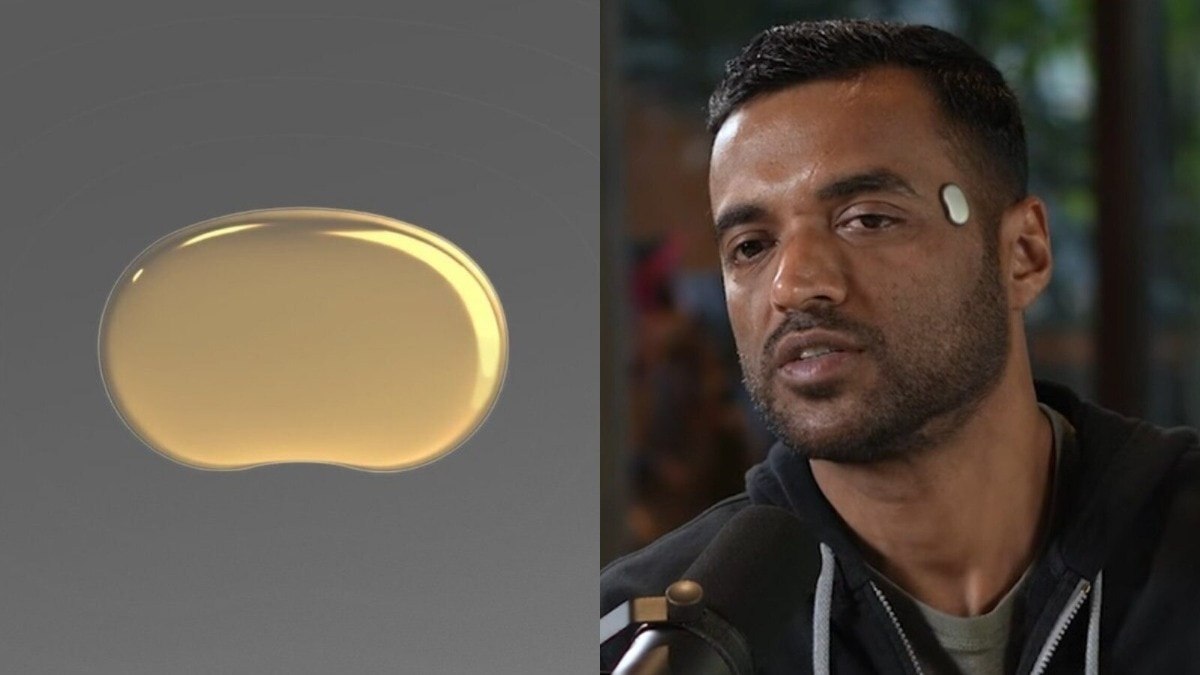
Temple sits against the side of the head, near the temple, and tracks health-related signals. Its bigger ambition, according to Goyal, is to become what he calls the world’s first “room-deaf” voice AI companion. That phrase is doing a lot of work. The device has no microphone, no camera and no screen. Instead, motion sensors pick up vibrations produced by the wearer’s voice and convert them into text.
How the device is supposed to work
The idea is simple to describe. A double tap wakes the device, and small vibrations signal when it starts and stops listening. The wearer can talk to the AI without pulling out a phone. Because the device does not pick up sound from the room, Goyal argues it does not record conversations happening around the user.
Goyal listed several everyday uses. Temple can capture thoughts and ideas, set reminders, remember details from conversations, send messages and log daily activities such as meals and workouts. Users can also record health complaints like headaches and dizziness, which lets Temple build a long-term health record over time.
On the health side, Temple will offer heart rate, HRV, sleep and VO2 max tracking. The team is also working on automatic chewing detection, snoring pattern monitoring, sleep-position tracking, jaw-clenching detection, REM sleep tracking and continuous core body temperature monitoring. Goyal believes these signals could reveal health insights that conventional wrist and finger wearables may miss.
Why the criticism started
Temple has become the subject of a public fight after doctors questioned the science behind its claims. Hepatologist Dr Cyriac Abby Philips, known on X as The Liver Doc, has been one of the most vocal critics.
The central concern is narrow but important. Can a sensor placed against the side of the head accurately measure blood flow inside the brain? Critics argue that detecting changes in blood flow near the skin does not necessarily mean the device can measure cerebral blood flow. Doubts have also been raised about the scientific evidence behind the proposed biological entropy metric.
The backlash grew after Temple opened pre-orders in India at Rs 85,000. Doctors questioned whether the product’s claims have been independently validated before consumers are asked to pay that price.
Goyal’s response
Goyal answered the criticism in a lengthy post on X on November 5, speaking to doctors directly. He rejected accusations that Temple is a scam. The company, he said, had already spent $30 million developing the device, including $20 million from his personal funds.
He also pointed to Temple’s 14-day, no-questions-asked return policy. His argument was that customers would quickly learn whether the product works as promised. The company stands by its research and methods, Goyal said, and he added that preprints and independent studies would provide more scientific validation.
Goyal also drew a line around what Temple is meant to be. It is a fitness and wellness wearable, he said, not a medical device. If any of its metrics are clinically validated, the company would share that validation.
“We are delusional enough to think we can build this. And we will.”
That line captures the tone of the entire project. Goyal is not presenting Temple as a finished product. He describes it as an ongoing research and development effort and invites people to join the journey.
The skeptics are not moving
Goyal’s defense has not satisfied everyone. Philips continued to question the evidence behind the wearable. His argument is that investment figures and return policies do not answer whether its brain-related claims are accurate. A refund window tells a buyer whether a device feels useful. It does not tell them whether a sensor on the temple can measure what happens inside the skull.
That gap sits at the center of the debate. Goyal says the proof will come through preprints, independent studies and, if it exists, clinical validation. Critics want that proof before the pre-orders turn into shipped units.
Goyal, for his part, sounds unbothered. He hinted that some of Temple’s most groundbreaking features have not been made public yet, and he added that some of them have nothing to do with doctors. That remark is likely to sharpen the argument rather than settle it. Until those features are shown, the only things anyone can judge are the claims already on the table, and the science behind them is what doctors are now putting under the microscope.
TL;DR
- Deepinder Goyal says he wants to build 20 generations of Temple, a microphone-free AI wearable.
- The Rs 85,000 Temple 01 is set to ship in early 2027 with AI and health features.
- Temple uses motion sensors to detect vibrations from the wearer’s voice, with no microphone, camera or screen.
- Doctors, led by hepatologist Dr Cyriac Abby Philips, question whether Temple can measure brain blood flow.
- Goyal says the company has spent $30 million on development, including $20 million of his own money.
- Temple comes with a 14-day, no-questions-asked return policy, and Goyal calls it a fitness wearable, not a medical device.