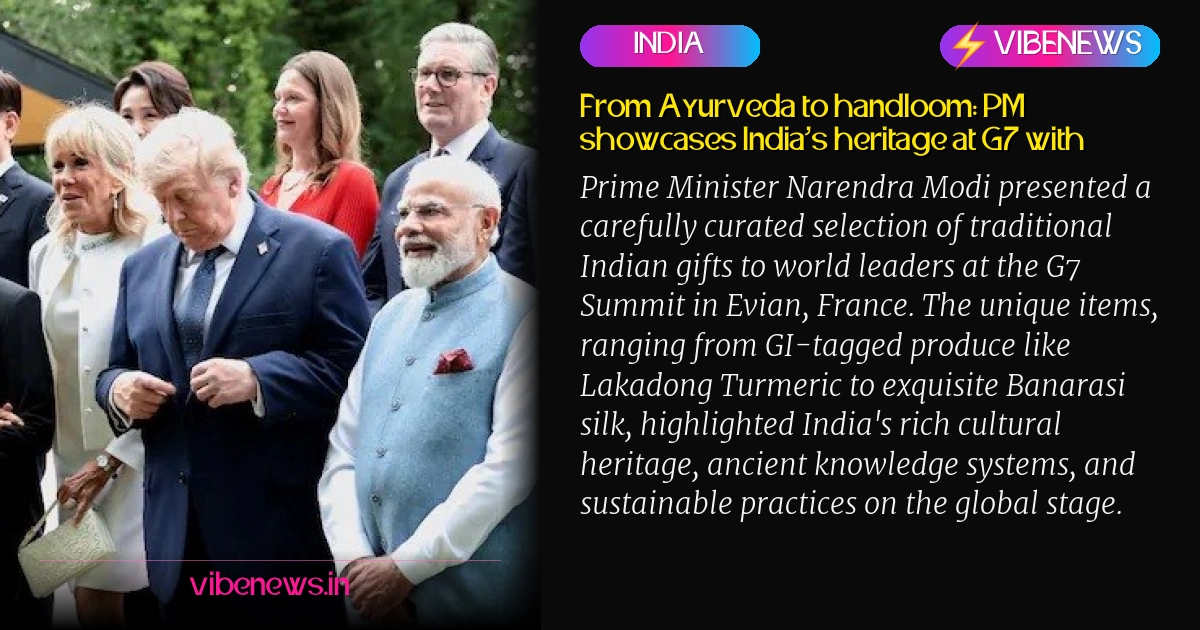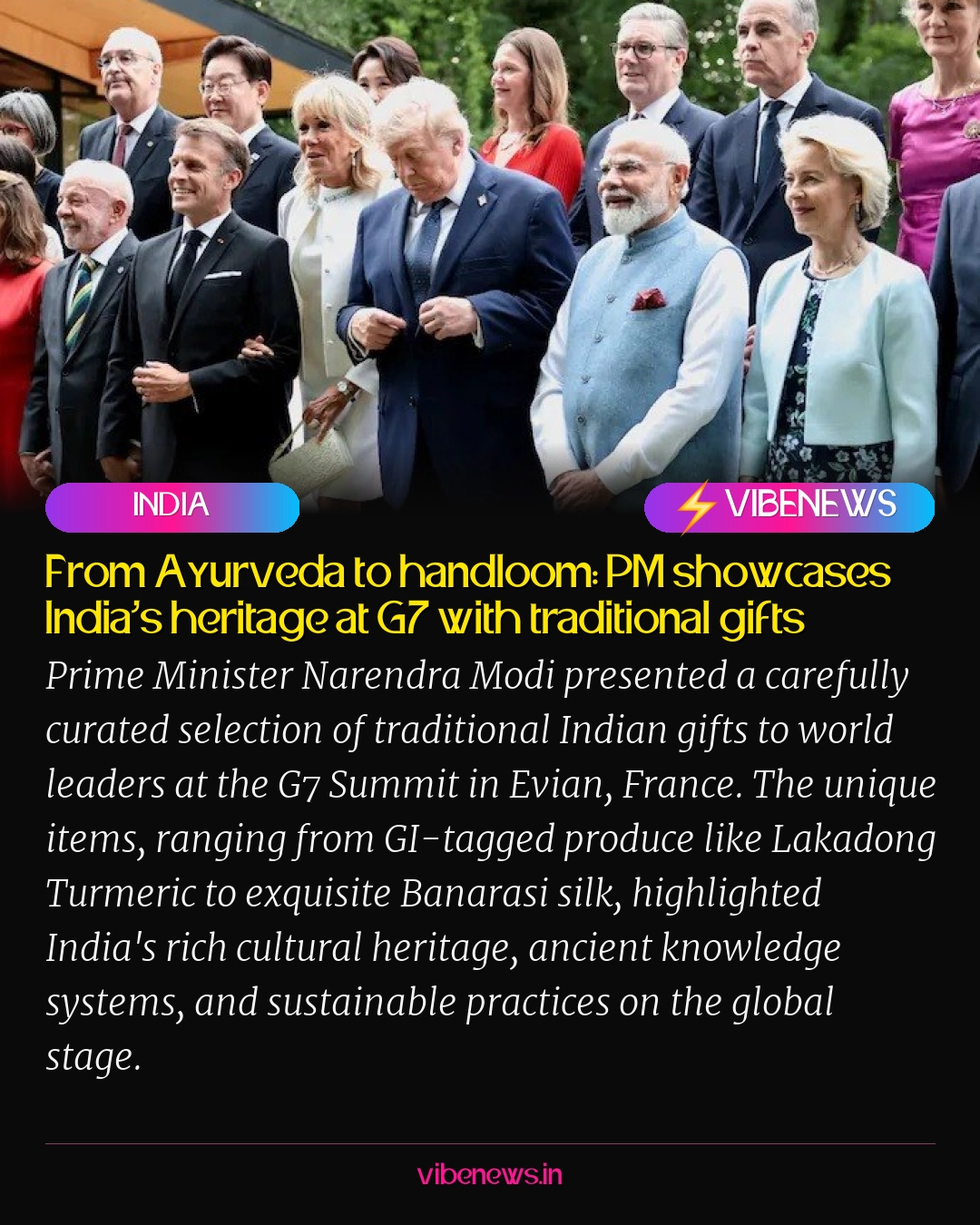
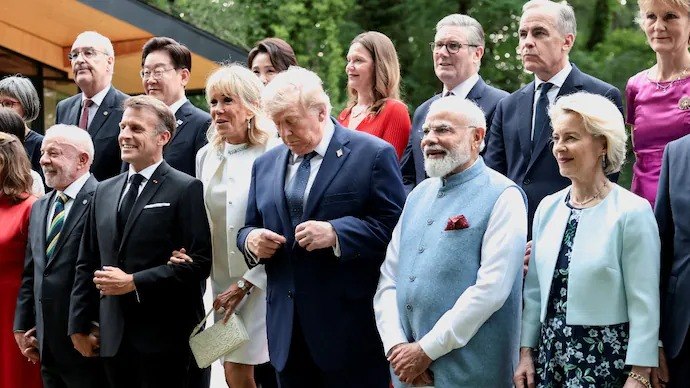
Prime Minister Narendra Modi leveraged the global platform of the 52nd G7 Summit in Evian, France, to showcase India's profound cultural heritage and indigenous traditions through a thoughtful selection of gifts presented to world leaders. This act of cultural diplomacy underscored the nation's rich tapestry of traditional knowledge, sustainable agricultural practices, and centuries-old craftsmanship, making a distinct statement about India's identity on the international stage.
The gifts, meticulously chosen, included Ramban Honey from Jammu and Kashmir, Lakadong Turmeric from Meghalaya, Nagauri Ashwagandha from Rajasthan, and a handwoven Banarasi silk stole from Uttar Pradesh. Each item carried a story of regional distinctiveness and traditional value, collectively reflecting India's diverse cultural landscape and its commitment to preserving indigenous products. Additionally, Slovakia's Speaker Richard Rai received Thekua, a traditional delicacy from Bihar and Jharkhand, further diversifying the cultural offerings.
Ramban Honey, sourced from the picturesque Chenab Valley in Jammu and Kashmir, is celebrated for its unique flavour profile and nutritional benefits. This distinctiveness comes from the region's abundant Himalayan flora. Produced by local beekeepers employing time-honoured methods, this honey holds significant value in Ayurvedic and traditional wellness systems, prized for its natural antioxidants and bioactive compounds that contribute to overall well-being.
From the northeastern state of Meghalaya, Lakadong Turmeric stood out with its exceptionally high curcumin content. Cultivated in the Jaintia Hills, this product has earned a Geographical Indication (GI) tag, signifying its specific origin and quality. Its recognition extends beyond its culinary uses to its health benefits, particularly its potent antioxidant and anti-inflammatory properties. The cultivation of Lakadong Turmeric also symbolises the sustainable farming practices deeply embedded within local communities.
Another GI-tagged offering was Nagauri Ashwagandha, originating from Rajasthan's Nagaur district. This variety is considered among the finest of the medicinal herb, widely integrated into Ayurvedic practices. Ashwagandha is traditionally associated with enhancing vitality, boosting immunity, and promoting overall well-being. Its cultivation not only preserves India's traditional medicinal heritage but also provides crucial support for rural livelihoods in the region.
The Banarasi silk stole, a masterpiece woven by skilled artisans in Varanasi, represented India's illustrious textile tradition. Renowned for its intricate zari work and elaborate motifs, Banarasi silk remains one of the country's most prestigious handloom products. It stands as a powerful symbol of enduring craftsmanship and the artistic legacy passed down through generations of weavers, embodying elegance and cultural depth.
The presentation of Thekua to Slovakia's Speaker highlighted India's culinary heritage. This traditional sweet snack, prepared from wheat flour, jaggery or sugar, ghee, and fennel seeds, is deeply intertwined with the Chhath festival in eastern India. Known for its rustic flavour and long shelf life, Thekua carries significant cultural resonance, representing the festive traditions and rich culinary diversity of Bihar and Jharkhand.
Prime Minister Modi's choice of gifts at the G7 Summit served a dual purpose: to foster goodwill among global leaders and to subtly promote India's soft power. By presenting items rooted in ancient wisdom, sustainable practices, and artisanal excellence, India projected an image of a nation proud of its heritage and committed to preserving its unique traditions. This strategic cultural outreach aimed to deepen understanding and appreciation for India's diverse contributions to the world, beyond just economic or political discussions.
Following the summit, Prime Minister Modi described his engagements in Evian as productive, indicating the positive reception of India's participation and its cultural offerings. This initiative effectively placed India's traditional knowledge systems and indigenous products on a prominent global platform, encouraging international recognition and potentially opening new avenues for cultural exchange and economic opportunities for local artisans and farmers. The curated gifts thus became ambassadors of India's rich legacy, leaving a lasting impression on the world stage.
TL;DR
- Prime Minister Narendra Modi presented a range of traditional Indian gifts to world leaders at the 52nd G7 Summit in Evian, France.
- The gifts included Ramban Honey, Lakadong Turmeric, Nagauri Ashwagandha, and a Banarasi silk stole, showcasing India's diverse cultural heritage.
- Each item highlighted specific regional traditions, from Ayurvedic knowledge to sustainable farming practices and intricate handloom craftsmanship.
- Ramban Honey from Jammu and Kashmir is valued for its distinct flavour and Ayurvedic properties, produced by local beekeepers.
- Lakadong Turmeric from Meghalaya, a GI-tagged product, is known for its high curcumin content and represents sustainable farming.
- Nagauri Ashwagandha from Rajasthan, also GI-tagged, is a fine medicinal herb used in Ayurveda, supporting rural livelihoods.
- The Banarasi silk stole from Varanasi symbolised India's prestigious textile tradition and enduring artisanal skill.
- Thekua, a traditional delicacy from Bihar and Jharkhand, was presented to Slovakia's Speaker, representing India's culinary heritage.
- This cultural diplomacy aimed to promote India's soft power, foster global goodwill, and showcase the nation's unique indigenous products and ancient wisdom.