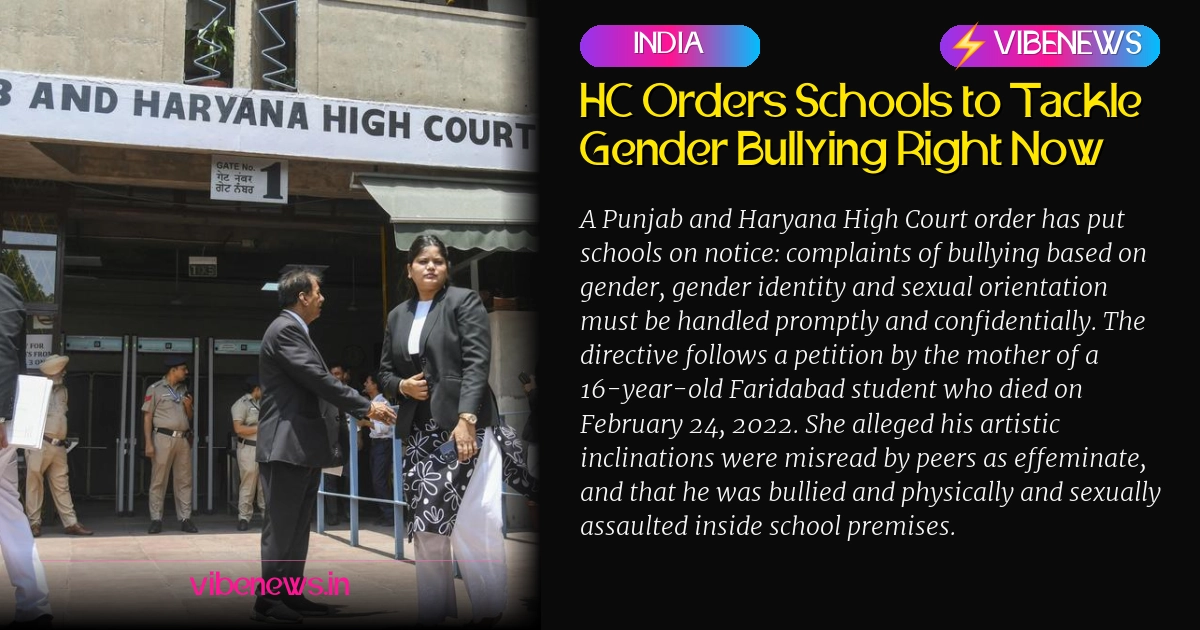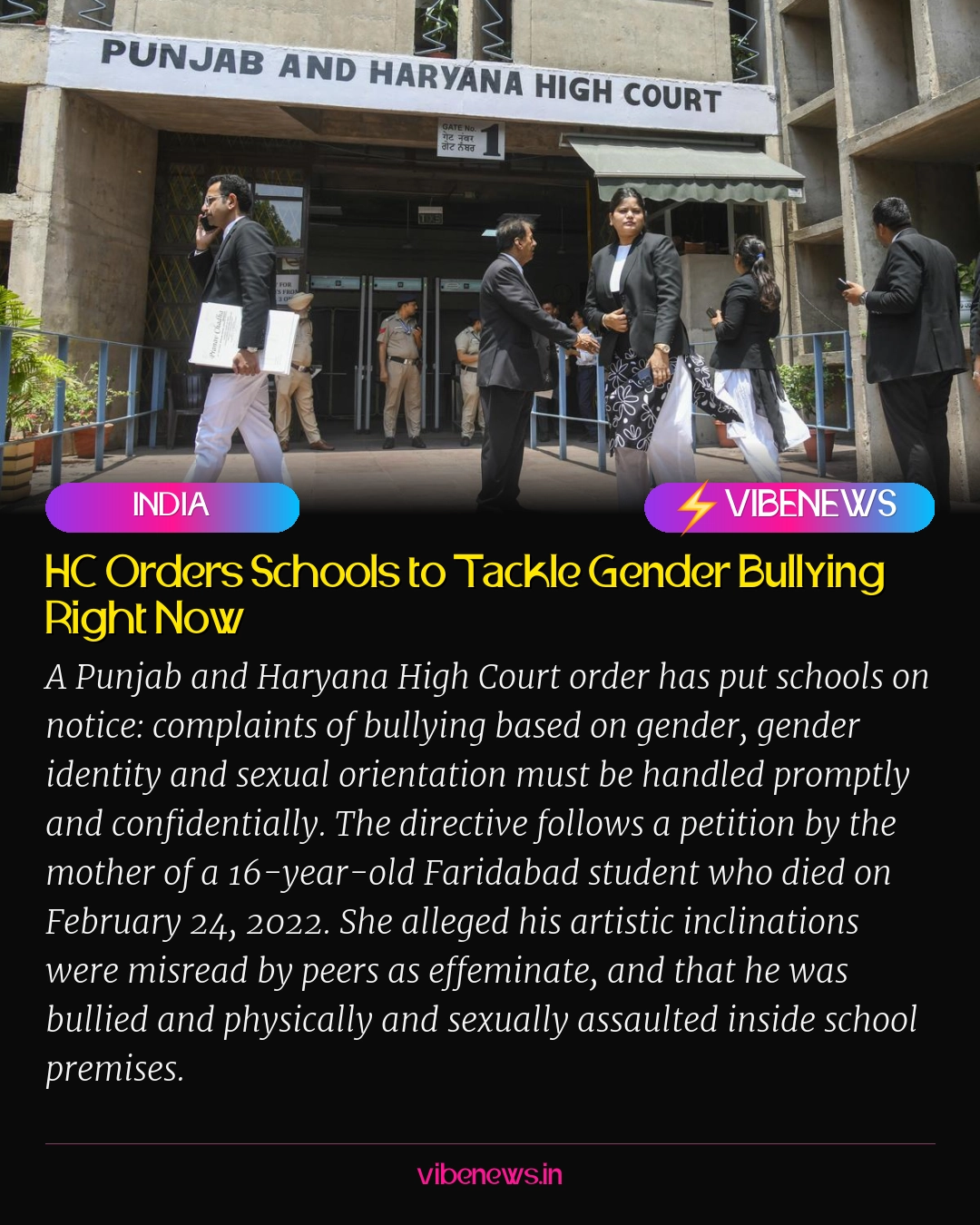
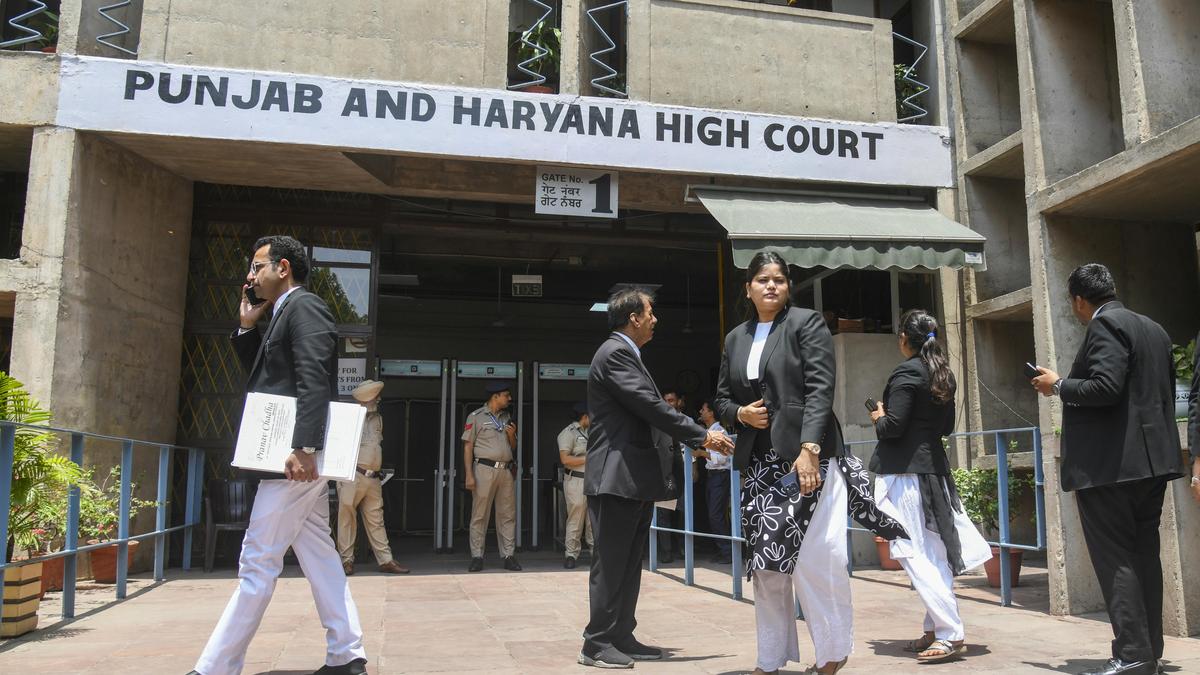
The Punjab and Haryana High Court has directed the Department of School Education, Haryana, and the Central Board of Secondary Education to ensure that every school under its jurisdiction complies with the Supreme Court’s guidelines in the Sukdeb Saha case. The order is specific: each school’s internal committee must be able to take complaints of bullying and harassment based on gender, gender identity and sexual orientation. For parents and educators, this is no longer a suggestion. It is a binding obligation that the court wants enforced now.
The case began with a mother’s petition. Her son was a 16-year-old student at a prominent school in Faridabad, and he died on February 24, 2022. According to the petition, his artistic inclination was misunderstood by his peers as being effeminate. He was bullied, and he was physically and sexually assaulted by a group of students within the school premises. The petition also accuses the school authorities and the headmistress of failing him.
The mother asked the court for much more. She wanted fresh guidelines to sensitise authorities and educational institutions, aimed at preventing harassment of students from the LGBTQIA+ community. She wanted those rules enforced in schools and colleges across the country. She also sought a Central Bureau of Investigation probe into her son’s case.
The court refused the demand for new guidelines. Its reasoning was direct. The Supreme Court, in the Sukdeb Saha case, had already taken note of the growing crisis of student deaths in the country. Because the apex court’s binding guidelines already cover the field, the high court said, writing a separate set of rules on the same subject would serve no useful purpose.
But the court did not stop there. It put the real failure on the record. The problem was never the absence of rules. The judges observed that the facts of this case showed that “guidelines which remain on paper offer little protection to a child in distress.”
“guidelines which remain on paper offer little protection to a child in distress”
The court pointed to the timeline. A CBSE circular issued in 2015 was in force throughout the period when the child is alleged to have suffered. The school, the court noted, had been told about his condition by his mother and by his treating psychologist. The rules existed. The warnings reached the school. The question, the court said, was what happened next.
That is why the judges called the central issue “the effective implementation of the existing guidelines at the level of the schools.” In plain terms, the court is telling school administrations that paperwork does not count as protection. A committee that exists only on a notice board does not stop a child from being hunted by classmates.
What schools must now do. The court has given the Haryana School Education Department a clear instruction. Complaints of bullying and harassment must be “dealt with promptly and confidentially.” Where a cognisable offence is disclosed, the cases must be reported to the police as required by law. Silence or internal handling that buries a criminal complaint is not an option under this order.
The CBSE also faces direct obligations. The board must ensure that the annual reports that schools are required to submit to it under the Supreme Court guidelines are actually called for. Those reports must be duly scrutinised. If a school fails to comply, the court has ordered that appropriate action be taken in accordance with the CBSE’s bye-laws. That turns a reporting requirement into something with consequences attached.
For parents, the message is practical. If your child is being bullied because of their gender identity, their sexual orientation, or simply because they do not fit a rigid idea of masculinity or femininity, the school is legally required to act. You should put complaints in writing, ask for the internal committee’s process, and keep a record of every step. If the conduct involves a crime, the order makes clear that the school must involve the police.
For educators, the order removes any ambiguity about the standard. The question is no longer whether a policy exists. The question is whether it works when a frightened child walks into the principal’s office. The mother in this case had done what the system asks. She informed the school. A treating psychologist had also raised the alarm. The court’s finding suggests that the machinery still failed to respond.
The order also carries a stark reminder about who pays when institutions do not act. The petition describes a teenager whose creative interests made him a target, and who was subjected to violence within a school that was supposed to protect him. The court did not rule on the allegations against the school or its headmistress in this report’s framing, but the directions it has issued show how seriously it views the failure to implement existing safeguards.
The ruling arrives at a time when the Supreme Court’s guidelines are already the governing reference point for schools. The high court’s intervention makes that reference point harder to ignore. Schools within the court’s territorial jurisdiction now have to show that their internal committees cover bullying tied to gender, gender identity and sexual orientation. They must also show that complaints are handled with confidentiality and that criminal matters go to the police.
Anyone who is in distress, or who knows a student who is, can seek help and counselling through helplines. The order itself links to resources for people who need support, and that is a reminder that the legal mandate matters most when it reaches the child who needs help today. The court has made the expectation plain. Schools must act on complaints immediately, not after another tragedy forces the issue.
TL;DR
- Punjab and Haryana High Court orders schools to act on gender and sexual orientation bullying immediately.
- Complaints of bullying based on gender, gender identity and sexual orientation must be dealt with promptly and confidentially.
- Cases disclosing a cognisable offence must be reported to the police, as required by law.
- The court said guidelines that remain on paper offer little protection to a child in distress.
- The case involves a 16-year-old Faridabad student who died on February 24, 2022.
- The CBSE must scrutinise annual school reports and act on non-compliance under its bye-laws.