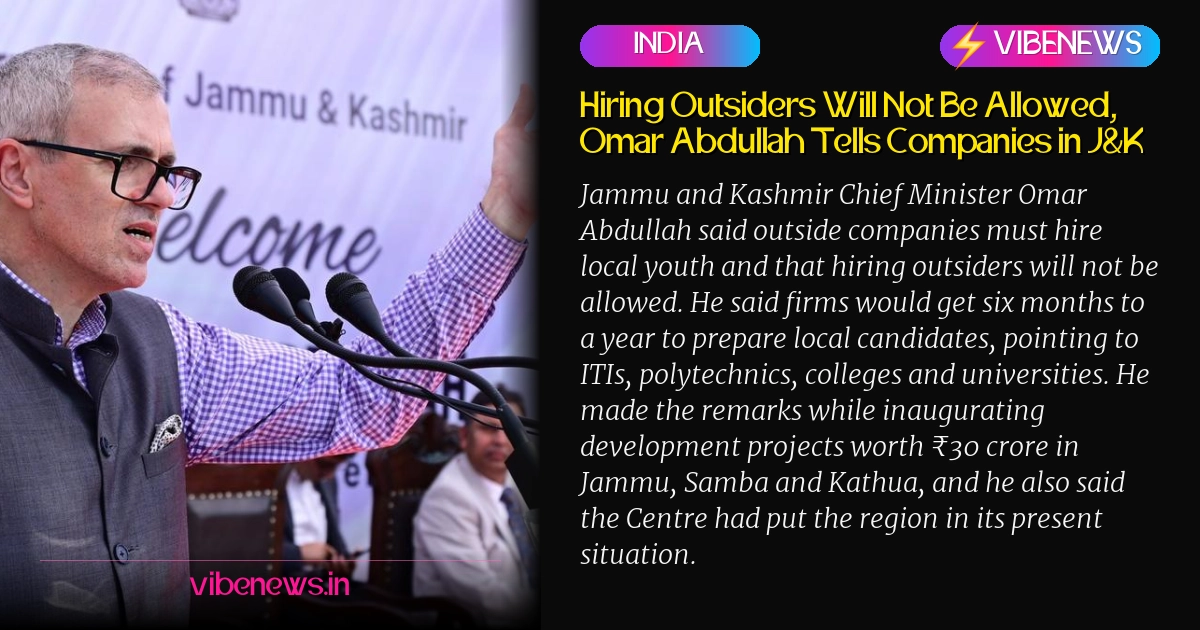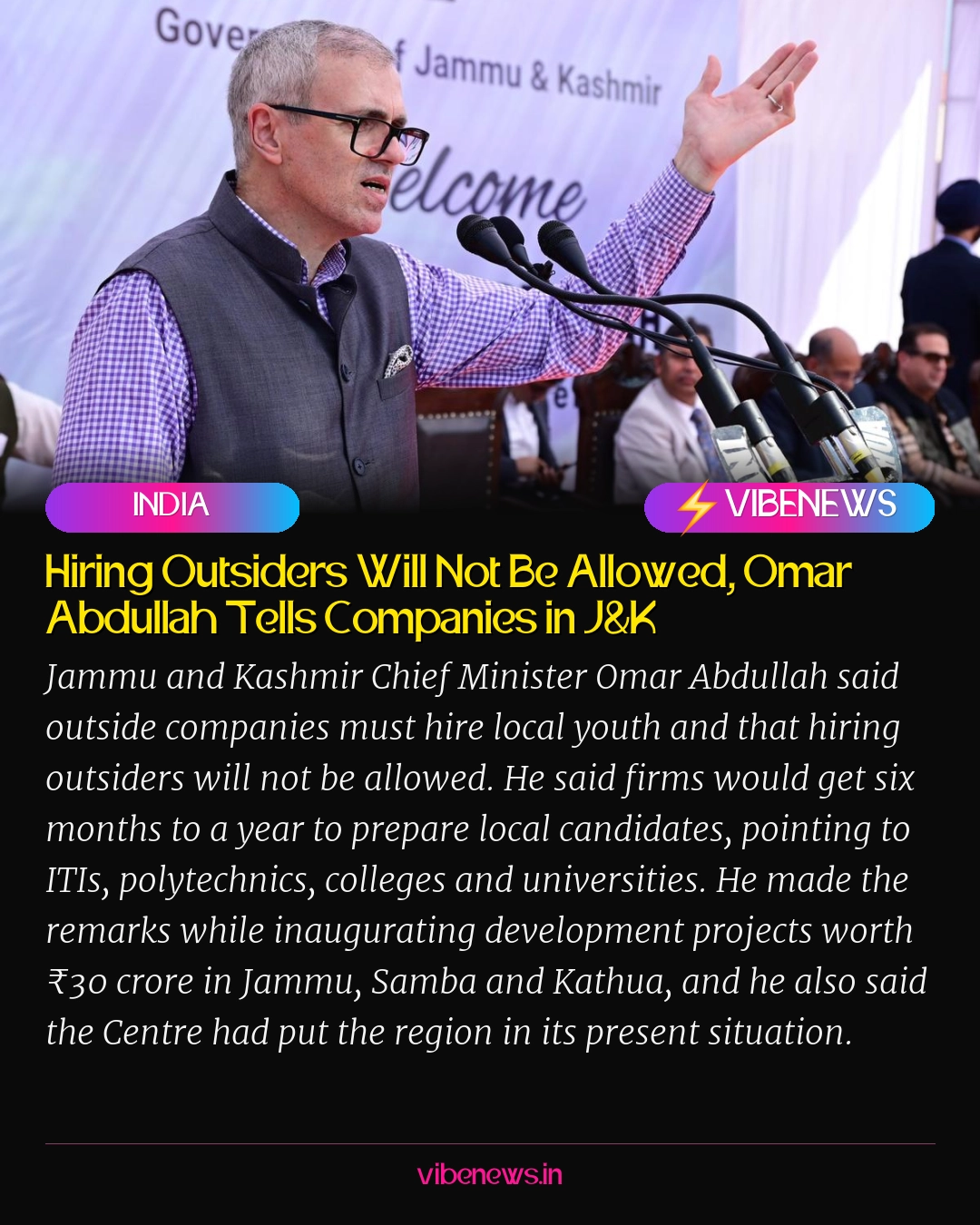
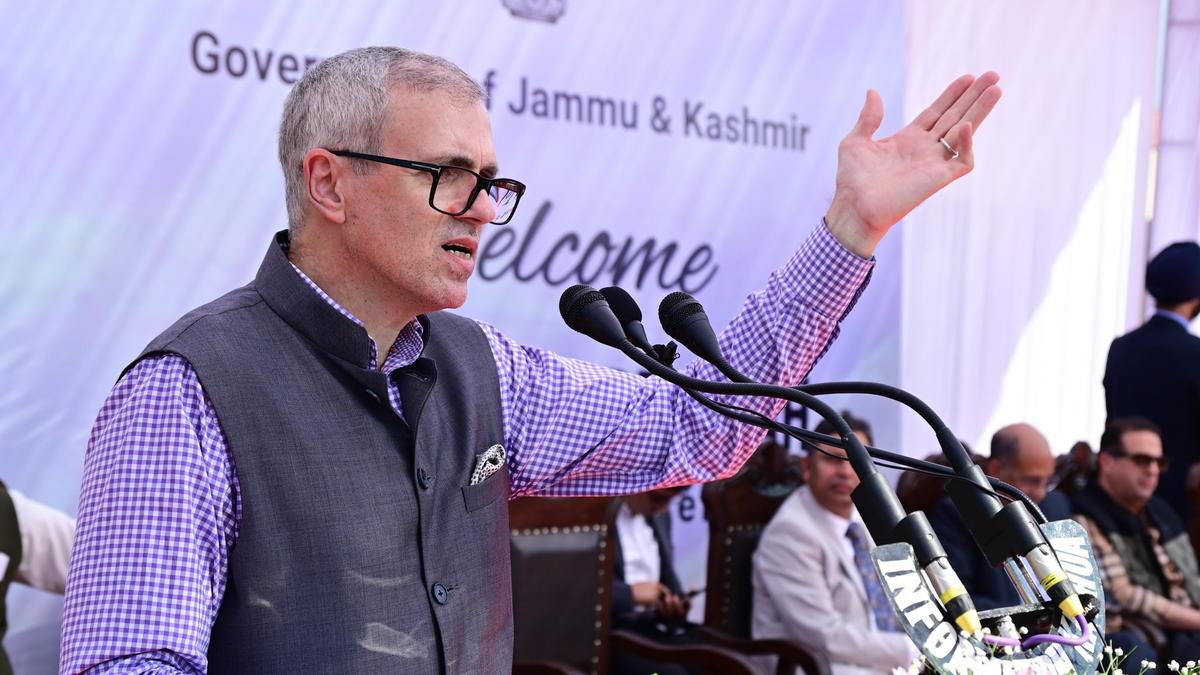
Jammu and Kashmir Chief Minister Omar Abdullah said on Tuesday that companies from outside the region must hire local people, and that hiring outsiders will not be allowed.
The statement came on November 17, 2026, during the inauguration of development projects worth ₹30 crore in Jammu, Samba and Kathua districts. Abdullah was addressing an audience that included businesses and officials connected to those works, and he made clear that the message was meant for employers who bring in workers from elsewhere.
The shortage excuse
The line that drew the most attention was his answer to a familiar argument from employers, that trained local workers are simply not available. Abdullah rejected it outright. “The excuse that trained youths are not available will not work,” he said. He offered companies a timeline instead: six months or one year, during which the government would prepare local youth for the jobs on offer.
He pointed to the institutions that the government can use for that task. Industrial Training Institutes, polytechnics, colleges and universities, he said, already exist in the region and can be used to build a workforce that companies say is missing.
Abdullah also argued that the talent is already there. He said youths from Jammu and Kashmir have no shortage of ability, and that they only need a chance. His words were blunt: “We will not tolerate excuses at the cost of our children’s future.”
A claim about talent, and a point about migration
Abdullah framed his argument around a record he said speaks for itself. Young people from Jammu and Kashmir, he said, are serving the country in many fields, and wherever they get a chance, they make an impact. “Wherever you look, you will find young people from J&K serving the country. The moment they get a chance, they leave their mark.”
That argument carries a sharp edge. If local youth are already succeeding across India, then the complaint that outside firms cannot find them becomes harder to defend in the eyes of many residents. It also shifts the discussion from whether the region has skilled people to whether companies are willing to train and hire them.
The debate behind the warning
The central tension here is between protecting jobs for people who live in a region and keeping open a national labour market where companies can move workers wherever the skills are. Abdullah’s position leans clearly toward the first. He is telling outside employers that the region’s young people come first, and that the state will help produce the workers they need rather than letting companies bring in their own.
Critics of such restrictions usually argue that they can raise costs for employers, slow down projects and discourage investment, especially when specialised skills are scarce. Supporters argue that an open market without local preference can leave local graduates behind, even in their own districts. The source report does not spell out how the proposed hiring rule would be applied, which companies would be covered, or what penalty a firm would face for breaking it. Those details matter, and they remain unclear.
What is clear is the political message. A chief minister is publicly tying employment to development spending and to the future of young people in Jammu and Kashmir. The projects Abdullah inaugurated, worth ₹30 crore across Jammu, Samba and Kathua, are part of the government’s effort to show that development is reaching the entire region. His argument is that jobs created by that development should go first to the people who live there.
Anger over the region’s status
Abdullah’s remarks also carried a sense of frustration about the region’s political position. He said Jammu and Kashmir did not become a Union Territory by choice. “This situation would never have arisen if it were up to us. The Central Government has put us in this difficult situation. Working under these circumstances is not easy.”
He then said he would not make excuses because of those circumstances. That line connects the jobs debate to the larger question of who controls decisions in the region. Local leaders are being asked to deliver employment and development while, in Abdullah’s telling, the power to shape those outcomes sits elsewhere. That gap between responsibility and authority is likely to remain at the centre of his government’s messaging.
For now, the public record is his statement and the timeline he set for companies. Whether firms respond by training local workers, pushing back, or seeking exemptions is not yet known. The coming weeks will show whether the warning becomes a policy that employers have to follow, or remains a demand that leaves young people waiting.
TL;DR
- Omar Abdullah said on November 17, 2026 that outside companies must hire locals and that hiring outsiders will not be allowed.
- He rejected the claim that trained youth are unavailable and gave firms six months to a year to prepare local candidates.
- The chief minister pointed to ITIs, polytechnics, colleges and universities as sources of trained workers in the region.
- He made the remarks while inaugurating development projects worth ₹30 crore in Jammu, Samba and Kathua districts.
- Abdullah said the Centre had put Jammu and Kashmir in its current Union Territory situation, not the government’s choice.