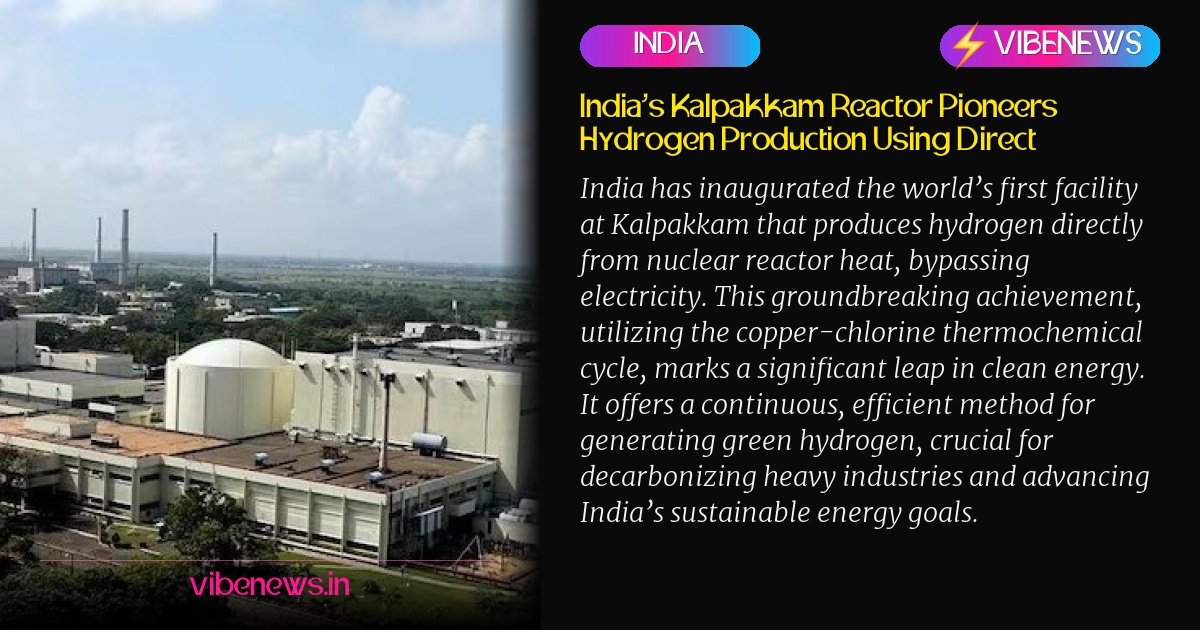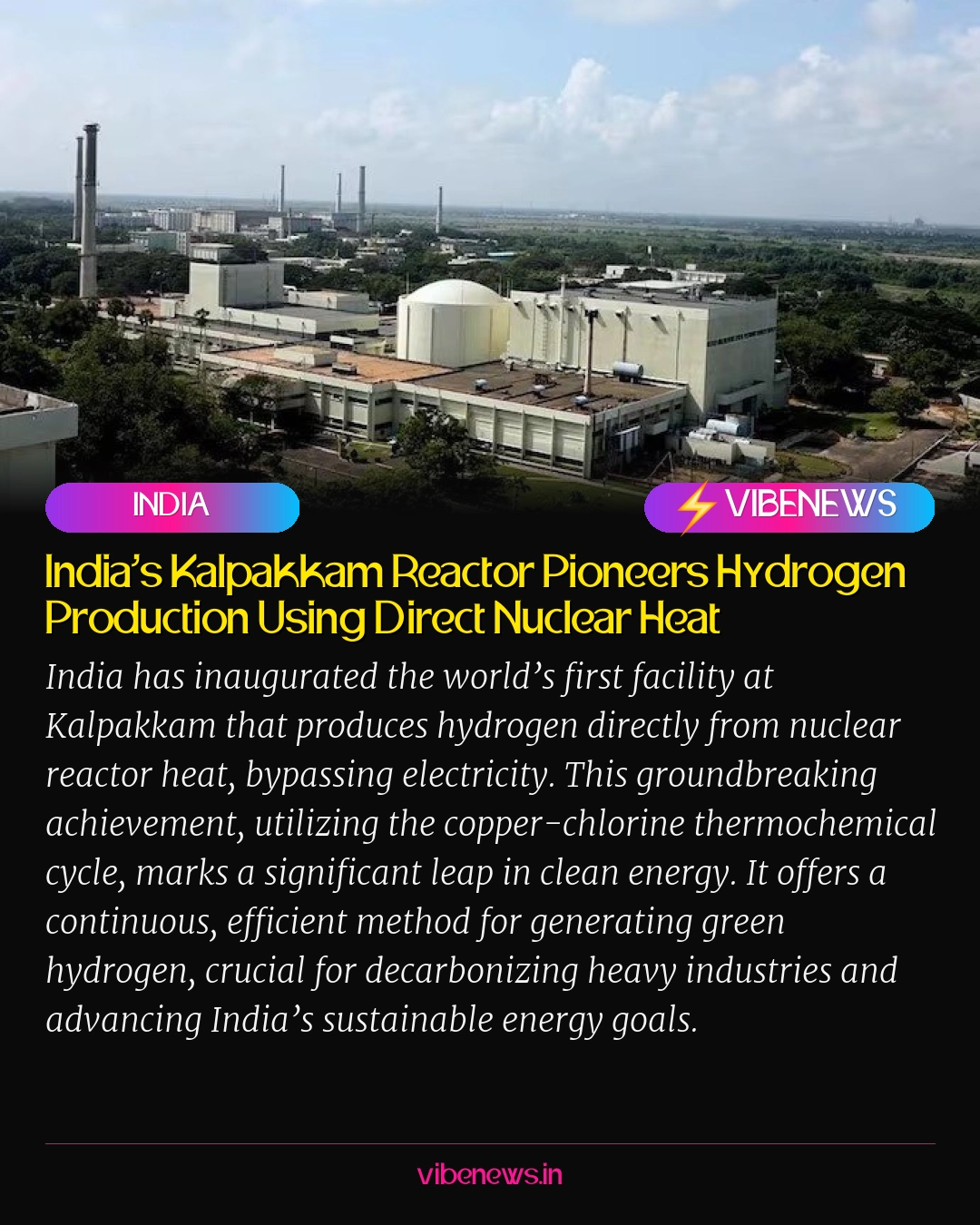
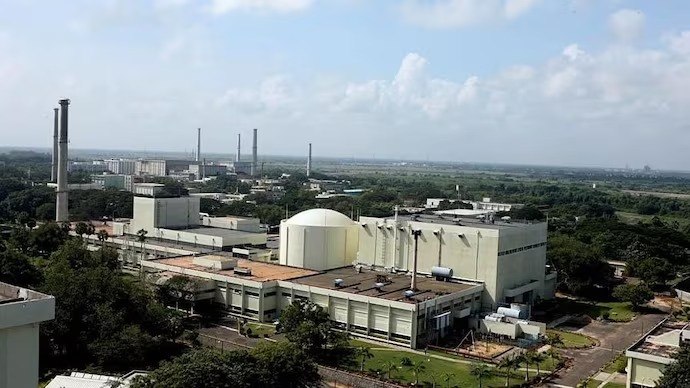
India has achieved a global first with the inauguration of a pioneering facility at Kalpakkam, Tamil Nadu, capable of producing hydrogen directly from the heat generated by a nuclear reactor, rather than relying on electricity. This innovative plant, located at the Indira Gandhi Centre for Atomic Research (IGCAR), was officially unveiled on June 26, 2026, marking a significant milestone in the quest for cleaner energy solutions.
The Department of Atomic Energy (DAE) hailed this development as a "defining milestone in India’s clean energy journey," underscoring its potential to reshape how green hydrogen is produced worldwide. Unlike conventional methods that consume vast amounts of electricity, this new approach taps directly into the thermal energy of a nuclear reactor, promising a more efficient and sustainable pathway.
Currently, the most common method for generating clean hydrogen involves electrolysis, where electricity is passed through water to split it into hydrogen and oxygen. While effective, this process is energy-intensive and can be costly, especially if the electricity isn’t sourced from renewables. The Kalpakkam facility introduces a fundamentally different strategy, leveraging thermochemical water splitting.
At the heart of this breakthrough is the copper-chlorine thermochemical cycle. Instead of a direct electrical jolt, this cycle employs a sequence of chemical reactions, using copper and chlorine compounds as reusable intermediaries. These compounds facilitate the breakdown of water into hydrogen and oxygen at much lower temperatures, making the process more manageable and less energy-demanding than direct high-temperature splitting.
A key advantage of the copper-chlorine cycle is its operating temperature range, typically between 450 and 550 degrees Celsius. This temperature band aligns perfectly with the heat output that a nuclear reactor can comfortably supply. Many alternative thermochemical cycles require temperatures exceeding 800 degrees Celsius, which are far more challenging for existing reactor designs to provide efficiently.
This direct utilization of reactor heat is known as ‘process heat.’ By feeding the heat straight into the chemical process, the Kalpakkam plant bypasses the energy losses inherent in converting thermal energy into electricity first, then using that electricity for electrolysis. This direct coupling significantly enhances the overall efficiency of hydrogen production, with studies estimating efficiencies ranging from 37 to 54 percent, depending on waste heat recovery.
While the underlying chemistry of the copper-chlorine cycle has been studied in laboratories for years, notably developed by India’s Bhabha Atomic Research Centre (BARC), the true world-first achievement at Kalpakkam lies in the engineering. No other country had successfully coupled this complex chemistry to a real, operational nuclear reactor and demonstrated the entire chain working at a plant level. Bridging the gap between laboratory success and industrial application presented immense challenges, from material corrosion to heat transfer at scale.
The heat source for this innovative process is the Fast Breeder Test Reactor (FBTR) at Kalpakkam. This 40-megawatt thermal reactor, cooled by liquid sodium, has been operational since the mid-1980s. For decades, the FBTR served as a crucial proving ground for advanced fuels, materials, and sodium technology, supporting India’s broader ambitions in fast breeder reactor development, including the 500-megawatt Prototype Fast Breeder Reactor. Now, it has gained a vital second life as a dedicated heat source for clean fuel production.
Nuclear hydrogen holds immense strategic importance for India’s energy future due to its inherent steadiness. Unlike intermittent renewable sources like solar and wind, a nuclear reactor operates around the clock, providing a continuous and reliable supply of hydrogen. This consistent output is particularly critical for decarbonizing the so-called ‘hard-to-abate’ sectors, such as steel manufacturing, fertilizer production, and oil refining, which cannot easily transition to battery power or direct solar energy.
This facility adds a new dimension to India’s long-term nuclear energy strategy, which has traditionally focused on electricity generation and eventually harnessing its vast thorium reserves. The Kalpakkam breakthrough demonstrates that nuclear reactors can play a dual role, not only keeping the lights on but also forging the clean fuels essential for a sustainable, carbon-neutral future. As a technology demonstrator, the plant’s primary purpose is to prove the viability of the concept, paving the way for potential larger-scale applications in the years to come.
TL;DR
- India has inaugurated the world’s first plant at Kalpakkam, Tamil Nadu, that produces hydrogen directly from nuclear reactor heat, not electricity.
- The facility, at the Indira Gandhi Centre for Atomic Research (IGCAR), was launched on June 26, 2026, marking a significant global achievement in clean energy.
- It utilizes the copper-chlorine thermochemical cycle, which efficiently splits water into hydrogen and oxygen using heat, bypassing the electricity-intensive electrolysis method.
- The copper-chlorine cycle operates at a temperature range (450-550°C) that nuclear reactors can comfortably supply, making it an ideal match for reactor-generated heat.
- This method uses ‘process heat’ directly, avoiding energy losses associated with converting heat to electricity first, thereby increasing overall efficiency.
- The engineering feat of successfully coupling this known chemistry to an operational Fast Breeder Test Reactor (FBTR) is what makes this a world-first.
- The FBTR, a 40-megawatt thermal reactor operational since the mid-1980s, now serves as the dedicated heat source for hydrogen production.
- Nuclear hydrogen offers a continuous, 24/7 supply, crucial for decarbonizing ‘hard-to-abate’ industries like steel, fertilizers, and oil refining, which struggle with intermittent renewable energy sources.