Senior advocate and Rajya Sabha MP Kapil Sibal has vehemently criticised the recent decision by a group of rebel Trinamool Congress (TMC) MPs to merge with the Nationalist Citizens Party of India (NCPI). Sibal, a prominent legal voice, described the move as "theatre of the absurd," raising significant questions about its legality and political implications.
His strong remarks came after rebel TMC MP Kakoli Ghosh Dastidar announced that 20 dissident MPs would align with the Tripura-based NCPI, simultaneously declaring their support for the BJP-led National Democratic Alliance (NDA). This development marks a deepening rift within the TMC, particularly in the Lok Sabha.
Sibal took to X, formerly Twitter, to articulate his legal position. He asserted that Members of Parliament can only merge with another political party if their original party, in this case, the TMC, explicitly wishes for such an association. He further argued that the Trinamool Congress should immediately move to disqualify these rebel members, suggesting their actions are a clear violation of established parliamentary norms and anti-defection laws.
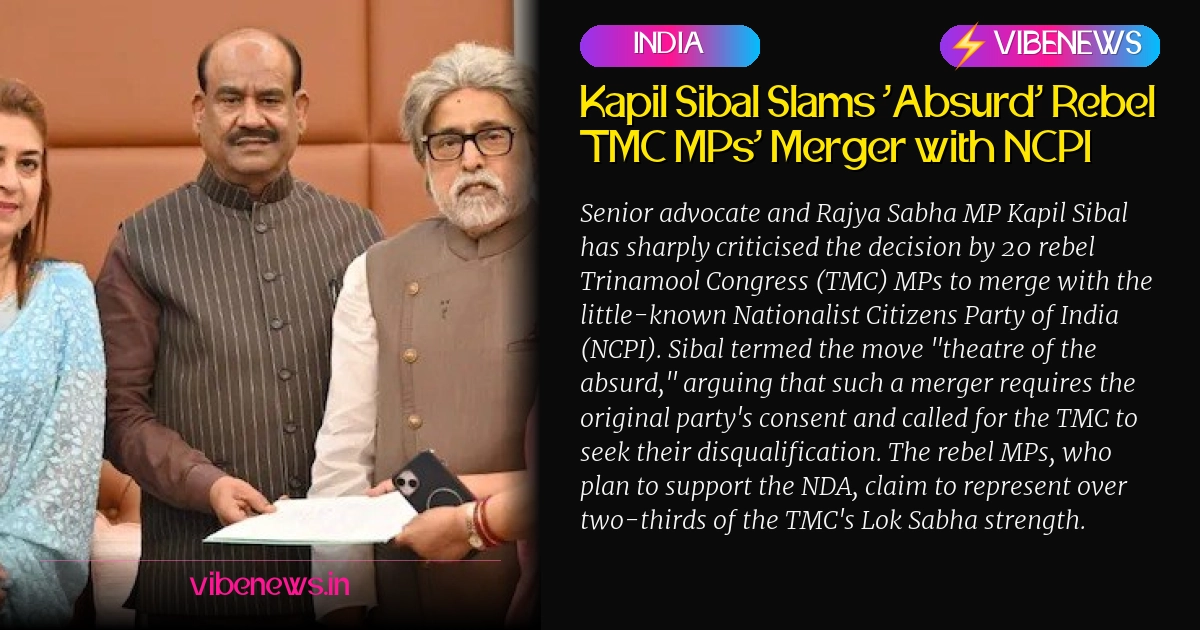
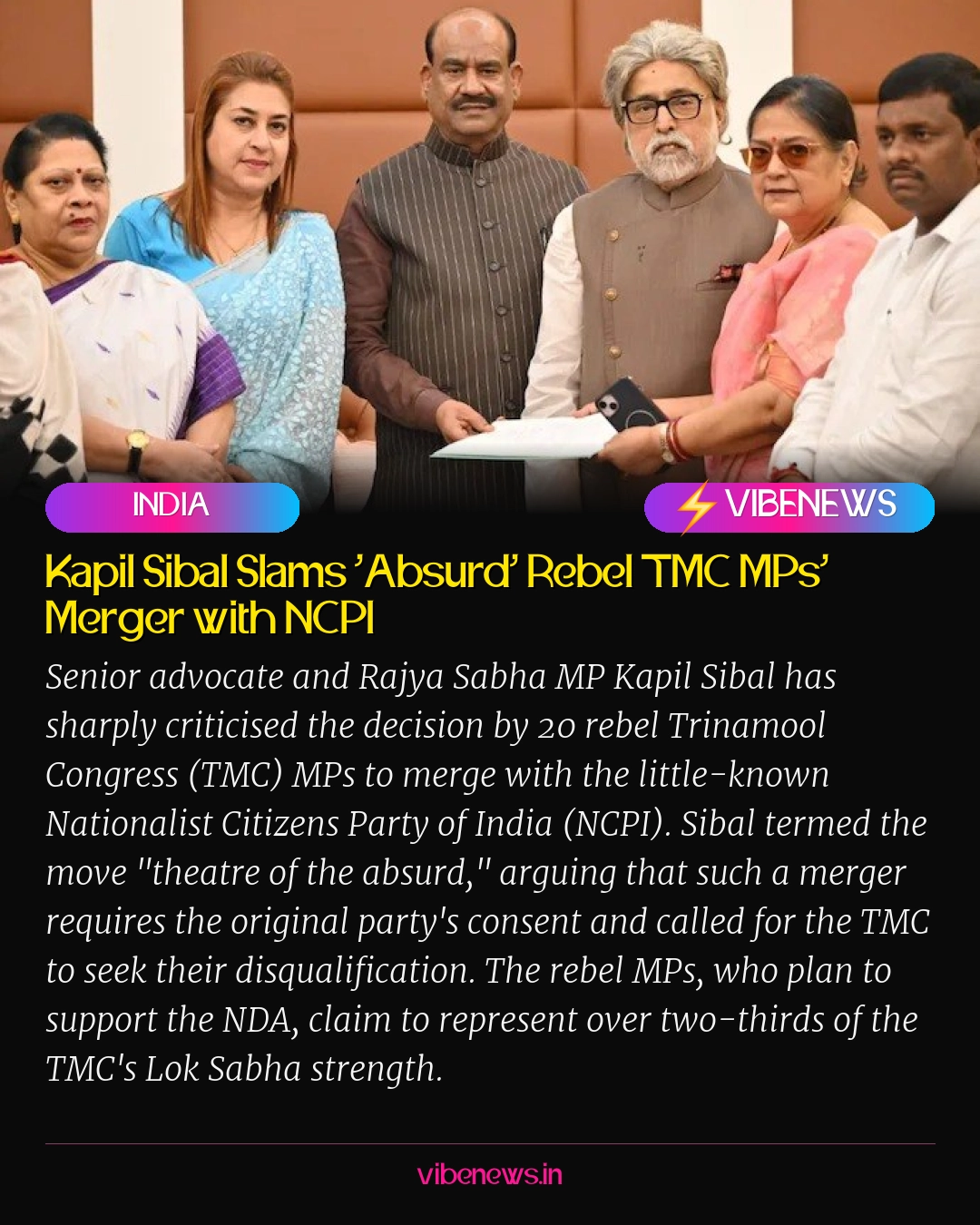
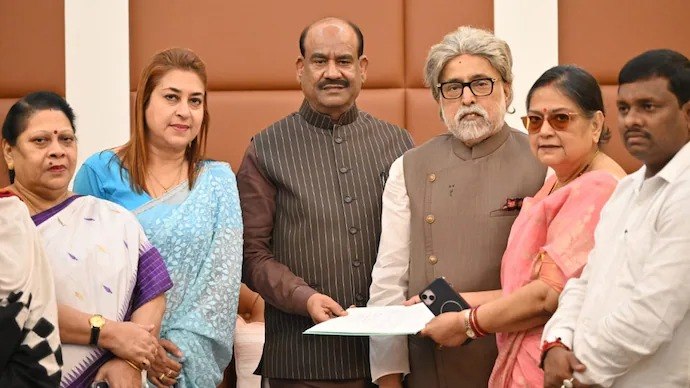
The rebel MPs, led by figures like Dastidar and Sudip Bandyopadhyay, met with Lok Sabha Speaker Om Birla in New Delhi. Following the meeting, Dastidar confirmed their submission of a letter requesting separate seating arrangements in Parliament. She stated unequivocally that the group would "collaborate" with the NDA under Prime Minister Narendra Modi's leadership, signalling a direct challenge to the TMC's political stance.
Bandyopadhyay echoed Dastidar's sentiments, indicating that the question of which faction truly constitutes the "real TMC" would ultimately be settled in the courts. He claimed the Speaker had verified their signatures and acknowledged that the rebel group indeed represented more than two-thirds of the party's total strength in the Lok Sabha. This numerical claim is critical, as it directly relates to the provisions of the Tenth Schedule of the Constitution, commonly known as the anti-defection law, which allows for mergers if two-thirds of a party's legislators agree.
The Nationalist Citizens Party of India (NCPI), the party with which the rebel TMC MPs are merging, has remained largely obscure until this announcement. Based in Tripura, the NCPI is a registered unrecognised political party with virtually no significant electoral presence. Its election symbol is an ink pen nib with seven strokes, and it contested only three seats in the 2023 Tripura Assembly elections, where its candidates performed poorly, often trailing behind 'None Of The Above' (NOTA) votes.
Sources suggest that the rebel TMC MPs opted for this merger with a little-known entity like the NCPI primarily due to legal complications associated with forming a separate parliamentary bloc. Forming a new bloc without merging with an existing party or having two-thirds of the original party's strength defect to a new party could expose them to immediate disqualification under the anti-defection law. By merging with an existing, albeit small, party, they aim to circumvent these legal hurdles.
However, Sibal's interpretation challenges this strategy, implying that even a merger with another party requires the consent of the original party from which the MPs defected. This sets the stage for a potentially complex legal battle, with the TMC likely to challenge the merger and seek the disqualification of the rebel MPs. The Speaker's decision, and subsequent judicial review, will be crucial in determining the fate of these MPs and the interpretation of the anti-defection law in such unique circumstances. The political landscape in West Bengal and the dynamics within the Lok Sabha could see significant shifts depending on the outcome of this unfolding drama.
TL;DR
- Senior advocate Kapil Sibal has strongly criticised the rebel Trinamool Congress (TMC) MPs' decision to merge with the Nationalist Citizens Party of India (NCPI).
- Sibal termed the merger move "theatre of the absurd" and argued that MPs can only merge with another party if their original party consents.
- He urged the TMC to seek the disqualification of the rebel MPs, highlighting potential violations of anti-defection laws.
- The 20 rebel TMC MPs, led by Kakoli Ghosh Dastidar and Sudip Bandyopadhyay, announced their merger with NCPI and pledged support to the BJP-led NDA.
- The rebel MPs claim to represent more than two-thirds of the TMC's Lok Sabha strength, a critical threshold under the anti-defection law.
- The NCPI is a little-known, Tripura-based registered unrecognised political party with no significant electoral presence.
- The move is seen as an attempt by the rebel MPs to navigate legal complexities associated with forming a separate parliamentary bloc.
- A potential legal battle over the validity of the merger and the claim to the "real TMC" is anticipated.