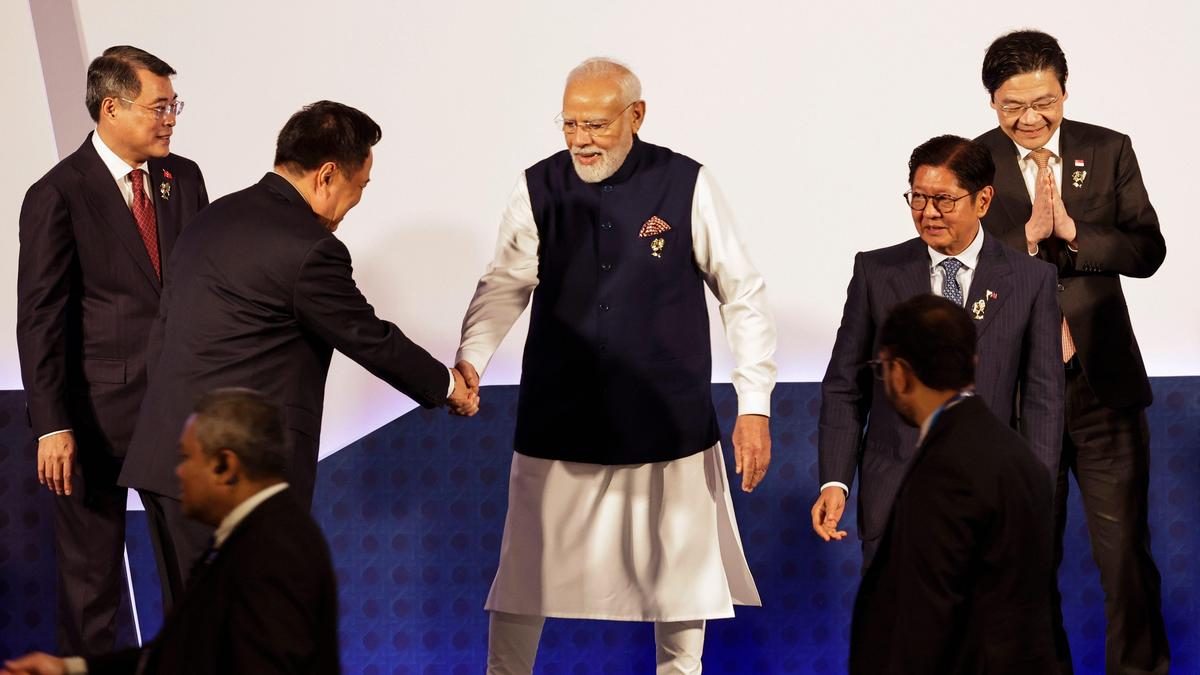
Prime Minister Narendra Modi took part in the 23rd ASEAN-India Summit and the 21st East Asia Summit in Manila on Tuesday, November 17, 2026, and is scheduled to attend the first in-person Quad leaders’ meeting since September 2024. The Philippines is hosting the summits as the current chair of the 11-nation Association of Southeast Asian Nations.
The Quad meeting is the headline for Indo-Pacific watchers. Sources in New Delhi had confirmed that Modi was expected to meet U.S. President Donald Trump, Japanese Prime Minister Sanae Takaichi and Australian Prime Minister Anthony Albanese on the sidelines of the ASEAN summits. External Affairs Ministry spokesperson Randhir Jaiswal confirmed Modi’s attendance at the Quad leaders’ meeting. The gathering would be the first held in person at leaders’ level since Trump returned to the White House.
Trump landed in the Philippines on Tuesday, and the Quad meeting was expected to follow his arrival. His stop in Manila is the first leg of a three-day trip. He is due in China on Wednesday for the Asia-Pacific Economic Cooperation summit, and he has said he may also meet North Korean leader Kim Jong Un. Along the way, he is expected to take part in three-way nuclear talks with Chinese President Xi Jinping and Russian President Vladimir Putin.
Trump is arriving with plenty of pressure at home. The trip was framed as a chance to talk trade and step away from a run of setbacks, including a major disruption to the U.S. aviation industry and a scandal that has rattled the global AI industry. A Thai official said Trump would sign a joint statement with Thailand’s premier on trade, marking "significant progress," though no final deal would be inked.
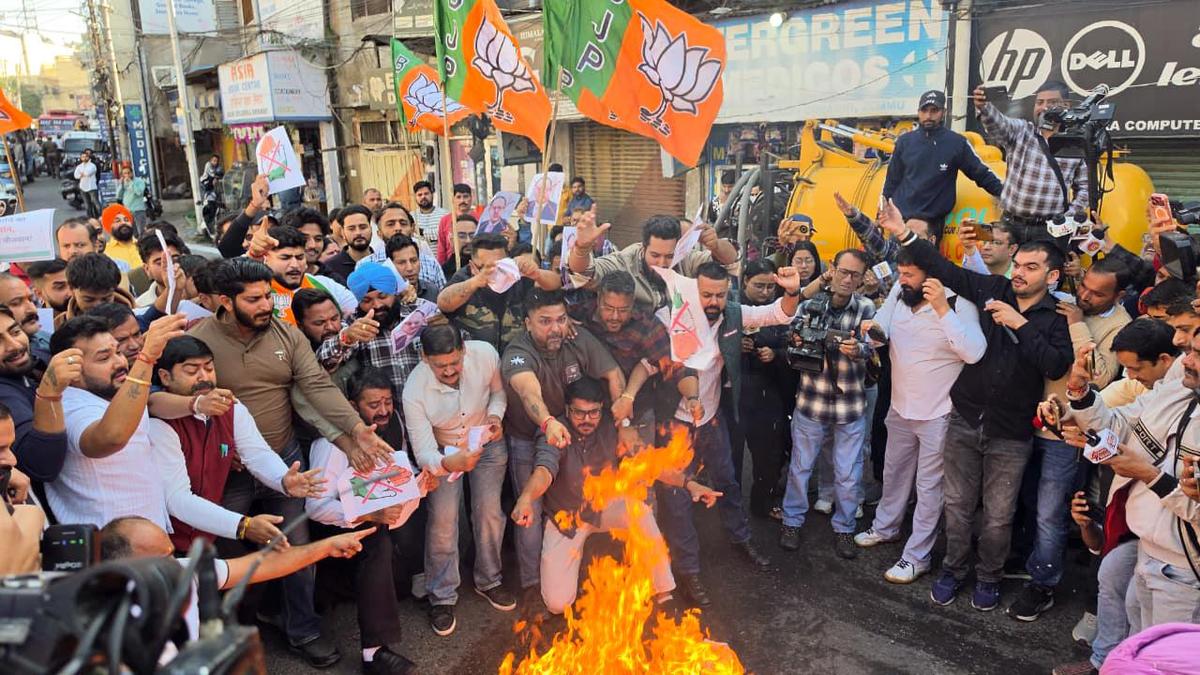
Protests were already building before he touched down. Around 2,000 demonstrators faced off in Manila carrying banners that read "Trump out now" and "Reject Pax Silica." Demonstrators have also burned effigies of the president and called for an end to the West Asia war and the scrapping of the U.S.-led Pax Silica initiative. The Quad itself has drawn sharp criticism from China, which views the grouping as an effort to constrain its influence in the region.
What Modi put on the table for ASEAN
For India, the summit was a chance to press its Act East Policy. Before leaving for Manila, Modi said India’s relationship with the ASEAN region sits at the "heart of India’s Act East Policy." Speaking at the India-ASEAN Summit, he said the Act East Policy had given fresh momentum and depth to ties with the bloc.
The Ministry of External Affairs listed a series of proposals after the summit. These include a long-term ASEAN-India Maritime Cooperation Plan covering connectivity, scientific research, disaster management, Coast Guard cooperation, maritime domain awareness and seafarers’ security. India also proposed a joint cyber forensics training programme, technical exchanges on nuclear energy, an ASEAN-India Space Hackathon, and cooperation on mining and critical minerals.
Modi also proposed free e-visas for tourists from ASEAN countries. For ordinary travellers, that is the most immediately useful offer on the list. He described direct flights between India and nine ASEAN countries, along with rising tourism, as evidence of how closely the partnership is growing.
On youth and education, Modi suggested an ASEAN-India Youth Connect initiative. It would include a youth summit, exchanges between young parliamentarians and start-up hackathons. He also proposed expanding scholarships for students from ASEAN countries at Nalanda University.
The two sides also agreed to deepen cooperation on disaster management. The joint statement pointed to enhanced early warning systems, sharing of satellite and meteorological data, joint preparedness exercises and rapid deployment of humanitarian assistance. Both India and ASEAN face earthquakes, tsunamis, floods, cyclones, extreme heat and landslides.
"India, ASEAN represent around one-fourth of global population; it is important to decide our future by cooperation; not by competition."
That line, delivered at the India-ASEAN Summit, captured the tone of Modi’s remarks. He said the world had faced several challenges in recent years and now needed peace, stability and predictability. He also said India’s development and ASEAN’s prosperity were deeply interconnected.
Energy, AI and a wider regional agenda
The summit agenda reached well beyond India. Japan told ASEAN nations they could use its crude oil storage facilities as the region braces for possible energy shortages. Takaichi said Japan’s "hydro-tanks" would be available under a proposed initiative on oil stockpiling. Japan also plans to help ASEAN countries build their own stockpiling facilities over the longer term. Japan’s Foreign Ministry said Quad leaders were expected to look for unity on maritime security, export restrictions, critical-minerals supply chains and AI.
ASEAN leaders adopted a declaration on using artificial intelligence to help micro, small and medium enterprises. It focuses on affordable technology, digital infrastructure, AI literacy and responsible adoption. The declaration recognises that MSMEs form the backbone of ASEAN economies but still struggle to adopt AI.
Separately, the 29th ASEAN-Japan Summit adopted a joint statement on economic resilience. Takaichi pledged to work with ASEAN on regional economic and energy resilience, including responses to export restrictions and vulnerabilities linked to rapid AI development.
Why it matters for Indian travellers and the diaspora
The Embassy of India in Manila will resume regular consular services, passport applications and visa processing from Wednesday. The services had been suspended because of special non-working days declared in the National Capital Region for the 49th ASEAN Summit and related meetings. Anyone with a pending passport or visa matter in the Philippines should check the embassy’s latest notice.
Modi also used his visit to connect with the Indian community. He led a foundation-stone laying ceremony for the redevelopment of Gurudwara Khalsa Diwan in Manila, a century-old place of worship. Baba Manmohan Singh, Granthi of the gurdwara, said Modi has a deep and genuine affection for the Sikh community. The Ministry of External Affairs said the gurdwara has stood for over a century as a symbol of India-Philippines cultural and people-to-people ties.
Modi put his own record on the table as well. Speaking at the summit, he said India had undertaken more than 100 initiatives to strengthen people-to-people ties since 2014, launched over 250 Quick Impact Projects and provided more than 10,000 skill-building scholarships. He called this his third visit to an ASEAN country this year.
What to watch next: The formal Quad leaders’ meeting and any readout from it will show whether the four leaders can project unity despite the pressure from protests, trade frictions and China’s objections. Trump’s bilateral moves in Manila and his stop in China on Wednesday will shape how much attention the Quad receives. For India, the practical test will come when the proposals on maritime cooperation, e-visas and youth exchanges move from announcement to implementation.
TL;DR
- Modi attended the 23rd ASEAN-India Summit and 21st East Asia Summit in Manila on Tuesday, with a Quad leaders’ meeting expected to follow.
- The Quad gathering would be the first in-person leaders’ meeting since September 2024 and the first since Trump returned to the White House.
- India proposed free e-visas for ASEAN tourists, a maritime cooperation plan and an ASEAN-India Youth Connect initiative.
- Japan offered ASEAN nations access to its crude oil storage facilities amid energy supply concerns.
- About 2,000 protesters gathered in Manila against Trump’s visit, citing the Pax Silica initiative.
- The Indian Embassy in Manila resumes consular and visa services from Wednesday.