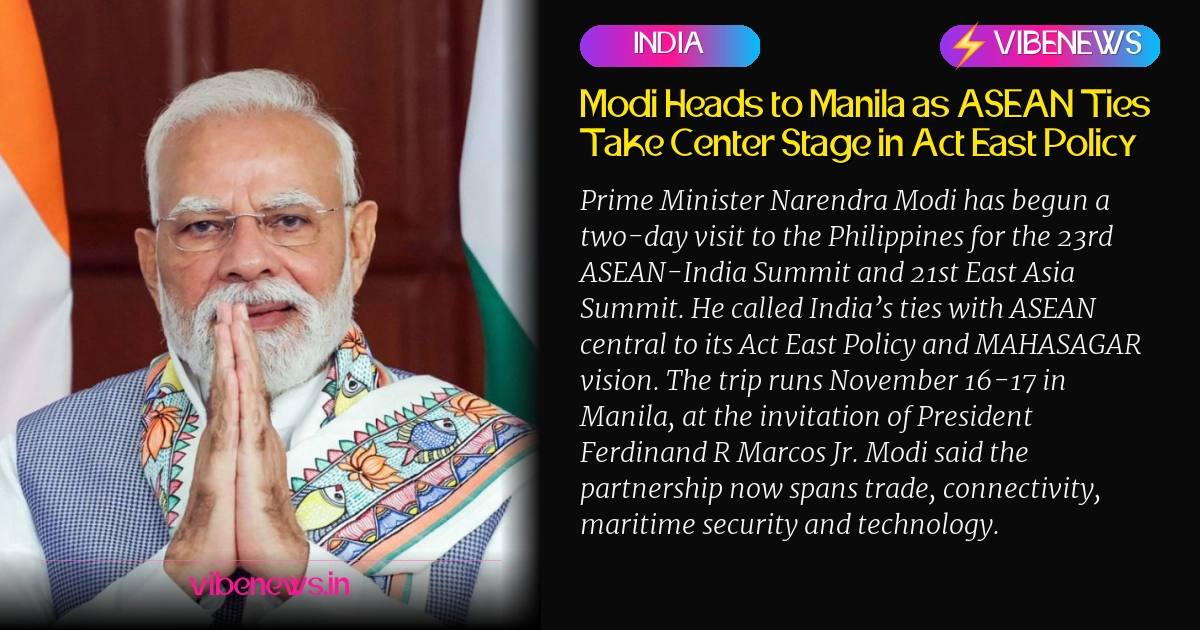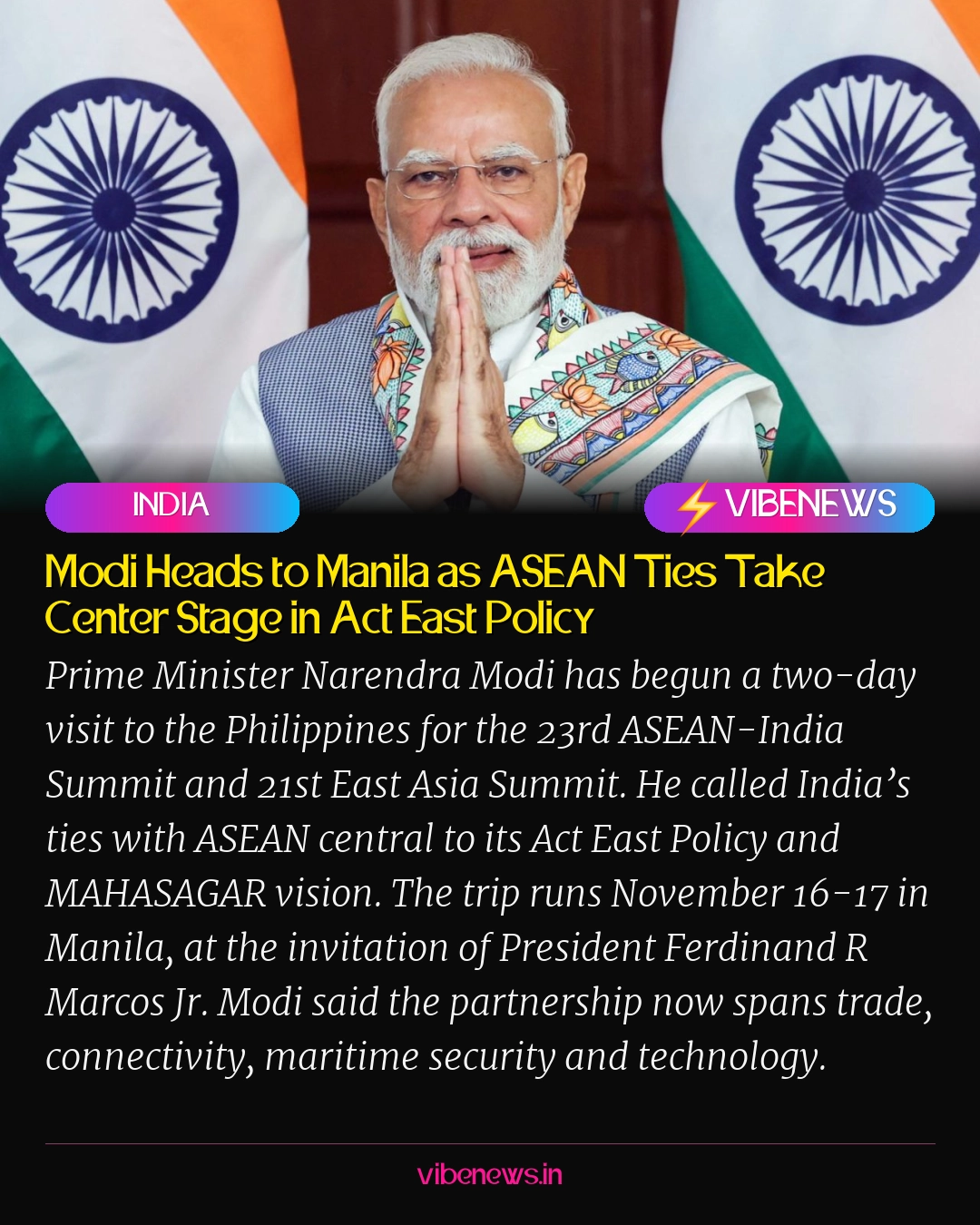
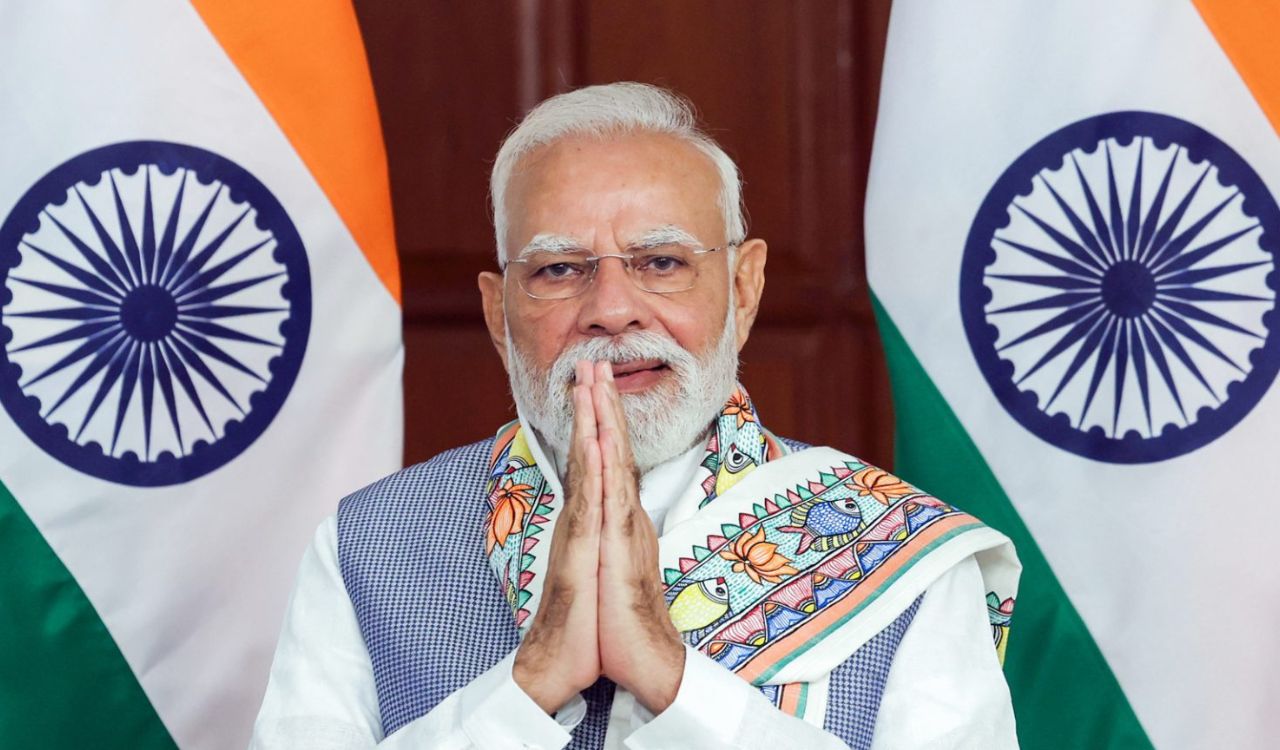
Prime Minister Narendra Modi left for the Philippines on Monday for a two-day visit that puts India’s relationship with Southeast Asia at the center of his diplomatic agenda. He will attend the 23rd ASEAN-India Summit and the 21st East Asia Summit in Manila on November 16-17, at the invitation of Philippine President Ferdinand R Marcos Jr.
Before boarding, Modi said India’s relationship with ASEAN countries sits at the heart of its Act East Policy. He also placed it at the core of what he called the MAHASAGAR vision. The source material does not expand on the MAHASAGAR framework, but the prime minister’s choice to name it alongside Act East signals how much weight New Delhi is putting on the region.
In his departure statement, Modi went further back in time than most leaders would. He traced India’s ties with ASEAN to centuries of civilisational exchanges, then described how those links have grown into something more structured.
India’s ties with ASEAN, rooted in centuries of civilisational exchanges, have evolved into a dynamic partnership spanning trade, connectivity, maritime security, technology and people-to-people relations.
That list matters. Trade and connectivity are the familiar pillars of any Asian economic engagement. Maritime security and technology are different. They suggest a relationship that now touches the sea lanes and the digital infrastructure that modern economies depend on, not just the shipping manifests and tariff schedules.
At the ASEAN-India Summit, Modi said he looks forward to working with fellow leaders to build on the progress of the Comprehensive Strategic Partnership. He framed the goal as giving further momentum to shared aspirations for growth, connectivity and prosperity. The phrase Comprehensive Strategic Partnership is a formal label that India and ASEAN have already adopted, and the prime minister’s language suggests he sees this summit as a chance to push that framework forward rather than start something new.
The East Asia Summit carries a different kind of weight. Modi described it as an important platform for discussing regional and global challenges. He said he will exchange views with participating leaders on strengthening peace, stability and cooperation in the Indo-Pacific. The Indo-Pacific is a term that appears throughout Indian foreign policy statements, and here it sits at the end of the sentence like a destination. That placement tells readers where Modi wants the conversation to land: beyond Southeast Asia, across the wider maritime region that links the Indian Ocean with the Pacific.
What the statements do not say is almost as telling. The source material does not list specific agreements, signed documents or bilateral deliverables expected during the visit. It does not detail which regional or global challenges will dominate the East Asia Summit discussions. Readers looking for a deal sheet will not find one here. What they will find is a clear message about intent and direction, delivered in advance of the meetings themselves.
There is also a human side to the trip. Modi said he will interact with the Indian community in the Philippines, and he described their contributions as strengthening the bonds of friendship between the two countries. Diaspora engagement is a routine part of prime ministerial travel, but it also serves a practical purpose. It shows that the relationship being built at summit tables has roots in the lives of ordinary people living abroad.
Modi expressed confidence that the visit would impart fresh energy to India’s partnership with ASEAN. He tied that energy to a broader goal: reinforcing the collective commitment to a peaceful, prosperous and resilient Indo-Pacific. The word resilient stands out. It implies concern about shocks, whether economic, security-related or environmental, and an interest in building arrangements that can absorb them. The source does not specify which shocks Modi has in mind, so any reading beyond the text would be speculation.
For now, the story is about positioning. India is using a high-profile trip to Manila to say that its engagement with Southeast Asia is deeper than trade figures alone. It is rooted in history, extended into security and technology, and carried forward through summit diplomacy. Whether the coming meetings translate that language into concrete steps is the question the next two days will begin to answer.
TL;DR
- PM Modi begins a two-day Philippines visit for the 23rd ASEAN-India Summit and 21st East Asia Summit on November 16-17.
- Modi says India’s ASEAN relationship is central to its Act East Policy and MAHASAGAR vision.
- He describes ties spanning trade, connectivity, maritime security, technology and people-to-people relations.
- Modi will press for peace, stability and cooperation in the Indo-Pacific at the East Asia Summit.
- He also plans to meet the Indian community in the Philippines during the visit.