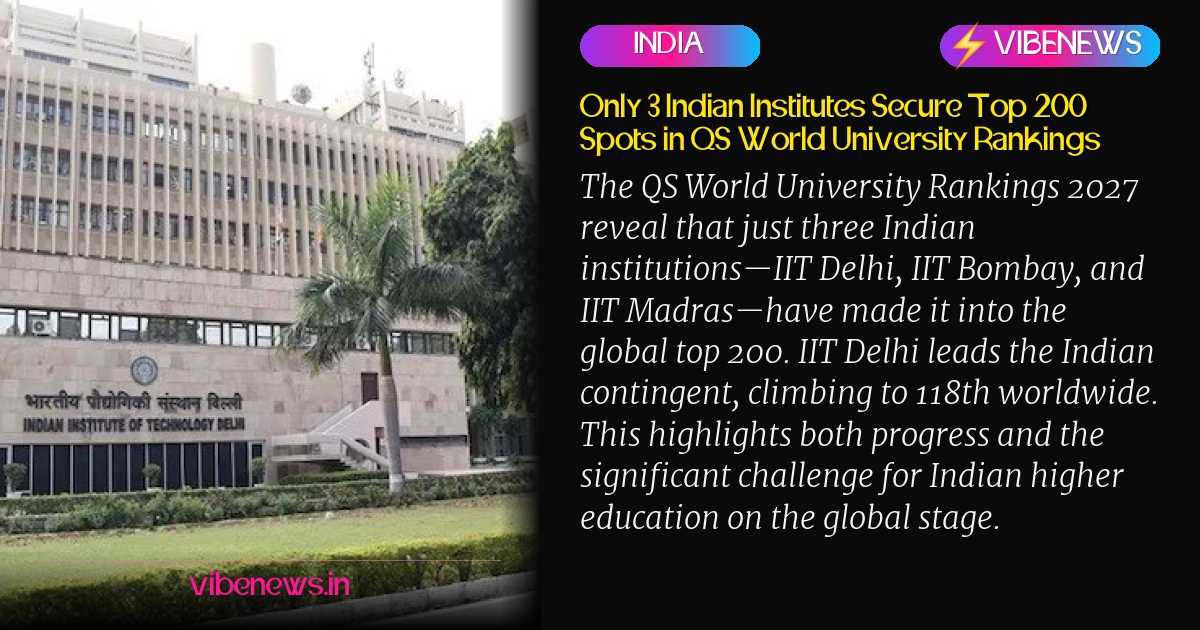
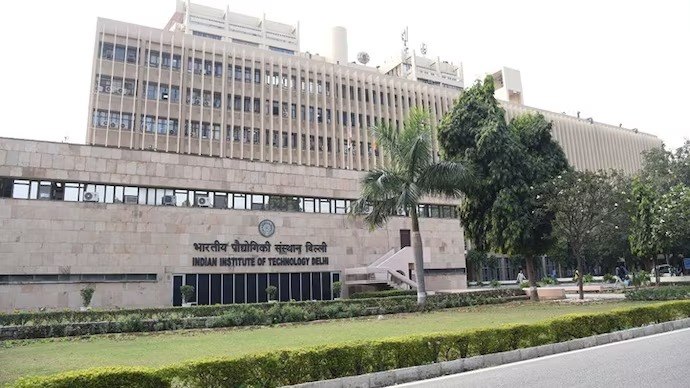
The QS World University Rankings 2027 have placed only three Indian institutions among the world's top 200, underscoring the ongoing journey for India's higher education system to achieve broader global recognition. The Indian Institute of Technology Delhi (IIT Delhi) emerged as the highest-ranked Indian university, securing the 118th position globally, a notable improvement of five places from its 2026 ranking.
Following IIT Delhi, the Indian Institute of Technology Bombay (IIT Bombay) was ranked 134th, and the Indian Institute of Technology Madras (IIT Madras) came in at 170th. These three institutions represent India's sole presence within the highly competitive top 200 tier of universities worldwide, a benchmark closely watched by students, academics, and policymakers alike.
IIT Delhi's performance was particularly strong in several key indicators used by QS. The institute scored an impressive 97.3 in Citations per Faculty, reflecting the significant research impact of its academic output. It also achieved high scores in Employer Reputation (96.9) and Sustainability (81.2), alongside a solid 64.6 in Academic Reputation and 59.6 in Employment Outcomes. Its International Research Network score stood at 66.5.
IIT Bombay, the second-highest ranked Indian institution, demonstrated robust performance with a 97.8 in Employer Reputation and 79.4 in Sustainability. Its Citations per Faculty score was 79.3, while Academic Reputation reached 72.5. The institute also recorded 78.2 in Employment Outcomes and 42.1 in International Research Network.
Meanwhile, IIT Madras, securing the 170th spot, showed strong research impact with 95.3 in Citations per Faculty. It scored 87.4 in Employer Reputation and 74.8 in Sustainability. Its Academic Reputation was 55.1, Employment Outcomes 53.2, and International Research Network 52.2. These detailed metrics provide insight into the specific strengths and areas for development within these leading institutions.
The QS World University Rankings evaluate institutions based on a comprehensive set of criteria, including academic reputation, employer reputation, faculty-student ratio, citations per faculty, international faculty ratio, international student ratio, international research network, sustainability, and employment outcomes. The limited number of Indian institutions in the top 200 highlights the considerable effort still required to elevate more universities to global elite status, despite the consistent performance of the IITs.
This annual assessment serves as a critical barometer for the quality and global standing of higher education systems. For India, the consistent presence of these IITs in the top echelons is a testament to their established excellence in engineering and technology. However, it also brings into focus the broader challenge of improving the overall quality and international competitiveness of the country's vast university landscape.
The rankings are not merely about prestige; they influence international collaborations, attract foreign students and faculty, and ultimately impact a nation's capacity for innovation and economic growth. The performance of these three IITs sets a high standard, but the goal for India's educational ecosystem must be to expand this success to a wider array of institutions across various disciplines.
Achieving a greater presence in the top global rankings requires sustained investment in research infrastructure, fostering a culture of innovation, enhancing faculty quality, and actively promoting internationalisation. It also necessitates a strategic focus on the specific metrics that drive these rankings, ensuring that Indian universities are not only excellent locally but also competitive on the world stage.
The QS World University Rankings 2027 thus offer a mixed picture for India: a strong showing from its premier technology institutes, but a clear indication that the journey towards widespread global academic leadership is still unfolding. The coming years will reveal how Indian policymakers and university leaders respond to these insights, aiming to broaden the nation's footprint among the world's best educational institutions.
TL;DR
- Only three Indian institutions—IIT Delhi, IIT Bombay, and IIT Madras—secured spots within the top 200 of the QS World University Rankings 2027.
- IIT Delhi is India's highest-ranked university, climbing five places to 118th globally.
- IIT Bombay ranked 134th, while IIT Madras secured the 170th position worldwide.
- IIT Delhi showed exceptional performance in Citations per Faculty (97.3) and Employer Reputation (96.9).
- The rankings highlight both the strengths of India's premier technology institutes and the broader challenge for Indian higher education to achieve wider global recognition.
- The QS rankings evaluate universities based on academic reputation, employer reputation, research impact, internationalisation, sustainability, and employment outcomes.