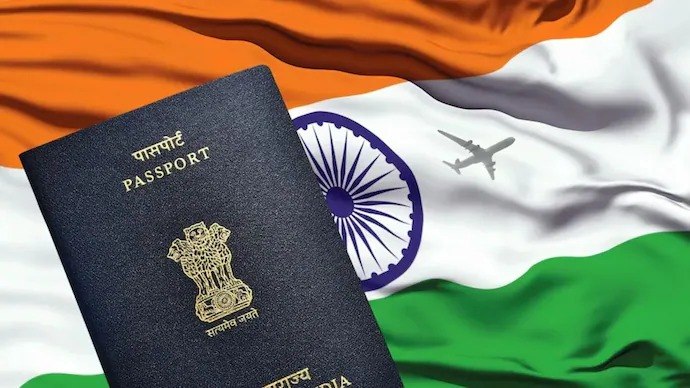
The Ministry of External Affairs (MEA) recently clarified that an Indian passport, despite being issued exclusively to citizens, is fundamentally a travel document and not a conclusive proof of citizenship. This significant statement, made on the occasion of the 14th Passport Seva Divas, has reignited public discussion regarding what truly constitutes definitive evidence of Indian nationality.
The MEA’s position highlights a nuanced distinction: while the government issues passports only to its citizens to facilitate international travel, the document itself does not serve as the legal instrument to establish one’s citizenship status. This clarification has prompted widespread debate, particularly on social media platforms, as many citizens have historically viewed their passport as a primary indicator of their nationality. The inherent irony of a document issued solely to citizens not being proof of citizenship underscores a perceived ‘grey area’ in India’s official stance on identity documentation.
Beyond its function as a travel permit, a passport is explicitly stated to be the property of the Government of India. A note on the back flap of every passport reinforces this, indicating that it must be surrendered if and when the government so orders. This detail further emphasizes the document’s role as a state-issued privilege for travel rather than an inherent right or proof of citizenship.
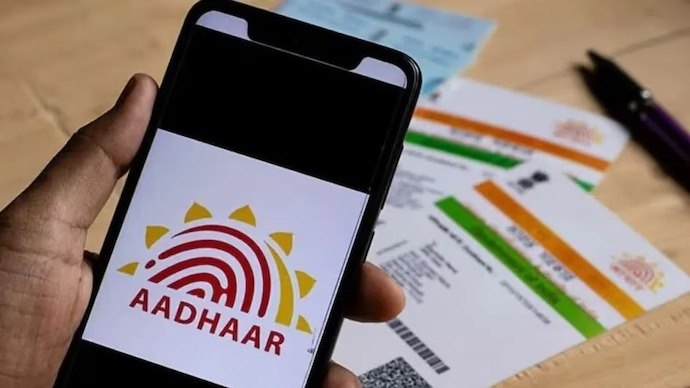
The MEA’s stance aligns with previous judicial observations concerning other widely used identity documents. Earlier this year, the Supreme Court affirmed that Aadhaar, while a robust identity document, is not conclusive proof of citizenship. Similarly, a voter ID card, which enables citizens to exercise their franchise, is primarily an identity and residence document, not a citizenship certificate. These precedents collectively underscore a consistent governmental and judicial approach to distinguishing between identity verification and citizenship establishment.
Understanding what *does* constitute Indian citizenship is crucial in this context. Under existing citizenship laws, an individual born in India on or after January 26, 1950, but before July 1, 1987, is considered an Indian citizen by birth. For those born after July 1987, citizenship can be claimed if at least one parent was an Indian citizen at the time of birth. A more stringent criterion applies to individuals born on or after December 3, 2004: they can claim citizenship by birth only if both parents are Indian citizens, or if one parent is a citizen and the other is not an illegal immigrant at the time of birth. These legal definitions form the bedrock of Indian citizenship, independent of travel documents.
The government’s clarification serves to delineate the specific legal function of a passport, preventing its misinterpretation as a universal citizenship certificate. This distinction is particularly relevant in a country where various documents serve different purposes, and the precise legal weight of each is not always clear to the general public. It prompts individuals to consider the foundational legal basis of their citizenship rather than relying solely on a travel document.
This official statement from the MEA highlights the ongoing need for clarity and public education regarding India’s citizenship laws and the specific roles of different identity documents. As discussions around national identity and documentation continue, understanding these precise legal definitions becomes increasingly important for citizens and authorities alike. The clarification, while seemingly straightforward, carries significant implications for how citizenship is understood and verified in India.
TL;DR
- The Ministry of External Affairs (MEA) has clarified that an Indian passport is primarily a travel document, not conclusive proof of citizenship.
- This statement was made on the 14th Passport Seva Divas, sparking public debate on what constitutes definitive proof of Indian nationality.
- Despite being issued exclusively to Indian citizens, the passport’s function is to facilitate international travel, not to establish citizenship status.
- Passports are considered the property of the Government of India, not the individual holder, and can be ordered to be surrendered.
- This clarification aligns with previous rulings that Aadhaar and Voter ID cards are also not considered conclusive proof of citizenship, serving instead as identity or residence documents.
- Indian citizenship laws define citizenship by birth based on specific dates and the citizenship status of parents at the time of birth.
- The MEA’s clarification underscores the importance of distinguishing between identity documents and legal proof of citizenship in India.