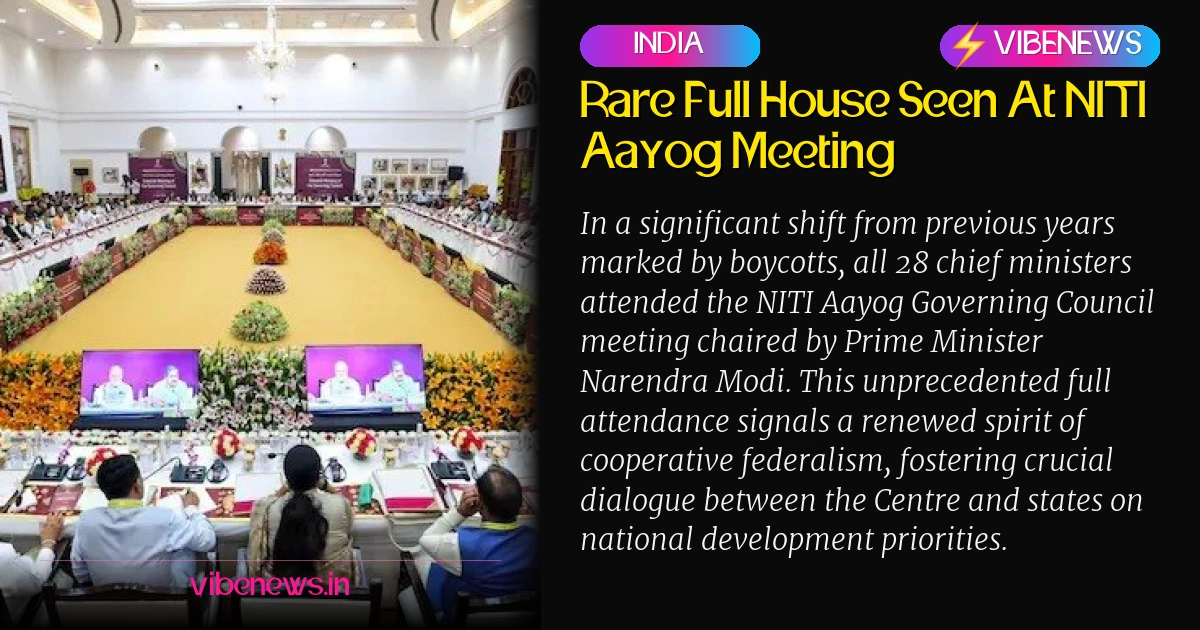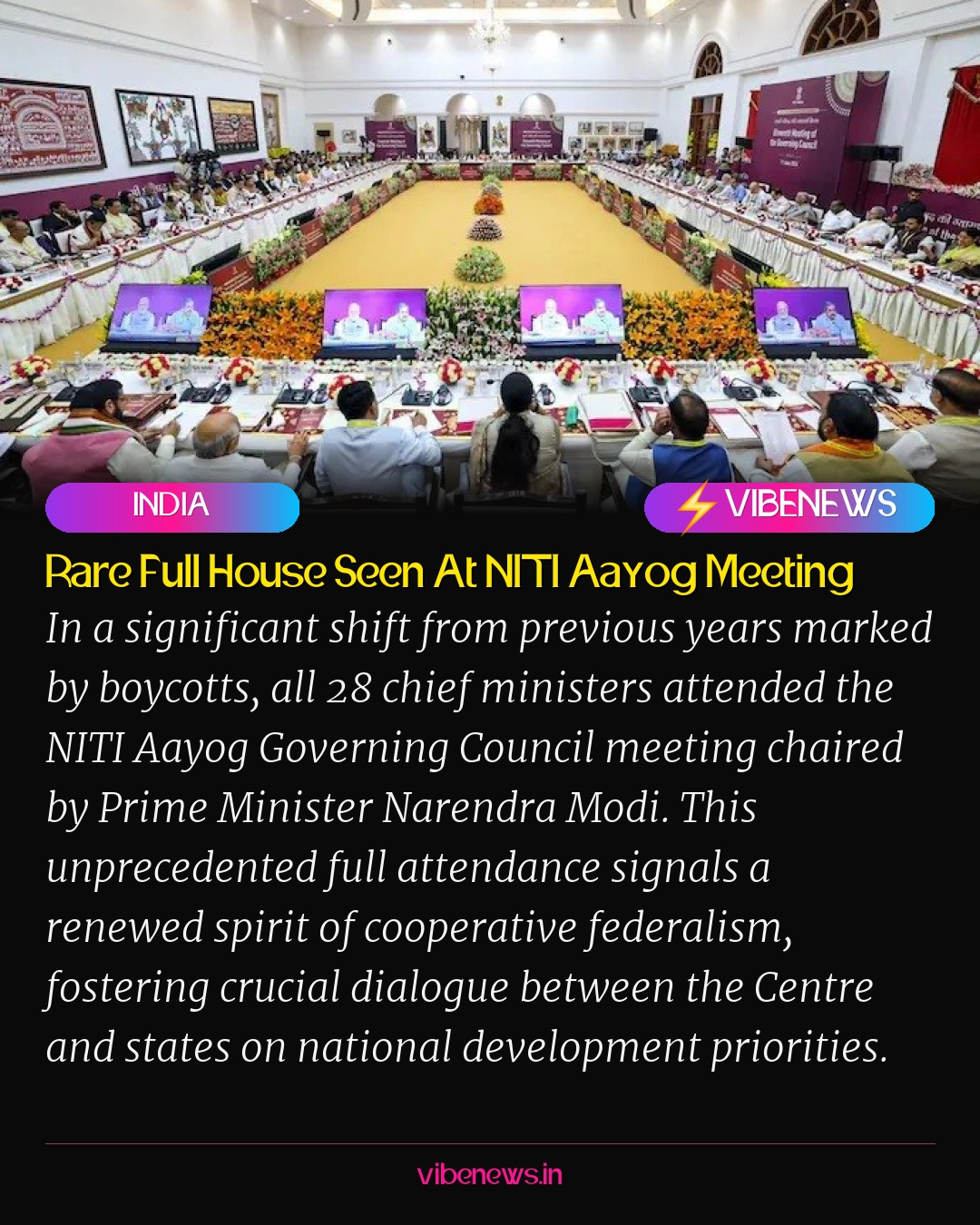
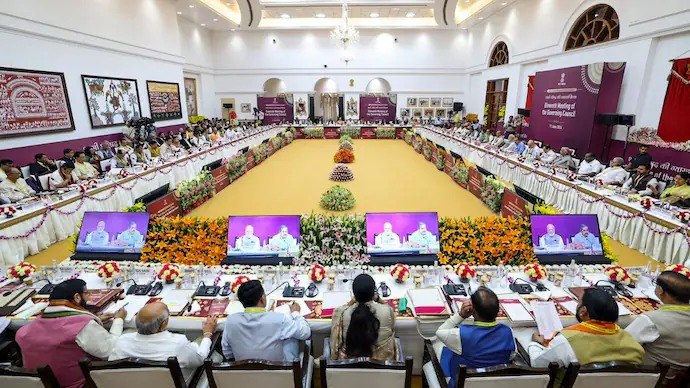
In a striking departure from recent trends, all 28 chief ministers from across India convened for the 11th NITI Aayog Governing Council meeting on Thursday, June 11, 2026. Chaired by Prime Minister Narendra Modi, the gathering at the Rashtrapati Bhavan Cultural Centre marked a rare full house for the country's apex public policy forum, signaling a potential resurgence of cooperative federalism.
The widespread participation included chief ministers from several opposition-ruled states, such as Joseph Vijay of Tamil Nadu, DK Shivakumar of Karnataka, VD Satheesan of Kerala, and Omar Abdullah of Jammu and Kashmir. They joined their BJP counterparts, including Devendra Fadnavis, Yogi Adityanath, and Suvendu Adhikari, alongside Lieutenant Governors of Union Territories and various Union ministers, underscoring a collective commitment to national development strategies.
This year's attendance stands in stark contrast to previous editions of the NITI Aayog Governing Council meeting, which were frequently marred by boycotts and absences from several chief ministers, particularly those from non-BJP governed states. For instance, the 10th Governing Council meeting saw four opposition chief ministers skip the event. In 2024, as many as ten chief ministers were absent, with some boycotting and others sending representatives. A similar pattern of nine chief ministers staying away was observed in 2023, highlighting a recurring challenge in fostering comprehensive Centre-state dialogue.
The full attendance this year is particularly significant as it suggests a willingness among state leaders, irrespective of political affiliation, to engage directly with the Centre on critical national issues. Prime Minister Modi, sharing photographs from the meeting, emphasized this spirit of cooperative federalism, stating that the collective efforts of the Centre and states are pivotal in realizing the vision of 'Viksit Bharat' (Developed India). He reiterated that India continues its growth trajectory with confidence despite global uncertainties, a message reinforced by the united front presented at the meeting.
During his address, Prime Minister Modi highlighted several key areas for collaborative action. He pointed to India's recent free trade agreements as significant opportunities for Micro, Small and Medium Enterprises (MSMEs) to prepare for global markets by adhering to international standards and enhancing competitiveness. He also stressed the importance of creating a robust ecosystem for India's youth through quality education, demand-driven skilling, and employment opportunities. Furthermore, Modi described women-led development as a cornerstone of the 'Viksit Bharat' vision, urging states to prioritize education, skilling, safety, and empowerment of women to unlock their full potential.
Following the main session, chief ministers from Uttar Pradesh, Tamil Nadu, Karnataka, Telangana, and Jammu and Kashmir held individual meetings with Prime Minister Modi. Notably, four of these states are governed by opposition parties, further underscoring the constructive engagement that characterized this year's council. The chief ministers also used the platform to share their visions for their respective states, outline development priorities, and present specific demands to the Centre, contributing to a more comprehensive and inclusive policy-making process.
The unprecedented participation at this NITI Aayog meeting sets a new precedent for Centre-state relations, suggesting a renewed focus on collaborative governance over political differences. This collective engagement is crucial for addressing India's diverse developmental challenges and leveraging the strengths of both the Union and state governments to accelerate the nation's progress towards its ambitious goals.
TL;DR
- All 28 chief ministers attended the 11th NITI Aayog Governing Council meeting, marking a rare full house.
- This attendance contrasts sharply with previous years, which saw significant boycotts and absences from state leaders.
- Prime Minister Narendra Modi chaired the meeting, emphasizing cooperative federalism and the vision of 'Viksit Bharat'.
- Chief ministers from both BJP and opposition-ruled states, including Tamil Nadu, Karnataka, Kerala, and Jammu & Kashmir, participated.
- PM Modi highlighted opportunities for MSMEs through FTAs, prioritizing youth education and skilling, and women-led development.
- Several chief ministers, including those from opposition parties, held individual meetings with the Prime Minister post-session.
- The full participation signals a potential shift towards more collaborative Centre-state engagement on national development priorities.