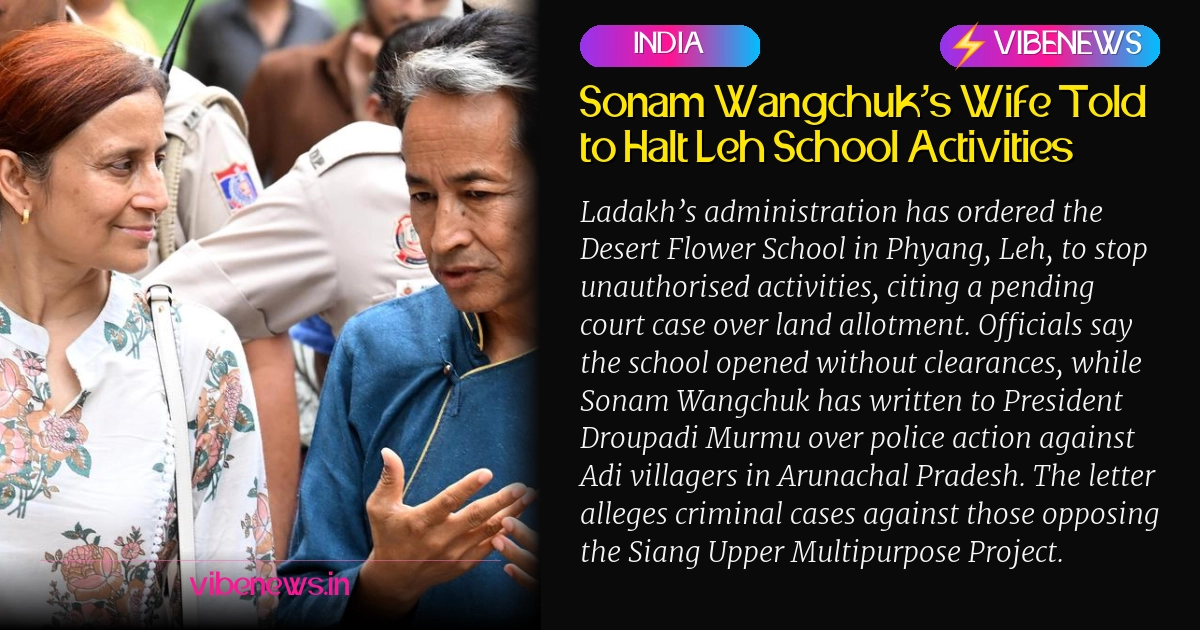
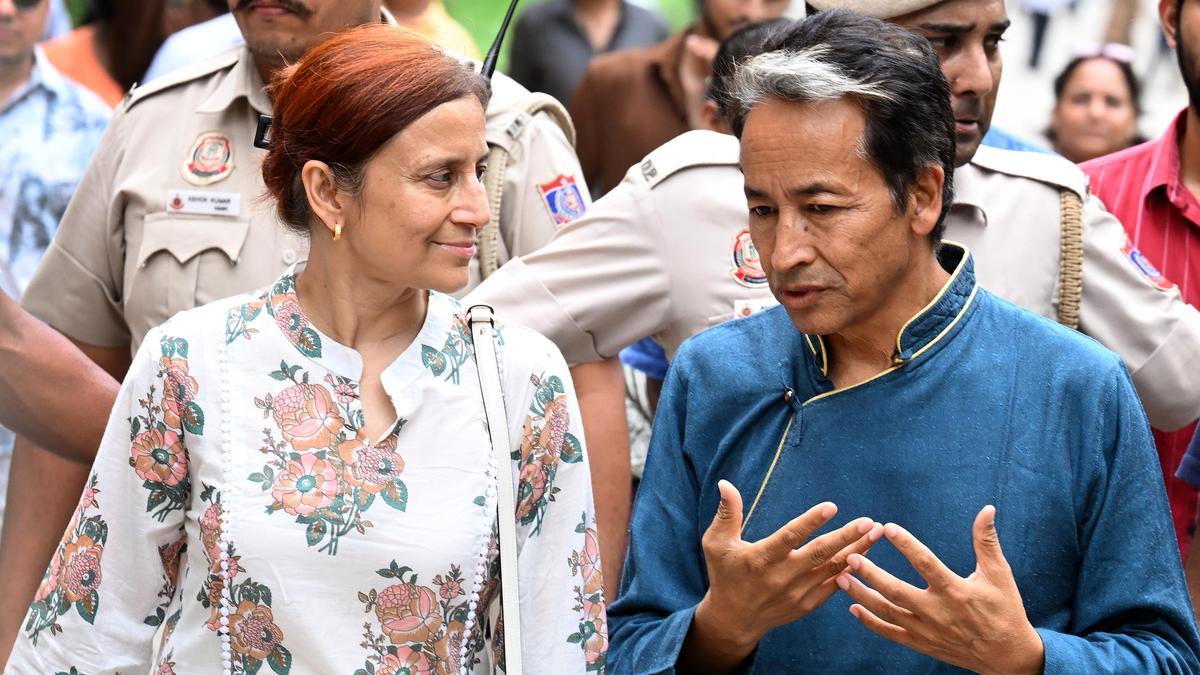
The Ladakh administration on Tuesday ordered the Himalayan Institute of Alternatives, Ladakh (HIAL), to stop unauthorised activities at its Desert Flower School in Phyang, Leh. The school is run by Gitanjali Angmo, wife of activist Sonam Wangchuk, and the order lands while the land question sits before the High Court of J&K and Ladakh.
The order came from the L-G administration, through a spokesman who said the school had begun functioning without the necessary clearance or approval from the competent authority. The administration told HIAL to strictly maintain the status quo and avoid any step that could prejudice the pending case.
The clearance request that started it
According to the administration, Angmo wrote to the Deputy Commissioner, Leh, on September 22 seeking a No Objection Certificate and clearance for the proposed members of the school’s Managing Committee. The school is located at Phyang, Leh. The administration had already cancelled the land allotment to HIAL in August 2025.
The administration’s position is blunt. The school, it says, commenced activities without obtaining the requisite consent, clearances and approvals from the concerned authorities. A notice issued by the Tehsildar, Leh, went further and strongly advised HIAL not to undertake any action towards functioning or commencing activities.
A letter to the President from Phyang
On the same day, Wangchuk turned his attention away from his family’s school and toward the Siang Valley in Arunachal Pradesh. He wrote to President Droupadi Murmu and appealed for intervention to protect the rights of indigenous communities, democratic freedoms and the fragile Himalayan ecology in the state.
Wangchuk has been campaigning for a special status for Ladakh. He was jailed last year under the National Security Act (NSA). His letter makes clear he sees a link between the two struggles, and he describes the Siang situation as one where indigenous communities, particularly the Adi people, are resisting the proposed Siang Upper Multipurpose Project.
The letter describes a heavy security footprint. Wangchuk highlighted reports of thousands of security personnel being deployed, young activists being arrested, and villagers facing intimidation and restrictions on movement. He also pointed to serious allegations of police excesses, including against elderly villagers, and to criminal cases filed against those opposing the project.
Wangchuk said the people of Ladakh have for years peacefully demanded constitutional safeguards under the Sixth Schedule to protect fragile ecology, ancestral lands and cultural identity. He wrote that his region knows what it feels like when decisions affecting its future are taken without adequate consultation.
The accusation that angered him most
The sharpest part of the letter is about how dissent is being labelled. Wangchuk said he was pained by the attempt to portray people raising legitimate concerns as anti-national or foreign-funded. He said it was deeply unfortunate that people who have stood by the nation in its most difficult times should face such accusations.
He tied this directly to Ladakh’s own experience. We have witnessed such allegations in Ladakh over the past year, he wrote, and now similar accusations are being made against the people of Arunachal Pradesh. His argument was that suspicion does not protect the country.
Such shortsighted accusations, particularly when made without credible evidence, do not strengthen national security. They weaken it. In sensitive border regions, the trust, goodwill and active cooperation of local communities are among our country’s greatest strategic strengths.
Wangchuk also called for de-escalation, protection of democratic rights and biological safeguards. He addressed the President directly, writing that the Himalayas are both the water towers of India and the shield of its borders. Protecting their ecology and respecting the communities who have lived there for generations, he argued, is not against national development or national security. It is essential to both.
He closed by asking the President to use the moral authority of her office to help bring peace, justice and meaningful dialogue to the Siang Valley. Border communities, he wrote, deserve to be treated as trusted partners in nation-building, not as suspects for raising their voices.
Two fronts, one argument
The two developments are separate on paper. One is a land and clearance dispute that the administration says is already before the court. The other is a protest over a hydro project in another state. Yet both stories circle the same question: who gets to speak, and what happens when they do.
In Ladakh, the administration’s order makes the school’s operations a matter of compliance and legal status. The administration has framed the issue around the court case and the absence of approvals. It has not, in the material available, addressed Wangchuk’s letter to the President.
Wangchuk’s letter, for its part, frames the Siang protests as a question of indigenous rights and ecological protection. He has asked for intervention from the highest constitutional office, and his appeal lands at a time when, in his words, villagers in the Siang Valley are living under heavy security and facing criminal cases.
What comes next
The immediate test is the status quo order. The administration has instructed HIAL to hold still while the High Court case is pending. Whether the school complies, and how the court addresses the land allotment that was cancelled in August 2025, will determine the next move in Phyang.
In Arunachal Pradesh, the reported deployment of security personnel and the allegations of police excess are the points most likely to draw scrutiny. Wangchuk’s letter puts the President on notice of those claims. The letter itself does not show a response from the President’s office.
For readers in Ladakh, the story is about a family’s school and a court battle that has been running for months. For the rest of the country, it is about a prominent activist using his personal platform to speak for communities far from home, and about a government that has been asked to explain both its land decisions and its handling of protest.
TL;DR
- Ladakh administration ordered HIAL to stop unauthorised activities at the Desert Flower School in Phyang, Leh, citing a pending court case.
- The school is run by Gitanjali Angmo, wife of activist Sonam Wangchuk, and officials say it started functioning without clearances.
- The administration cancelled HIAL’s land allotment in August 2025, and the matter is sub judice before the High Court of J&K and Ladakh.
- Angmo had sought a No Objection Certificate for the school’s proposed Managing Committee members on September 22.
- On the same day, Wangchuk wrote to President Droupadi Murmu about the Siang Upper Multipurpose Project in Arunachal Pradesh.
- He alleged police excesses, deployment of thousands of security personnel, and criminal cases against those opposing the project.