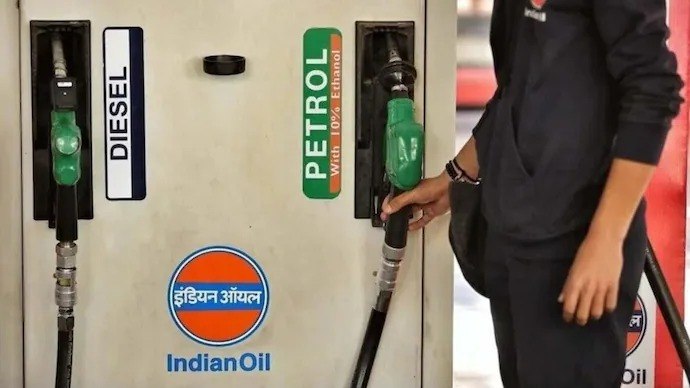
The critical Strait of Hormuz, a vital artery for global oil shipments, has reopened following an understanding between the United States and Iran, alleviating immediate concerns about supply disruptions. This development has led to a softening of international crude oil prices, prompting many Indian households to wonder if this will finally translate into cheaper petrol, diesel, and LPG at the pump.
However, the direct impact on retail fuel prices in India is unlikely to be immediate or substantial, according to economic experts. Dr. Manoranjan Sharma, Chief Economist at Infomerics Ratings, indicates that meaningful price cuts for petrol and diesel would only materialise if crude oil prices remain consistently below the $80 per barrel mark for an extended period.
The Strait of Hormuz, a narrow passage connecting the Persian Gulf to the Gulf of Oman, is globally significant, facilitating the transit of nearly one-fifth of the world's oil and a considerable portion of liquefied natural gas (LNG). For India, which relies on imports for over 85% of its crude oil needs, any instability in this region directly impacts the nation's import bill, the strength of the rupee, and overall inflation.
While the reopening of the strait is a positive development, reducing fears of supply shortages and helping to stabilise global crude prices, the benefits for Indian consumers at the fuel station are complex. Oil Marketing Companies (OMCs) in India are currently focused on recouping past losses, often referred to as 'under-recoveries,' and strengthening their financial health. This means they may not immediately pass on the full benefit of lower international crude prices to consumers.
Even if OMCs decide to reduce prices in the near term, any cuts are likely to be modest, potentially in the range of Rs 2-4 per litre, and would be carefully implemented rather than a drastic return to pre-conflict levels. This cautious approach reflects the need for sustained low crude prices to justify significant retail adjustments.
The outlook for LPG cylinder prices also suggests a selective rather than widespread reduction. The Indian government has already provided considerable support to households through periodic LPG price cuts and subsidies, including a notable Rs 200 per cylinder subsidy for beneficiaries of the Pradhan Mantri Ujjwala Yojana (PMUY). Eligible households can receive this support for up to 12 subsidised domestic cylinders annually, with the exact amount varying by city.
Should global LPG and crude oil prices remain subdued, the government's subsidy burden could lessen, potentially creating more fiscal space for future price management. However, any further LPG relief will likely depend on a confluence of international energy prices, the government's financial position, and its policy priorities, meaning benefits may continue to be targeted rather than universally applied.
While lower energy prices can offer some relief to families by reducing expenditure on cooking fuel and moderating transportation costs, the overall impact on monthly household budgets may not be dramatic. Existing subsidies and previous LPG price reductions already provide a cushion for lower-income households. The limited pass-through of crude oil price declines to petrol and diesel, coupled with OMC financial considerations and government fiscal priorities, will restrict the overall savings.
Beyond direct consumer prices, lower oil prices offer significant advantages for India's financial markets and currency. Periods of elevated oil prices and global uncertainty have historically led to substantial foreign institutional investor (FII) outflows from India. Such outflows, exceeding $20 billion, can weaken the rupee, increase exchange-rate volatility, and necessitate intervention by the Reserve Bank of India (RBI) through dollar sales.
While RBI intervention can mitigate sharp currency movements, it cannot entirely prevent depreciation and may draw down foreign exchange reserves. Dr. Sharma notes that India's substantial forex reserves, robust services exports, and resilient external sector provide a strong buffer against such economic shocks. The reopening of the Strait of Hormuz and the easing of US-Iran tensions are broadly positive for India, primarily by reducing the specter of an oil supply crisis.
Ultimately, while the global oil market sees some relief, Indian consumers should manage their expectations regarding immediate and sharp reductions in fuel bills. For petrol and diesel prices to experience meaningful cuts, crude oil prices will need to remain low for an extended duration. Until then, any relief at the petrol pump or for LPG prices is likely to be gradual, limited, and contingent on the strategic decisions of both the government and oil marketing companies.
TL;DR
- The Strait of Hormuz has reopened, easing global oil supply concerns and leading to a softening of crude oil prices.
- Despite this, immediate and significant reductions in petrol and diesel prices in India are unlikely, according to experts.
- Meaningful price cuts for petrol and diesel would require crude oil to remain sustainably below $80 per barrel for a prolonged period.
- Indian Oil Marketing Companies (OMCs) are currently prioritising the recovery of past losses, which may delay the full pass-through of lower crude prices.
- Any potential retail price cuts for petrol and diesel are expected to be limited, possibly around Rs 2-4 per litre, and carefully calibrated.
- LPG price relief is also likely to be selective, building on existing government subsidies for beneficiaries like those under the Pradhan Mantri Ujjwala Yojana.
- Lower oil prices are positive for India's economy, strengthening the rupee and reducing pressure on financial markets, but direct consumer savings on fuel may be modest.
- Future fuel price adjustments will depend on sustained international price trends, government fiscal policies, and decisions by oil companies.