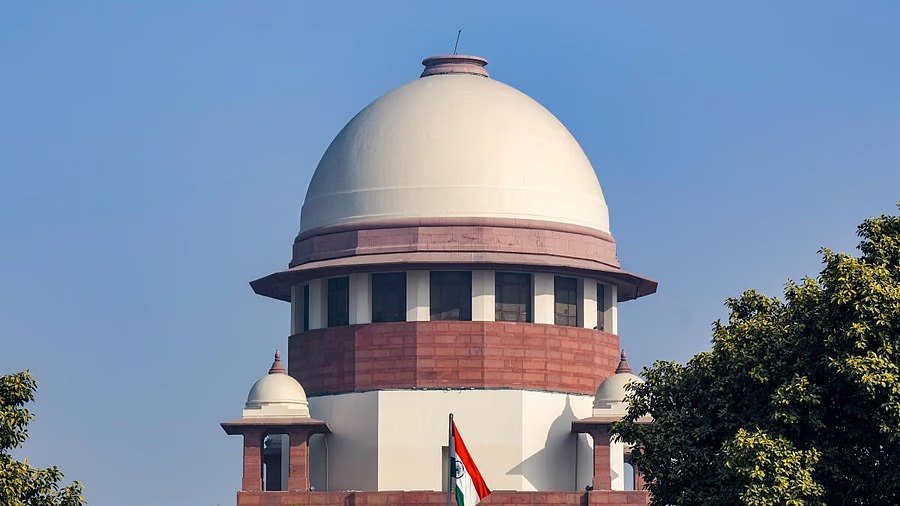
The Supreme Court of India has issued a stern observation, stating that Right to Information (RTI) activism has transformed into a 'new business,' often leading to the obstruction of public servants and development projects. This significant remark came as a bench of Justices Sandeep Mehta and Vijay Bishnoi refused anticipatory bail to RTI activist Rakesh Kumar Behl and his aide, who are embroiled in a case involving alleged obstruction and assault related to a Rs 57 crore road project in Punjab.
The apex court's criticism underscores a growing judicial concern regarding the potential misuse of the RTI Act, an instrument designed to promote transparency and accountability. The bench questioned the authority of activists to monitor public projects directly, asserting that such oversight falls within the purview of designated government authorities. This stance clarifies the judiciary's view on the appropriate channels for addressing corruption allegations, emphasizing institutional mechanisms over individual intervention that might cross legal boundaries.
The case at hand involves serious allegations against Behl and his associate. They stand accused of obstructing the construction of a vital road project, using caste-based slurs against workers, and physically assaulting labourers. An FIR was registered against them on February 20 this year in Punjab, detailing the charges. The complainant reportedly sustained seven injuries, including one grievous hurt, during the alleged incident, painting a picture of a confrontation that escalated beyond mere information seeking.
In their defense, the activists claimed they were being falsely implicated. They argued that the charges were a retaliatory measure after they had raised legitimate concerns about the use of substandard materials in the Rs 57 crore project. This defense attempts to frame their actions as genuine public interest advocacy, aimed at ensuring quality and preventing corruption in public spending. However, the courts have so far not found this argument compelling enough to grant them pre-arrest bail.
Both the Punjab and Haryana High Court and subsequently the Supreme Court rejected their pleas for anticipatory bail. The High Court had previously cited substantial evidence of assault and obstruction, indicating that the allegations against Behl and his aide were not merely speculative. The Supreme Court's decision to uphold this rejection reinforces the gravity with which the judiciary views the alleged actions, particularly when they involve physical harm and disruption of public works.
Justice Mehta, while delivering the Supreme Court's decision, articulated the court's broader apprehension about the evolving nature of RTI activism. He highlighted instances where the Act, intended as a tool for good governance, appears to be exploited for personal gain or to exert undue influence. This judicial perspective suggests a need for a clearer distinction between genuine public interest litigation and activities that might be driven by ulterior motives, potentially hindering legitimate development efforts.
This ruling sends a clear message about the boundaries of activism and the rule of law. While the Right to Information Act empowers citizens to seek information, it does not grant individuals the authority to take law enforcement into their own hands or to physically obstruct government projects. The court's observation serves as a reminder that allegations of corruption, even if valid, must be pursued through established legal and administrative channels, allowing authorities to investigate and take appropriate action.
The implications of this Supreme Court observation extend beyond this specific case. It could influence how lower courts perceive and handle similar cases involving RTI activists accused of overstepping their roles. The judiciary is signaling that while transparency is crucial, it must not come at the cost of public order, safety, or the timely execution of essential infrastructure projects. This development underscores the ongoing challenge of balancing citizen oversight with the need for efficient governance and the prevention of vigilantism.
Moving forward, Behl and his aide will now have to face the legal process without the protection of anticipatory bail, meaning they can be arrested at any time. The trial will proceed, and the evidence presented by both sides will be scrutinized. This case will likely serve as a precedent, prompting a re-evaluation of the methods employed by some RTI activists and reinforcing the judiciary's commitment to ensuring that legal instruments are used for their intended purpose, not as leverage for personal or commercial interests.
TL;DR
- The Supreme Court of India observed that RTI activism has become a 'new business' that obstructs public servants and projects.
- This remark came as the court denied anticipatory bail to RTI activist Rakesh Kumar Behl and his aide.
- Behl and his associate are accused of obstructing a Rs 57 crore road project in Punjab, using caste-based slurs, and assaulting labourers.
- An FIR was registered against them on February 20 this year, detailing charges including causing seven injuries to the complainant.
- The activists claimed false implication, stating they had raised concerns about substandard materials in the project.
- Both the Punjab and Haryana High Court and the Supreme Court rejected their bail pleas, citing evidence of assault and obstruction.
- The Supreme Court emphasized that authorities, not activists, are responsible for addressing corruption allegations in public projects.
- The ruling highlights judicial concern over the potential misuse of the RTI Act for personal gain or to hinder legitimate development.