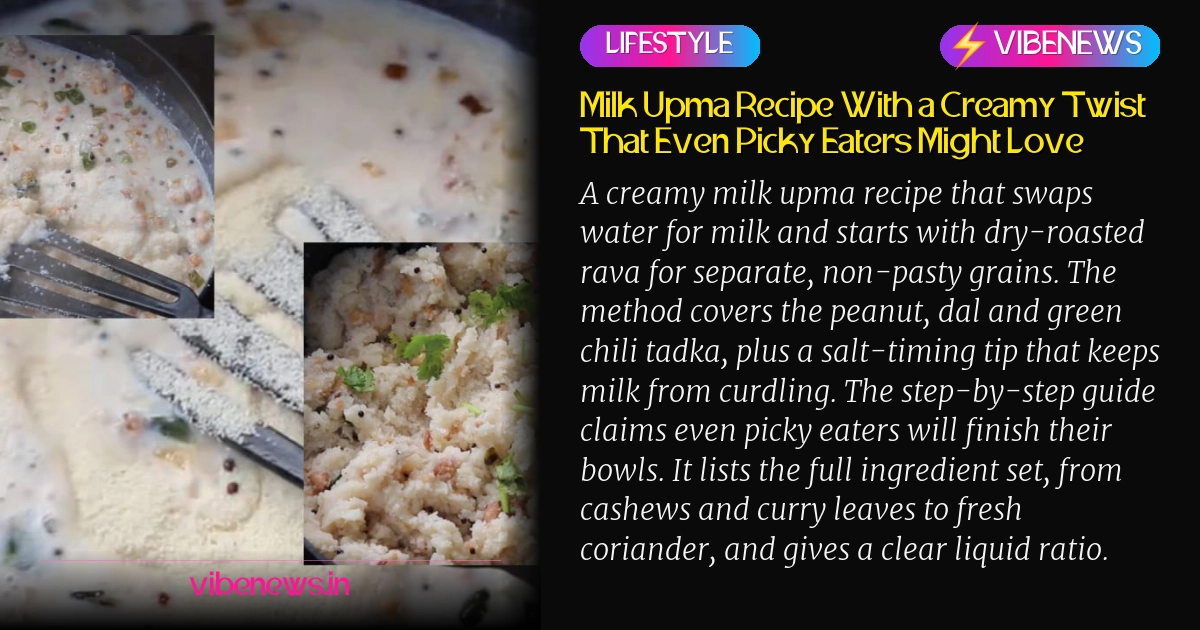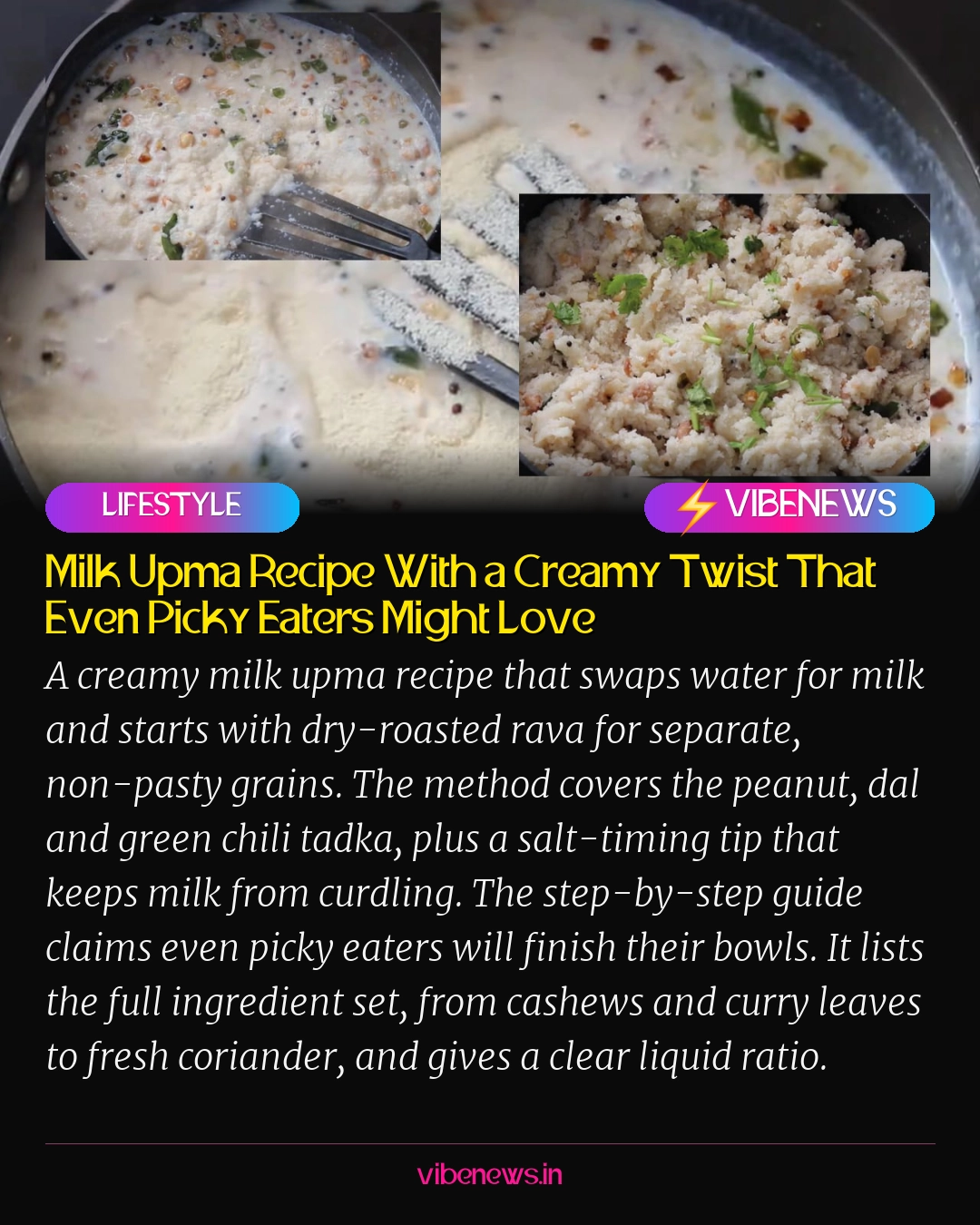
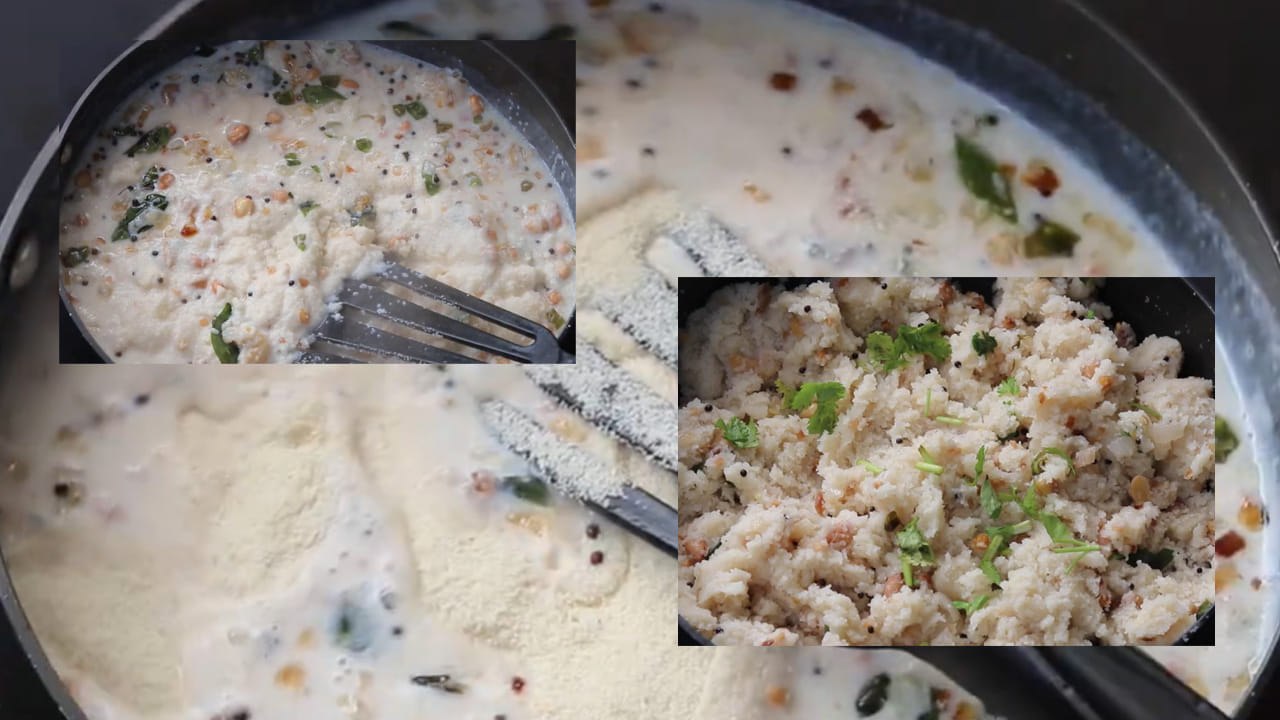
Prasanna Yadla’s milk upma recipe, updated on November 10, 2026, replaces the water that upma is usually cooked in with milk, producing a richer and creamier breakfast bowl. The guide is written in Telugu and aimed at home cooks who want something different from the everyday tiffin.
The dish is built on upma rava, the coarse semolina that forms the base of most South Indian-style breakfasts. The recipe calls for one cup of rava, two tablespoons of oil, two to three tablespoons of peanuts, a teaspoon of mustard seeds, a tablespoon each of chana dal and urad dal, and a teaspoon of ginger. It also uses four to five green chilies, adjusted to taste, along with a small chopped onion, some cashews, a sprig of curry leaves, one cup of water, two cups of milk, salt and fresh coriander.
Roast the rava before anything else
The first step is easy to skip, and the author says it matters most. Heat a thick kadai over low flame, add the rava and dry-roast it for two to three minutes. The rava should warm through without changing color. Once roasted, move it to a plate and set it aside.
According to the recipe, this step is what keeps the finished upma loose and grainy instead of pasty. Cooks who skip it are more likely to end up with a dense, sticky texture.
Oil, not ghee, for the tadka
Back in the same pan, add two tablespoons of oil. The author is specific here: oil suits milk upma better than ghee, which the recipe says does not add much flavor to this dish. Once the oil heats, fry two to three tablespoons of peanuts for a short time.
Next come the mustard seeds, chana dal and urad dal. These go in over low flame and need careful watching, because the dals can burn quickly. When they turn golden, add the grated ginger, the green chilies, the chopped onion and, if you like, a few cashews and a sprig of curry leaves. The tadka is finished once everything has fried gently and the onion is soft.
The milk rule that prevents curdling
The recipe spends the most time on one detail: when to add salt. Pour in one cup of water and two cups of room-temperature milk. Cover the pan and bring the liquid to a hard boil over high flame.
Do not add salt while the milk is boiling, the author warns, because it can cause the milk to split. Salt goes in later, once the milk has reduced and the upma is cooking through.
The recipe also gives a simple ratio for the liquid. One cup of rava needs about three cups of liquid overall. Readers who prefer a fully milk-based version can use three cups of milk and no water.
Cooking it through
When the milk reaches a rolling boil, lower the flame and add the roasted rava slowly while stirring constantly. Adding it gradually prevents lumps from forming. Once the rava is in, raise the heat to medium and let the mixture cook.
Add salt at this stage and mix well. Then reduce the flame to medium or low and keep cooking until the upma thickens and turns dry and fluffy. The author estimates this takes about ten minutes. Finish with a sprinkle of finely chopped coriander and turn off the stove.
Why the recipe is getting attention
The article makes a clear promise in its opening lines: this version is so creamy that people who usually avoid upma will keep reaching for another bowl. That claim comes from the author and has not been tested by anyone else. It is still the hook that makes the recipe worth trying for anyone who finds plain upma bland.
For readers outside Andhra Pradesh and Telangana, the recipe is a practical way into a familiar dish. The ingredients are common in most kitchens, and the method relies on technique rather than anything specialized. For households in the two Telugu states, it offers a version of a breakfast they already know, adjusted with milk and a few careful steps.
The recipe does not offer nutritional details or serving sizes, so anyone tracking calories or dietary needs will have to work those out separately. What it does offer is a clear, step-by-step method with timings, heat levels and the one warning that most often ruins this kind of dish. Those details are what make it easy to follow on a weekday morning.
TL;DR
- Milk upma replaces the usual water with milk for a richer, creamier breakfast bowl.
- Dry-roasting the rava first keeps the finished upma loose and grainy instead of pasty.
- The recipe says oil works better than ghee for the tadka in this particular dish.
- Salt should be added only after the milk has reduced, because adding it during boiling can split the milk.
- The method uses one cup of rava with about three cups of total liquid.
- The author says even picky eaters will finish their bowls.