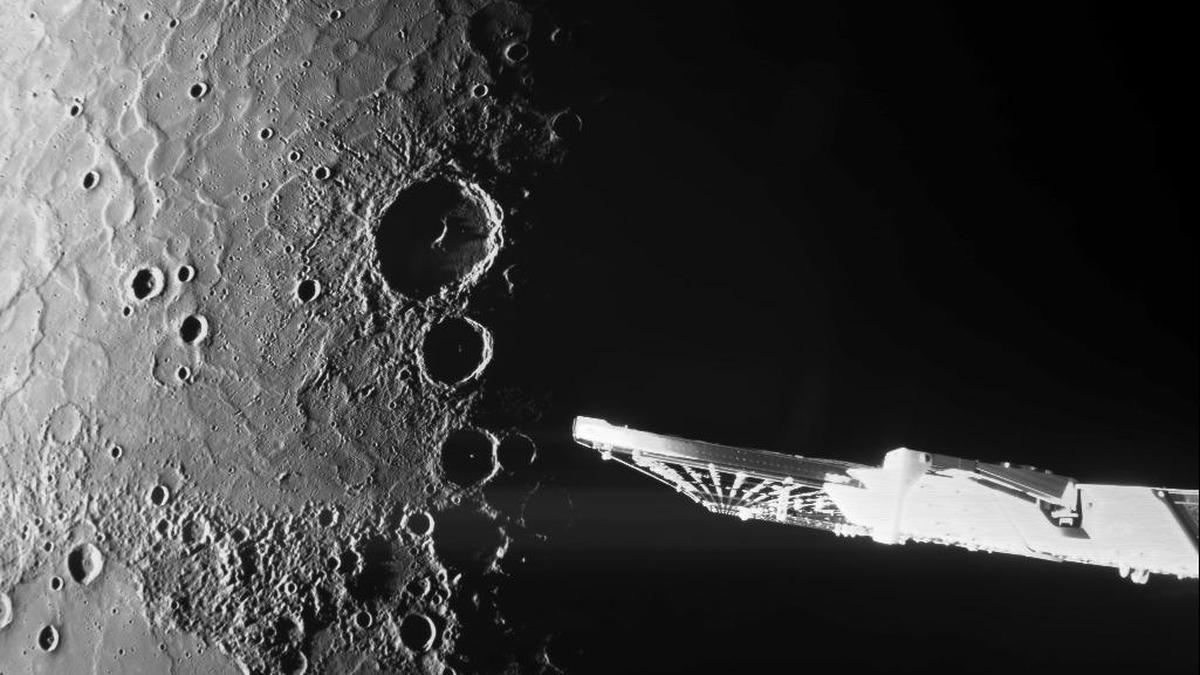
BepiColombo Enters Mercury Orbit Amid Thruster Glitch
After an eight-year journey across the solar system, the European-Japanese spacecraft BepiColombo has officially begun orbiting Mercury. The milestone arrival on November 21, 2026, marks a major step forward in planetary exploration, though it comes paired with unexpected technical trouble.
The European Space Agency confirmed that while the spacecraft achieved a successful entry into orbit, a software issue caused the thruster burn to run shorter than planned. Mission controllers at the European Space Operations Centre immediately confirmed the spacecraft remains safe while diagnostic work continues.
High-Stakes Exploration of the Inner Solar System
Mercury stands as the smallest and least explored of the four rocky planets in the inner solar system. BepiColombo represents only the third spacecraft to visit the distant world and just the second to enter orbit around it.
The spacecraft is safe and teams at ESOC are working to understand what happened.
The robotic explorer is a joint undertaking between the European Space Agency and the Japan Aerospace Exploration Agency. Launched back in 2018, the composite vehicle consists of two distinct scientific units: the Mercury Planetary Orbiter and the Mercury Magnetospheric Orbiter. These units are scheduled to separate on December 9 and 10, with routine science operations slated to kick off in April.
Unlocking Solar System Mysteries
Researchers hope the mission will finally answer lingering questions regarding Mercury. Key scientific objectives include uncovering why the sun-scorched planet maintains a magnetic field, determining how ice manages to survive inside polar craters, and explaining the geological nature of mysterious surface depressions known as hollows.
Orbiting a world sitting sixty percent closer to the Sun than Earth presents severe engineering hurdles. From Mercury’s surface, the Sun appears more than three times as large and seven times as luminous as it does from Earth, testing the endurance of the robotic explorer.
Key Facts
BepiColombo entered Mercury orbit on November 21, 2026.The mission is a joint effort between the European Space Agency and Japan Aerospace Exploration Agency.A software issue caused the orbital insertion thruster burn to run shorter than planned.The spacecraft was originally launched in 2018 for its eight-year transit.Separation of the orbiter units is scheduled for December 9 and 10.What caused the BepiColombo thruster issue? | A software glitch caused the thruster burn to run shorter than planned during the orbital insertion maneuver on November 22, 2026.
Is the spacecraft in danger? | Mission officials confirmed that the spacecraft is completely safe while teams at the European Space Operations Centre investigate the anomaly.
When do science operations begin? | Routine science operations for the dual-orbiter mission are scheduled to commence in April following the separation of the two spacecraft modules.
TL;DR
- BepiColombo entered Mercury orbit after an eight-year journey.
- A software glitch caused a shorter-than-planned thruster burn.
- Mission controllers confirmed the spacecraft remains safe.
- The joint ESA and JAXA mission launched in 2018.
- Science operations are slated to begin in April.