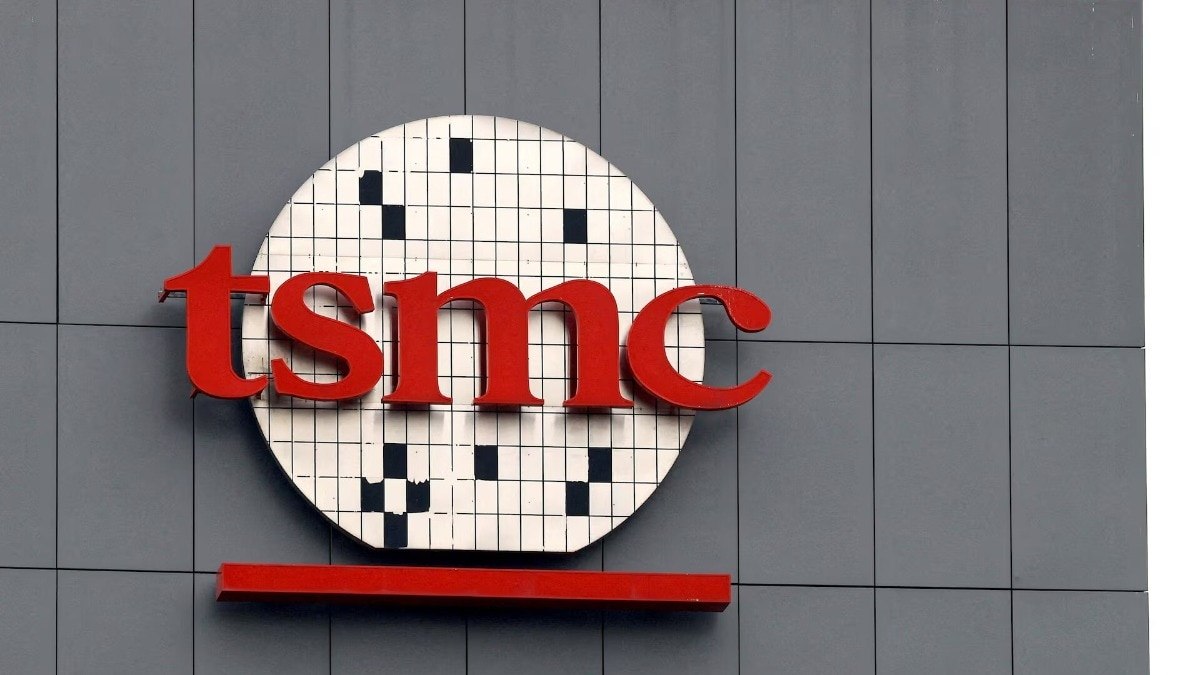
TSMC’s US-listed shares jumped more than 6% in early trading on Friday after a report that the world’s biggest contract chipmaker is exploring advanced memory production at the request of its largest customer, Nvidia.
The idea is big. TSMC has built its fortune making processors for other companies. Now it is reportedly looking at a business that has been dominated by Samsung, SK Hynix and Micron for years, and investors clearly liked what they heard.
Nvidia’s request opens a new front
According to the report, TSMC has started drawing up plans to manufacture a next-generation memory technology called 3D DRAM. Another report said the company is considering two routes: building new factories, or acquiring an existing semiconductor facility and converting it for memory production.
Neither path is confirmed. TSMC told the publication that its focus remains on its core foundry business, and no production timeline has been disclosed. For now, the market is reacting to a possibility, not a product.
Why memory has become the AI bottleneck
Companies are building increasingly powerful AI processors, but those chips need equally capable memory to store and retrieve data quickly. The rapid expansion of AI data centres has sent demand for memory soaring, and manufacturers are struggling to keep up.
That is why Nvidia matters so much here. Its GPUs power many of the world’s AI data centres, and a processor is only as useful as the memory feeding it. More memory supply could help ease a growing bottleneck in the AI hardware supply chain, which explains why a request from one customer can move a chipmaker’s stock by more than 6% in a single session.
What 3D DRAM would actually change
The proposed technology is not a small upgrade. Conventional DRAM arranges memory cells in a horizontal layer. 3D DRAM stacks them vertically to increase capacity, which is a different engineering challenge and a different factory problem.
It is also different from High Bandwidth Memory, the advanced memory used alongside AI processors. TSMC already works with SK Hynix on HBM4 development, so the company is not a stranger to memory. But manufacturing 3D DRAM would be a much bigger step, moving TSMC from supplying partners to building the memory itself.
A history most investors have forgotten. TSMC is not entirely new to memory. The company manufactured standard memory chips from the 1990s until the late 2000s, before it focused fully on contract chipmaking. That earlier chapter is the reason the current report has drawn attention: the company has done this before, just not at the scale of today’s AI demand.
A crowded field of established rivals
If TSMC goes ahead, it would compete with three established memory makers: Samsung Electronics, SK Hynix and Micron. All three are also exploring next-generation memory technologies, which means TSMC would be entering a race that is already well underway.
That competition cuts both ways. TSMC brings deep manufacturing expertise and a close relationship with the biggest name in AI hardware. But the incumbents have decades of memory know-how, and they are not standing still while a newcomer draws up plans.
The catch: memory is a cyclical business
This is the part that sobers the excitement. Memory is a cyclical market, and the shortage driving today’s urgency could turn into oversupply once new factories start producing chips. Anyone who has watched memory prices swing knows how quickly a boom can become a glut.
Memory is a cyclical market, and today’s shortage could eventually turn into oversupply once new factories start producing chips.
Building a memory business is also slow. Moving from plans to large-scale manufacturing could take years, and TSMC has not said when, or whether, it will commit the capital needed to get there.
For now, Nvidia’s reported request has opened an interesting possibility. The stock jump shows how much investors want more AI memory supply to exist. But TSMC still has a long way to go before it becomes another major memory chipmaker, and the market has only priced in the first step.
TL;DR
- TSMC shares jumped more than 6% in early trading on Friday after reports it is exploring advanced memory chip production.
- The push reportedly follows a request from its biggest customer, Nvidia, whose GPUs power many AI data centres.
- TSMC is drawing up plans for 3D DRAM, a vertically stacked memory technology that differs from conventional DRAM and HBM.
- The company is considering new factories or acquiring an existing facility and converting it for memory production.
- TSMC says its focus remains its core foundry business, and no production timeline has been disclosed.
- Memory is cyclical, and today’s shortage could eventually turn into oversupply once new factories start producing chips.