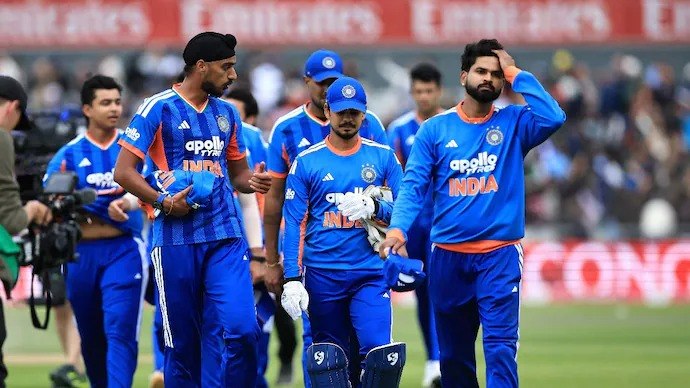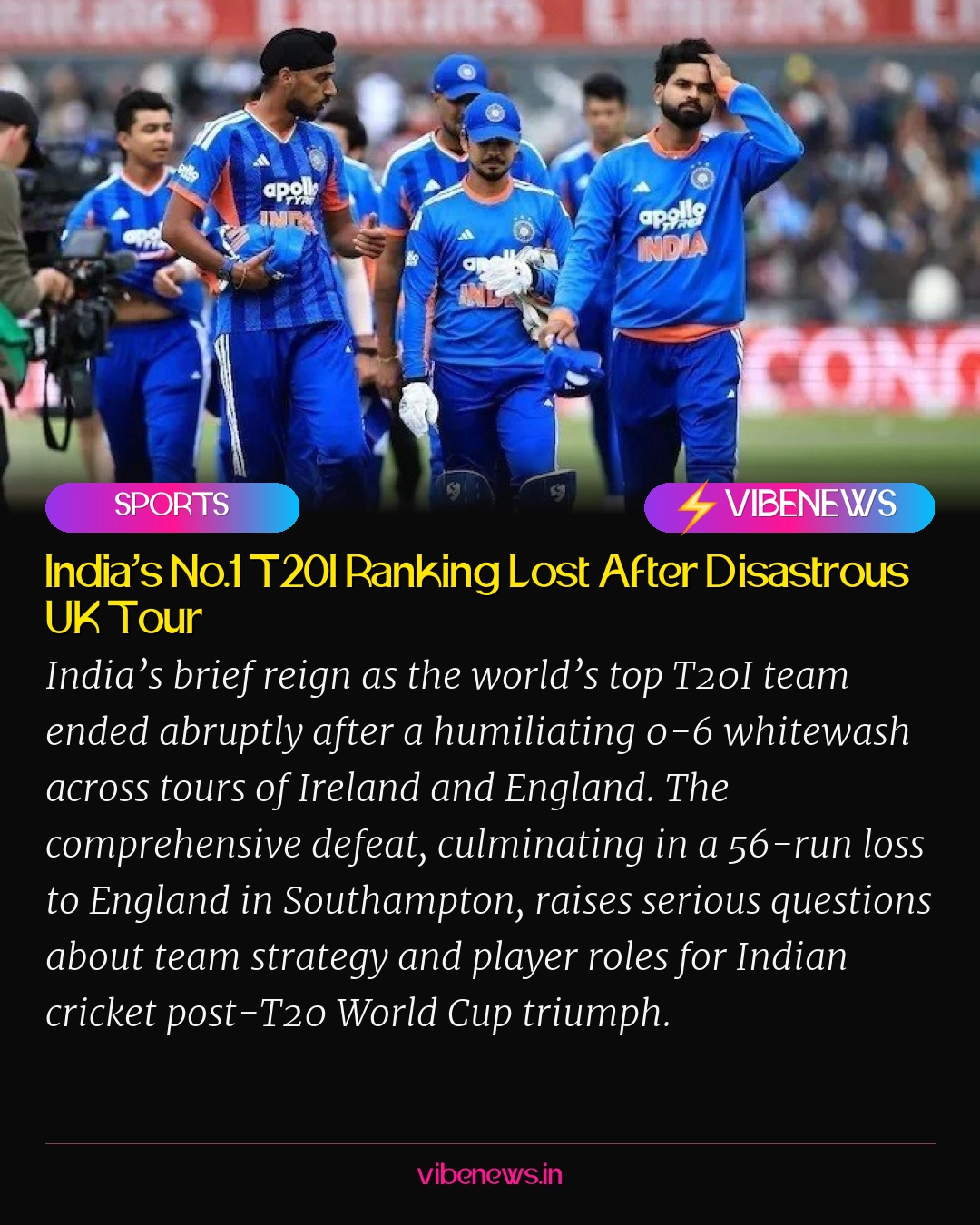
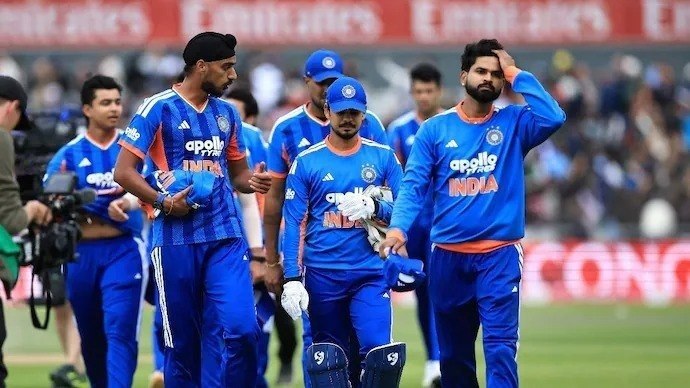
The Indian cricket team has lost its coveted No.1 T20 International ranking, just two weeks after clinching the T20 World Cup, following a disastrous 0-6 whitewash across its recent tours of Ireland and England. This humiliating run culminated in a 56-run defeat to England in the final T20I in Southampton, signaling a significant strategic setback for the world champions.
The comprehensive nature of the defeat, which saw India fail to secure a single victory across six T20 International matches, has sparked widespread concern among fans and experts. It highlights a stark contrast between their recent World Cup success and their struggles on foreign soil, prompting a re-evaluation of team composition and tactical approaches.
A Brief Reign at the Top
India’s ascent to the top of the T20I rankings was short-lived, lasting merely two weeks after their triumphant T20 World Cup campaign. The team, under the captaincy of Shreyas Iyer for both series, appeared to lose its rhythm and tactical edge almost immediately after their global success.
The tour began with a 0-2 series loss against Ireland, where India struggled to adapt to conditions. This was followed by an even more emphatic 0-4 surrender against England, exposing deep-seated issues within the squad’s performance and strategy.
England’s Dominance in Southampton
The final T20I in Southampton served as a stark reminder of India’s challenges. England, playing with confidence and aggression, posted a formidable total of 257 for 3, their highest-ever T20I score against India. This monumental target proved insurmountable for the visitors.
England’s innings was spearheaded by exceptional performances from their top order. The Indian bowlers struggled to contain the onslaught, conceding runs freely and failing to pick up crucial wickets at regular intervals.
Buttler and Brook’s Record Partnership
The highlight of England’s batting display was a record-breaking 233-run partnership between Jos Buttler and captain Harry Brook. Buttler smashed a blistering 131 runs, showcasing his destructive power and experience.
Harry Brook, on the other hand, played a breathtaking innings, remaining unbeaten on 95 off just 45 balls. Their combined assault dismantled India’s bowling attack, with bowlers like Prince Yadav conceding 60 runs and Axar Patel leaking 63 without a wicket.
India’s Persistent Struggles Throughout the Tour
India’s batting line-up, which had shown glimpses of brilliance, consistently failed to build substantial partnerships or accelerate effectively under pressure. Despite individual efforts like Ishan Kishan’s 56 off 35, Shreyas Iyer’s 38 off 16, and Tilak Varma’s 53 off 25 in the final match, the team could only manage 201 runs in response to England’s mammoth total.
The recurring issue of losing both openers inside the Powerplay plagued India throughout the series, putting immense pressure on the middle order. This pattern of early collapses made chasing high totals exceedingly difficult.
Batting Order Instability and Bowling Woes
A significant concern highlighted by the tour was the lack of a settled playing XI and a clear tactical identity. The team management experimented extensively with the batting order, with players like Tilak Varma batting at multiple positions and Axar Patel floating through the order.
The bowling attack also suffered from constant chopping and changing, exacerbated by injuries to key players like Harshit Rana and Varun Chakravarthy. This instability prevented bowlers from finding their rhythm and executing consistent lengths, particularly against the short ball, which England exploited effectively.
Questions for Indian Cricket’s Future Strategy
The 0-6 record and the loss of the No.1 ranking less than a fortnight after a World Cup triumph raise critical questions for the Indian cricket team management. The aggressive blueprint that brought success at home seemingly failed to translate to overseas conditions, where pitches rewarded smart batting over blind aggression.
The inability to identify a settled XI, the persistence with constant changes, and the apparent struggle to find tactical solutions once opponents exposed India’s flaws are major takeaways. As the team returns from the United Kingdom thoroughly outplayed, the focus will now shift to strategic planning and player development to regain their dominance in T20 International cricket.
TL;DR
- India lost its No.1 T20I ranking just two weeks after winning the T20 World Cup.
- The team suffered a comprehensive 0-6 defeat across T20I series against Ireland (0-2) and England (0-4).
- England secured a 56-run victory in the final T20I in Southampton, posting 257/3, their highest T20I total against India.
- Jos Buttler (131) and Harry Brook (95* off 45 balls) formed a record 233-run partnership for England.
- India’s tour was marked by an unsettled playing XI, tactical inconsistencies, and struggles with both bat and ball.
- The performance raises critical questions for Indian cricket team management regarding future T20 strategy and player roles.