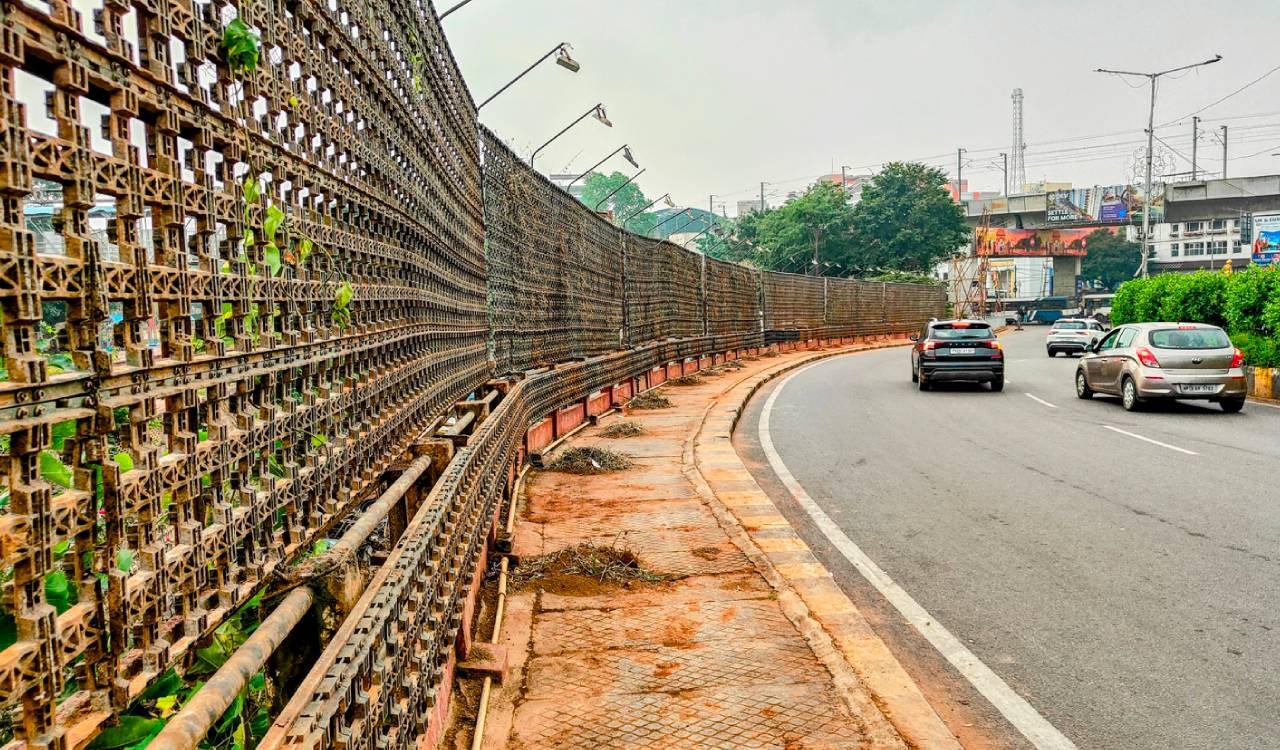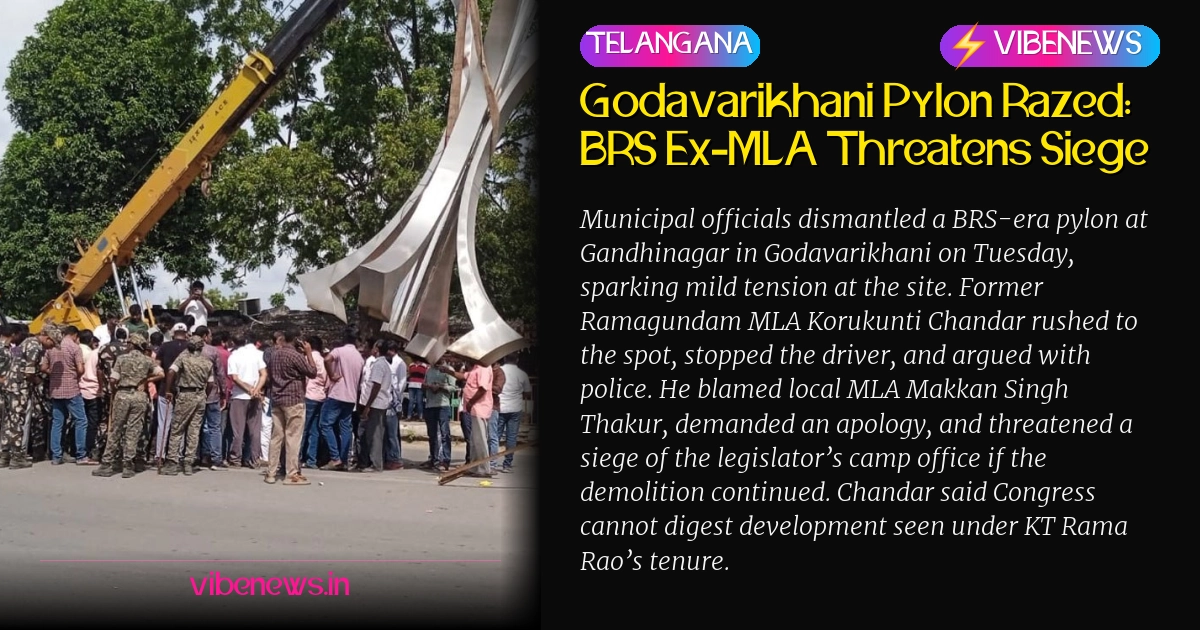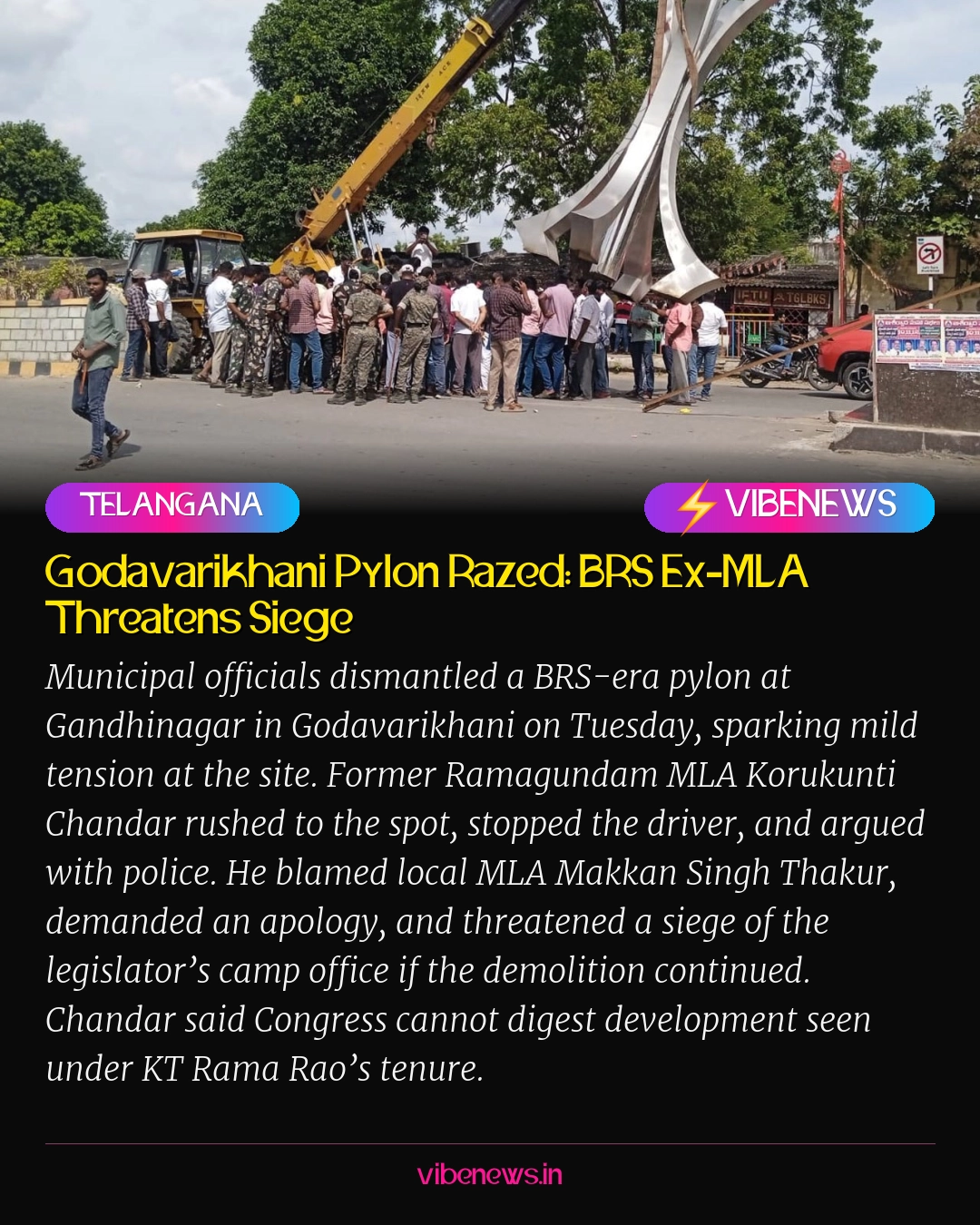
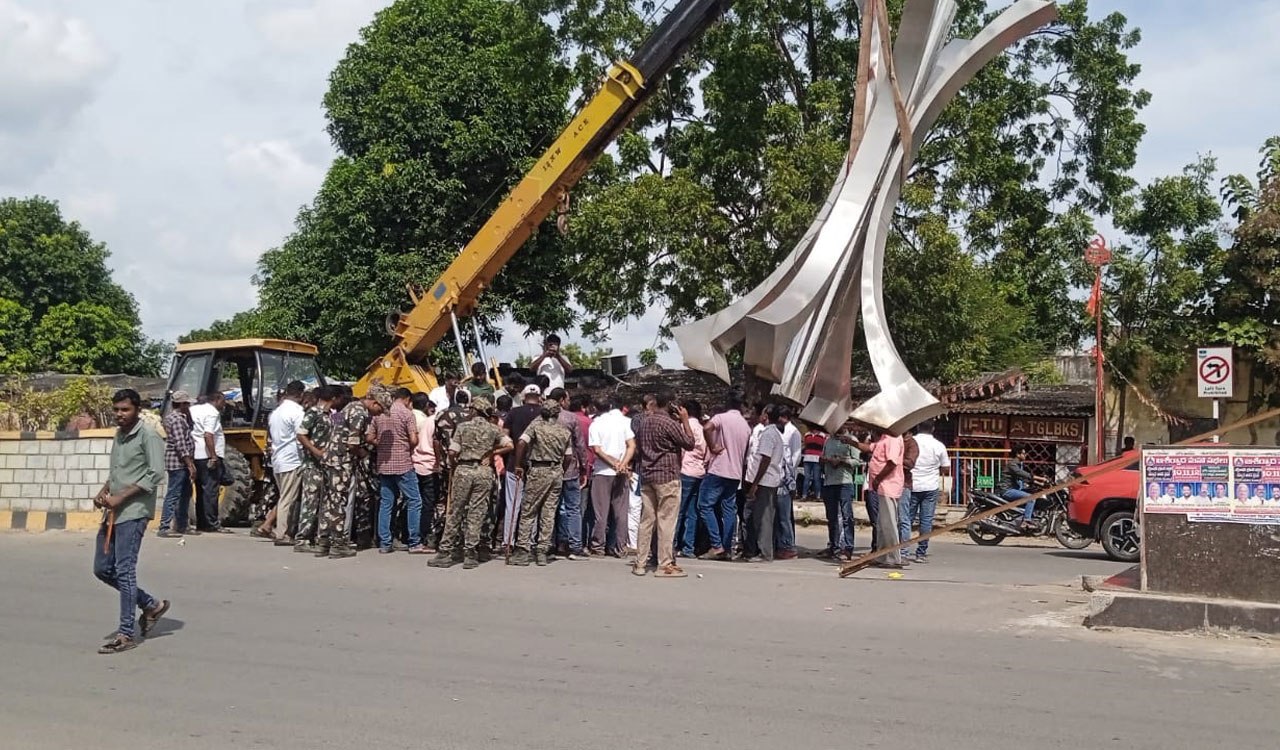
Ramagundam Municipal Corporation officials razed a pylon built during the BRS regime at Gandhinagar in Godavarikhani on Tuesday, setting off mild tension at the site.
Officials used an earthmover to bring the structure down. The reason for the move has not been made public, and the people on the ground were left to piece together what happened from the sight of heavy machinery tearing into a monument to local development.
It was alleged that the officials acted on the instructions of local MLA Makkan Singh Thakur. That allegation is the spark that turned a civic action into a political standoff, and it is the reason the demolition is now being read as a personal and party matter rather than a routine municipal decision.
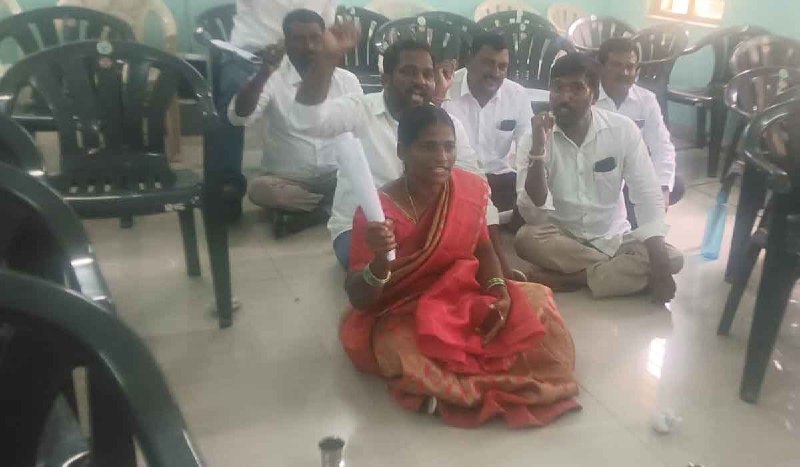
Former Ramagundam MLA Korukunti Chandar reached the spot after receiving information, and he did not hold back. He objected to the dismantling and physically stopped the driver from razing the structure any further. He then picked up an argument with the police personnel present at the site, and the confrontation left the area tense for a while.
Chandar’s demand was blunt. He wants Makkan Singh Thakur to tender an apology for what he described as the illegal removal of the structure. If the demolition is not stopped, Chandar announced that his side would lay siege to the legislator’s camp office. That is a direct escalation, and it moves the dispute from a site confrontation to a threat aimed at the MLA himself.
The fight over the pylon
What makes the episode sharper is the reason Chandar gave for his anger. The pylon was constructed by the BRS government in memory of developmental activities at Gandhinagar. To Chandar, its removal was not simply about a block of concrete. It was about erasing a record of work he says was done under the previous government.
The former MLA said that the Congress was unable to digest the development witnessed during the BRS regime.
That single line captures the core of the fight. Chandar framed the demolition as a political reaction rather than an administrative one, arguing that the current leadership cannot accept what was built during the BRS years. He did not leave the claim abstract. He listed the projects he believes deserve credit.
He recounted that a drinking water scheme, IT and industrial parks, and some other developmental projects were taken up under the leadership of the then Municipal Administration and Urban Development Minister KT Rama Rao. By placing those schemes at the centre of his argument, Chandar tied a single pylon to a much larger claim about who built what in Godavarikhani and why it matters now.
Why this matters for Telangana
For Telangana, the episode is a clear example of how a municipal action can quickly become a party battle. A pylon is a small public object, but when it is removed under the instructions of a sitting MLA, and when a former MLA threatens to lay siege to that MLA’s office, the stakes move well beyond one street in Gandhinagar.
The report is datelined Peddapalli, and it places the confrontation in the Godavarikhani civic area under Ramagundam Municipal Corporation. That is where the day-to-day consequences of such disputes land: with residents, local workers, municipal staff, and police who are asked to keep order while the political argument plays out in public.
The episode also shows how the old political divide in Telangana continues to shape local debates. Chandar’s remarks put the rivalry between the BRS and Congress at the centre of the dispute. Whether or not the removal was justified on administrative grounds, the way it was carried out has turned it into a test of political credibility for both sides.
What is still unknown
The reporting leaves several gaps. The official reason for the removal has not been given. The source material does not include a response from Makkan Singh Thakur to the apology demand or to the allegation that he issued the instructions. No account from the Ramagundam Municipal Corporation explaining the timing or legal basis of the action has been reported.
Those gaps matter because they shape how the next phase of the dispute will be judged. If the municipal body can show the removal followed due process, the argument about the BRS legacy may stay rhetorical. If it cannot, the claim that the structure was removed illegally will carry more weight with the people who saw the earthmover at work.
Chandar’s threat of a siege adds a clock to the story. He tied his protest to whether the demolition is stopped, which means the next few hours will show whether the threat stays a warning or becomes a crowd outside the legislator’s camp office. Police presence at the site already shows that officials expect the tension to continue if the standoff is not defused.
For now, the pylon at Gandhinagar is a pile of rubble in the eyes of the officials who removed it, and a symbol of unfinished political business in the eyes of the former MLA who came to defend it. The sight of an earthmover pulling down a structure built for public memory has given the dispute an emotional charge that will be hard to ignore. What happens next will decide whether the fight stays on the street or moves into a full political confrontation.
TL;DR
- BRS-era pylon at Gandhinagar, Godavarikhani, was razed by Ramagundam Municipal Corporation officials using an earthmover on Tuesday.
- Former Ramagundam MLA Korukunti Chandar stopped the demolition driver and argued with police at the site, causing mild tension.
- Chandar alleged the removal was carried out on the instructions of local MLA Makkan Singh Thakur, and the official reason has not been disclosed.
- He demanded an apology from the MLA for what he called the illegal removal of the structure.
- Chandar threatened to lay siege to the legislator’s camp office if the demolition was not stopped.
- He said the Congress cannot digest development under the BRS regime, citing KT Rama Rao’s drinking water scheme and IT parks.