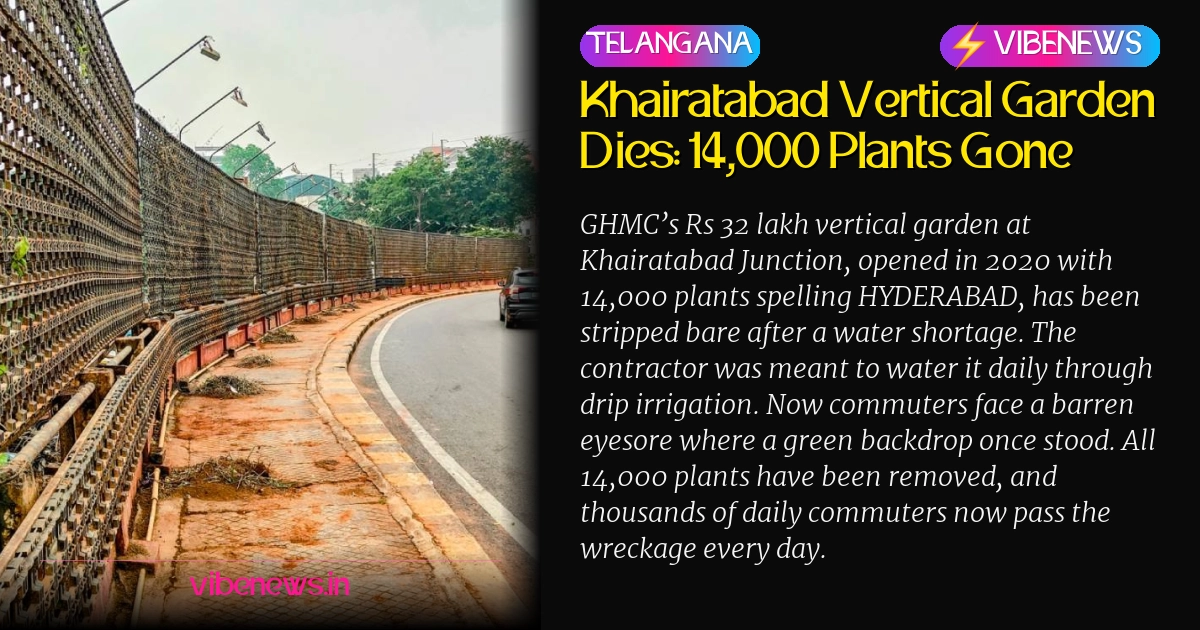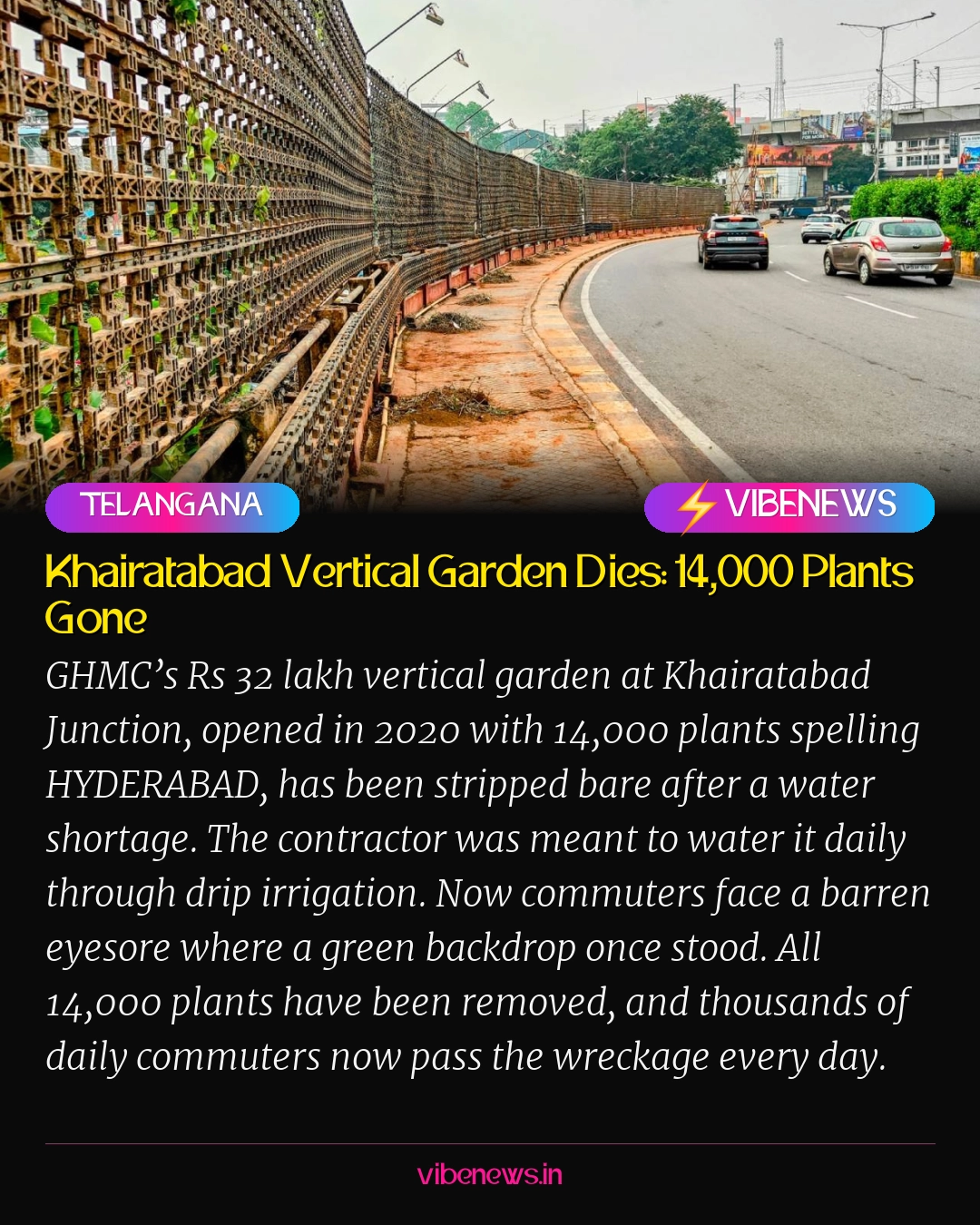
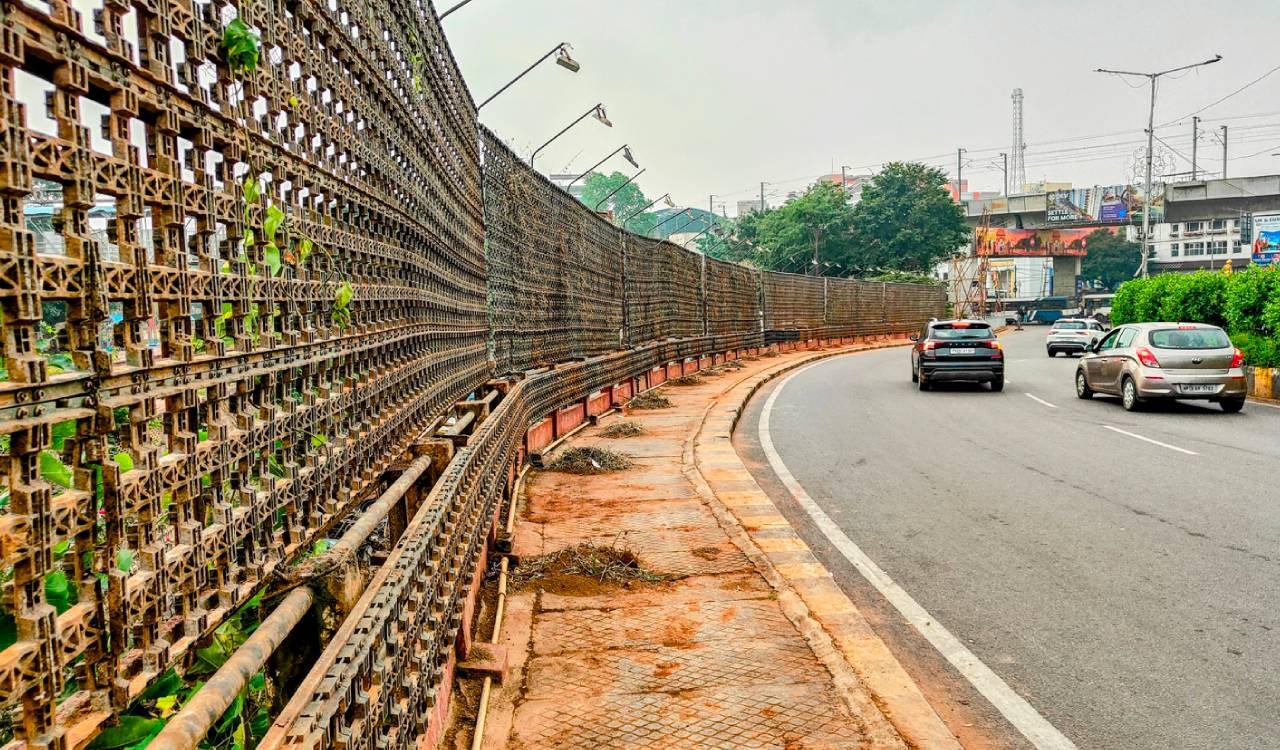
All 14,000 plants in the vertical garden at Khairatabad Junction have been removed after they dried up from a water shortage, a senior official from the Greater Hyderabad Municipal Corporation’s Urban Biodiversity wing said. The once-lush green wall now sits as a dreary, lifeless eyesore beside one of the busiest junctions in the city.
The garden spelled HYDERABAD in living plants, and it was built to be seen. Commuters heading from the Telangana Secretariat and the Khairatabad flyover passed it on their right. It stood 10 feet tall and stretched 260 feet long. For years it was a busy selfie point, a splash of green against traffic and concrete. Today it offers nothing but a bare, faded frame.
For Hyderabad, this is not an abstract civic failure. It is a daily reminder, written in dead plants, of what happens when public money buys a city something beautiful and then nobody keeps it alive. Residents who used the junction as a rare green break now drive past a patch of brown where their city’s showpiece used to be.
The numbers make the failure harder to stomach. The GHMC spent over Rs 32 lakh on the project and inaugurated it in 2020, during the BRS regime. The garden carried 14,000 plants of 10 species, including Crossostephium chinense in white, duranta in yellow, and amaranthus or iresine in red. It also featured alternanthera, vulcameria, buxus and tradescantia spathacea. The report describes it as a rare vertical garden in Hyderabad, which makes its collapse even more painful.
On paper, the upkeep plan was simple. The contractor was assigned to maintain the greenery and water the plants every day through a drip irrigation system. The plants still ran dry. According to the senior GHMC-UBD official, the water shortage forced the removal of the entire garden. The official’s account is brief, and it leaves the basic question unanswered: how did a daily watering job fail for long enough to kill 14,000 plants?
The reporting does not hold back on who it blames. In its own words:
The apathy of the civic administration in protecting and nurturing the green wall and abandoning routine maintenance and watering despite spending lakhs of rupees to set up the framework has led to the drying up of a major city attraction.
That charge is sharp, but the facts behind it are straightforward. Money was spent to build the framework. Routine watering was supposed to keep it alive. Neither held. The result is a city attraction that did not survive its first serious test of maintenance.
Who paid the price. The people most affected are the ones who never had a say in the contract. Thousands of daily commuters have been angered by the decline, and the report notes that the garden was once a lush green oasis amid urban concrete. Those commuters did not choose the contractor, did not approve the watering schedule, and did not get a voice in whether the garden would be removed. They simply lost a green spot in the middle of their commute.
What the city has not explained. The report does not say whether the contractor has faced any action over the failed watering. It does not say when the water shortage began, how long it lasted, or whether anyone from the civic body was monitoring the daily irrigation. It also does not say whether the removed plants will be replaced or when the site might look green again. Those gaps matter, because the answers would show whether this was a single lapse or a broken system.
The garden was meant to be a welcome to the city, a living sign that someone cared about how Hyderabad looked. Instead it has become a cautionary tale about public projects that get a ribbon-cutting in 2020 and then get forgotten. Every commuter who now passes the empty frame is a witness to that gap between announcement and upkeep.
The question for GHMC is no longer whether the garden can look good in a photograph. It is whether anyone is responsible for keeping the promise that the photograph made. Until the civic body answers that, the bare wall at Khairatabad will keep telling the same story to everyone who drives past it.
TL;DR
- All 14,000 plants at Khairatabad Junction’s vertical garden were removed after they dried up from a water shortage.
- The Rs 32 lakh GHMC project was inaugurated in 2020 and spelled HYDERABAD in living plants.
- The contractor was assigned to water the plants daily through a drip irrigation system.
- A senior GHMC Urban Biodiversity official said the water shortage forced the removal of the garden.
- Thousands of daily commuters have been angered by the garden’s decline into a dreary eyesore.