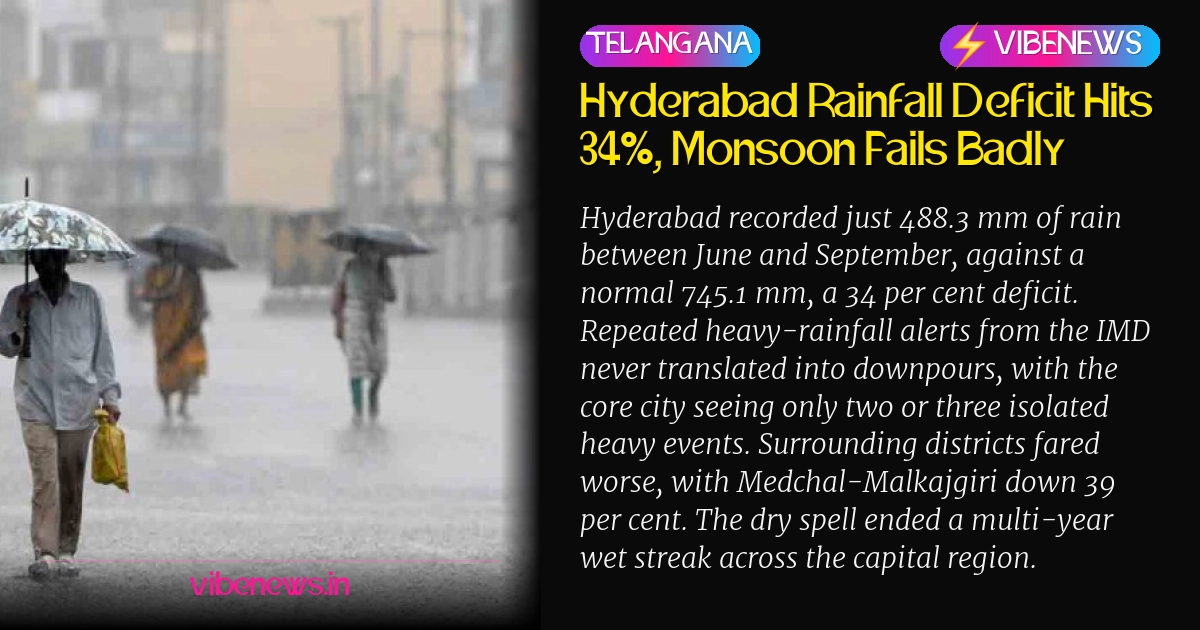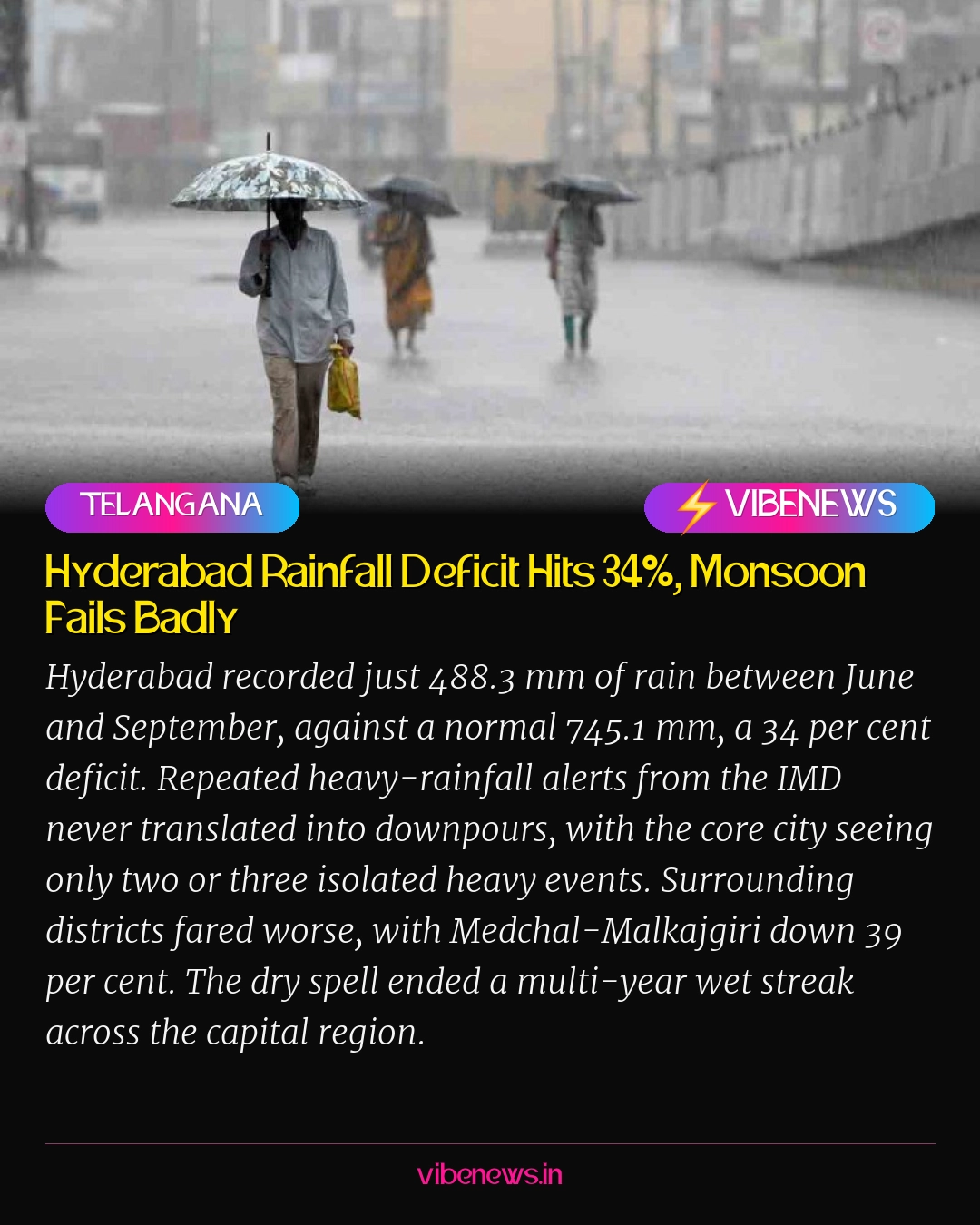
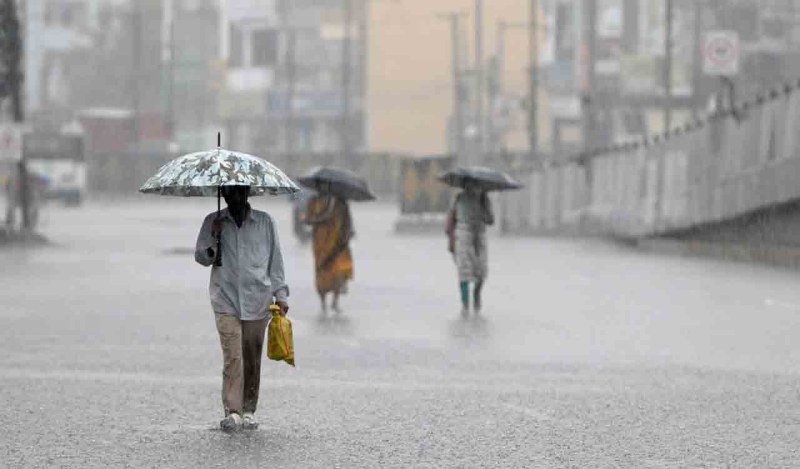
Hyderabad received just 488.3 mm of rain between June and September this year, a 34 per cent deficit against the normal 745.1 mm, according to TSDPS rainfall data. The city was supposed to be drenched. It was not.
The India Meteorological Department’s Hyderabad office issued heavy-to-very-heavy rainfall alerts several times this season as low pressure systems formed over the Bay of Bengal. Each time, rain-bearing clouds gathered over the city and then dissolved into thin air or left behind scanty drizzle at isolated spots.
Civic bodies scrambled. Emergency response teams, police and traffic departments issued alerts and advisories, and some even pushed for staggered timings for IT companies. Then, as the reporting puts it, nothing happened.
Two or three storms in four months
By the end of the season, the core region of Hyderabad had registered fewer than two to three isolated heavy downpours between June and September. For residents, the monsoon turned into something closer to a daily exercise in anxiety, with dark skies that promised relief and delivered almost none.
The shortfall matters for more than the calendar. The dry phase broke a wet streak that had lasted for multiple years in Hyderabad and its surrounding district. Instead of a continuation of recent good seasons, the city ended the monsoon in a severe deficit.
The districts around the city fared worse
The dry spell did not stop at the city limits. It choked the districts that ring the capital, and several of them posted steeper losses than Hyderabad itself. Medchal-Malkajgiri recorded a 39 per cent deficit. Vikarabad was 32 per cent short, Yadadri Bhuvanagiri (Bhongir) was down 30 per cent, Rangareddy recorded a 28 per cent shortfall, and Sangareddy finished with a 25 per cent deficit.
For Telangana, this is not an abstract weather story. The rain that failed to fall on Hyderabad also failed to fall on the districts that depend on the same weather systems, and the gap runs across the region rather than sitting in one pocket. Those are the communities that will feel the consequences first if the shortfall carries into the months ahead.
What the IMD says went wrong
A senior duty officer from the IMD’s Hyderabad office pointed to several causes for the weak monsoon. The officer cited El Nino, which also brought high temperatures during the peak monsoon months.
This year was tough, in terms of rains.
The statement, from a senior duty officer at IMD Hyderabad, offers a blunt summary of a season that never settled into the pattern forecasters had signalled. The officer’s explanation links the failure to a larger climate driver and to heat during the months when rain usually arrives most reliably.
The forecasting problem
The season also exposed how hard rainfall is to predict at the city level. The clouds were there. The alerts were issued. The rain did not follow. That gap between warning and outcome left residents, civic teams and employers preparing for storms that never arrived, and it left the city with the uncomfortable feeling that the forecast had cried wolf repeatedly.
Monsoon forecasting has always carried uncertainty, but a season where high-severity alerts repeatedly preceded near-empty skies erodes public trust. The IMD’s numbers show the failure in plain terms. Hyderabad’s 488.3 mm sits well below the 745.1 mm the city normally expects, and the surrounding districts sit below that as well.
The water question
The rainfall figures do not, on their own, measure reservoir levels, groundwater recharge or the city’s supply position. Those details are not part of the data available for this report, so the full effect on water supply cannot be confirmed here. What is confirmed is that the rain that was expected did not arrive, that the deficit spread across Hyderabad and its neighbours, and that the dry spell came after several years of wetter seasons.
That combination is what makes this season alarming. A single weak monsoon is a bad year. A weak monsoon that breaks a multi-year wet run, across the capital and the districts around it, is a warning that residents and planners cannot easily dismiss.
TL;DR
- Hyderabad received 488.3 mm of rain this monsoon against a normal 745.1 mm, a 34 per cent deficit.
- Medchal-Malkajgiri recorded the steepest district shortfall at 39 per cent.
- Repeated IMD heavy-rainfall alerts never turned into sustained downpours across the city.
- The core region registered only two or three isolated heavy rainfall events between June and September.
- The IMD linked the weak season to El Nino and high temperatures during peak monsoon months.
- The dry phase broke a wet streak that had lasted for multiple years in Hyderabad.