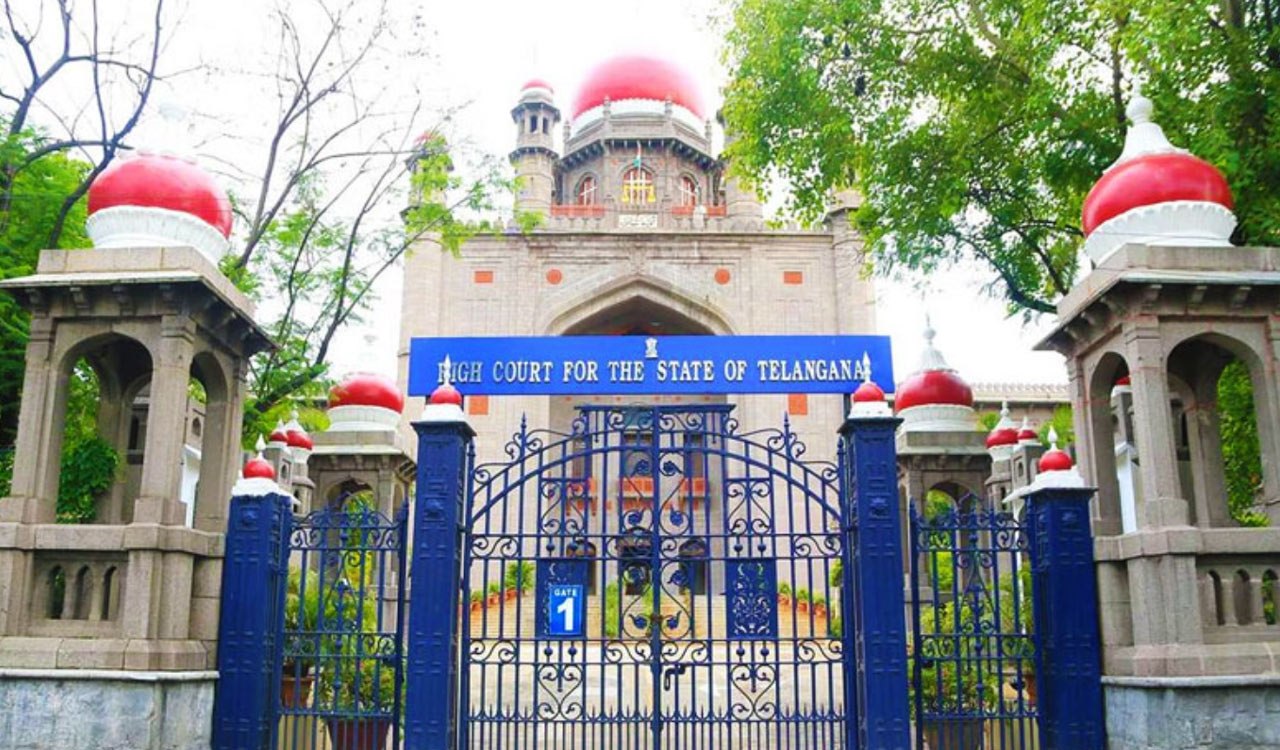
The Telangana High Court on Thursday gave the state government more time to respond to a public interest litigation claiming it is not prepared for drought-like conditions across several parts of the State. A Division Bench comprising Acting Chief Justice P. Sam Koshy and Justice Suddala Chalapathi Rao heard the matter, and the government sought time to file its counter affidavit.
The government’s reply is due in an interlocutory application that asks the court to step in and assess the drought situation. The application also seeks relief for the people who are already feeling the effects of the dry spell, and the court has not yet decided the merits of the petition.
A 24 per cent rainfall gap and mandals already marked
The PIL was filed by Dr. Cheruku Sudhakar and another. The petitioners told the court about shortages of drinking water and the hardships faced by people, farmers and other vulnerable sections because rainfall has fallen short. They pointed to reports showing a 24 per cent deficiency in cumulative rainfall in Telangana between June and October 2026.
They also noted that several mandals have already been classified as drought-affected. Their argument is simple: if the official label is in place, the official response should be visible on the ground. They have asked for an actual assessment of the situation, not a paper exercise.
What the petitioners want the state to do
The petitioners have asked the court to direct the authorities to carry out a scientific, district-wise assessment of drought conditions. They want the disaster management and contingency plans disclosed, so the public can see what the state has actually prepared. They also want the supply of drinking water and essential commodities ensured.
The petition goes further by seeking the appointment of special officers at the district level. Those officers would supervise relief operations and monitor the situation. The petitioners rely on the Disaster Management Act, 2005, and argue that the crisis calls for a coordinated response from both State and Central authorities.
For readers who do not follow court procedure closely, a PIL, or public interest litigation, is a case filed on behalf of people who may not be able to approach court on their own. An interlocutory application is a request made during a case, usually to seek interim relief before the final hearing. A counter affidavit is the formal written reply the government files to answer the allegations.
Two hospital incidents now before the High Court
In a separate matter, the Telangana High Court has registered a suo motu PIL, meaning the court has taken up the issue on its own motion, over two incidents at government hospitals. One is a fire at the neonatal ward of RIMS Hospital in Adilabad. The other is a ceiling collapse at MGM Hospital in Warangal.
The case began with a report submitted by Hyderabad-based advocate Nallapu Manideep to Chief Justice of India Surya Kant. The CJI forwarded the report to the High Court for consideration as a PIL, citing alleged violations of the fundamental right to life under Article 21 of the Constitution. A Division Bench comprising Acting Chief Justice P. Sam Koshy and Justice Suddala Chalapathi Rao has directed the Telangana government and the Union Health Ministry to file their counter-affidavits.
Both incidents took place in September. At RIMS Hospital in Adilabad, a fire broke out in the Special Newborn Care Unit. Reports say three newborns died, while hospital staff evacuated 28 other infants. The fire was suspected to have been caused by an air-conditioner short circuit.
At MGM Hospital in Warangal, portions of the concrete ceiling and false ceiling collapsed in the Aarogyasri ward. A paralysed patient, attendants and sanitation workers were injured. The report raised concerns about safety standards, infrastructure and staffing in government hospitals.
Such lapses posed a threat to the lives of patients, particularly those belonging to economically weaker sections who depend on public healthcare facilities.
That is the core argument of the report. The people most exposed to these failures are the ones with no private alternative, and that makes the question of hospital safety a question of basic fairness.
What the hospital PIL is asking for
Relying on the Supreme Court’s judgment in Paschim Banga Khet Mazdoor Samity v. State of West Bengal, the PIL seeks independent technical inquiries into both incidents. It also asks for a comprehensive safety and staffing audit of government hospitals across the State. Time-bound improvements to intensive care units and neonatal wards are part of the demand.
The petition also seeks compensation and rehabilitation for the victims. It proposes a permanent monitoring mechanism to make sure hospitals keep to safety standards over the long term, rather than only after a tragedy makes headlines.
Why the two cases matter for Telangana
The drought petition and the hospital PIL come before the same bench in the same week, and both test the state’s ability to act before harm becomes unavoidable. One asks whether the state has a working plan for water and relief in districts already struggling with rainfall shortfalls. The other asks whether the state can keep newborns and patients safe inside its own hospitals.
For ordinary families in Telangana, the answers will show up in very practical places: the tap, the field, and the hospital ward. Neither matter has been decided, but both now carry the weight of court scrutiny.
What comes next
The court has not ruled on the merits of either case. In the drought matter, the state has asked for time to file its counter affidavit. In the hospital matter, the Telangana government and the Union Health Ministry have been directed to file counter-affidavits.
Those written replies will be the first real test of the government’s position. Watch whether the state disputes the 24 per cent rainfall figure, what its disaster and contingency plans actually contain, and how it explains the safety failures reported in September. The response, not the petition, will decide how quickly the state is forced to act.
TL;DR
- The Telangana High Court has given the state time to respond to a PIL alleging poor drought preparedness after a 24 per cent rainfall deficit.
- Petitioners want district-wise drought assessments, assured drinking water and special district officers to supervise relief.
- The same court has registered a suo motu PIL over a neonatal ward fire at RIMS Adilabad and a ceiling collapse at MGM Warangal.
- Reports say three newborns died in the Adilabad fire, while 28 other infants were evacuated by staff.
- The Telangana government and the Union Health Ministry have been directed to file counter-affidavits in the hospital case.