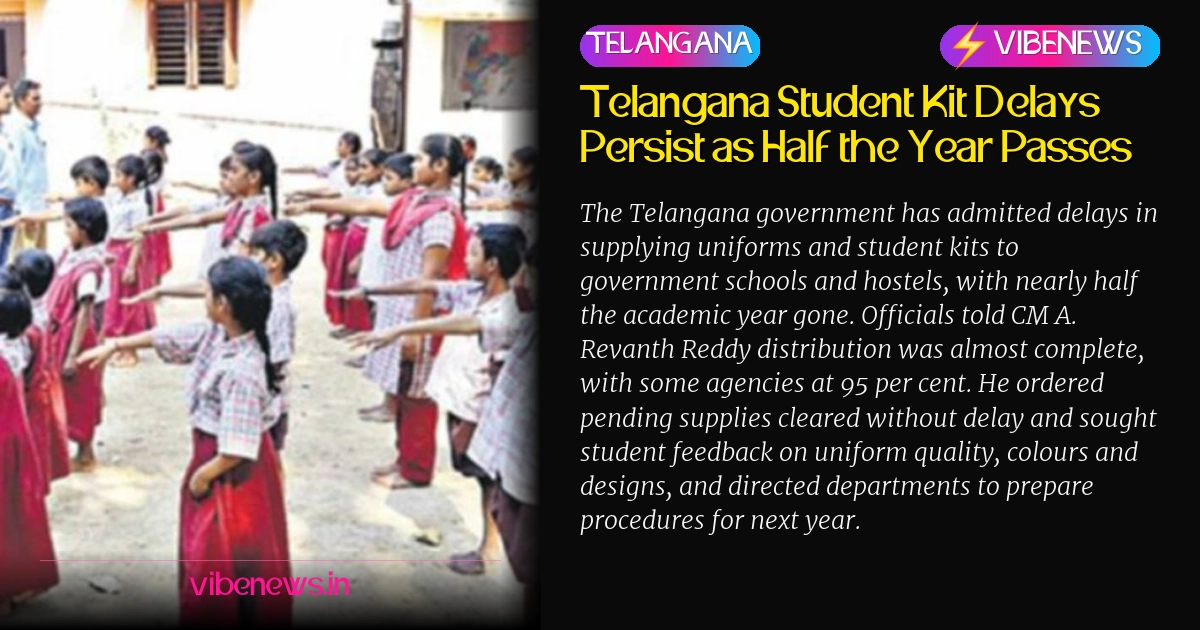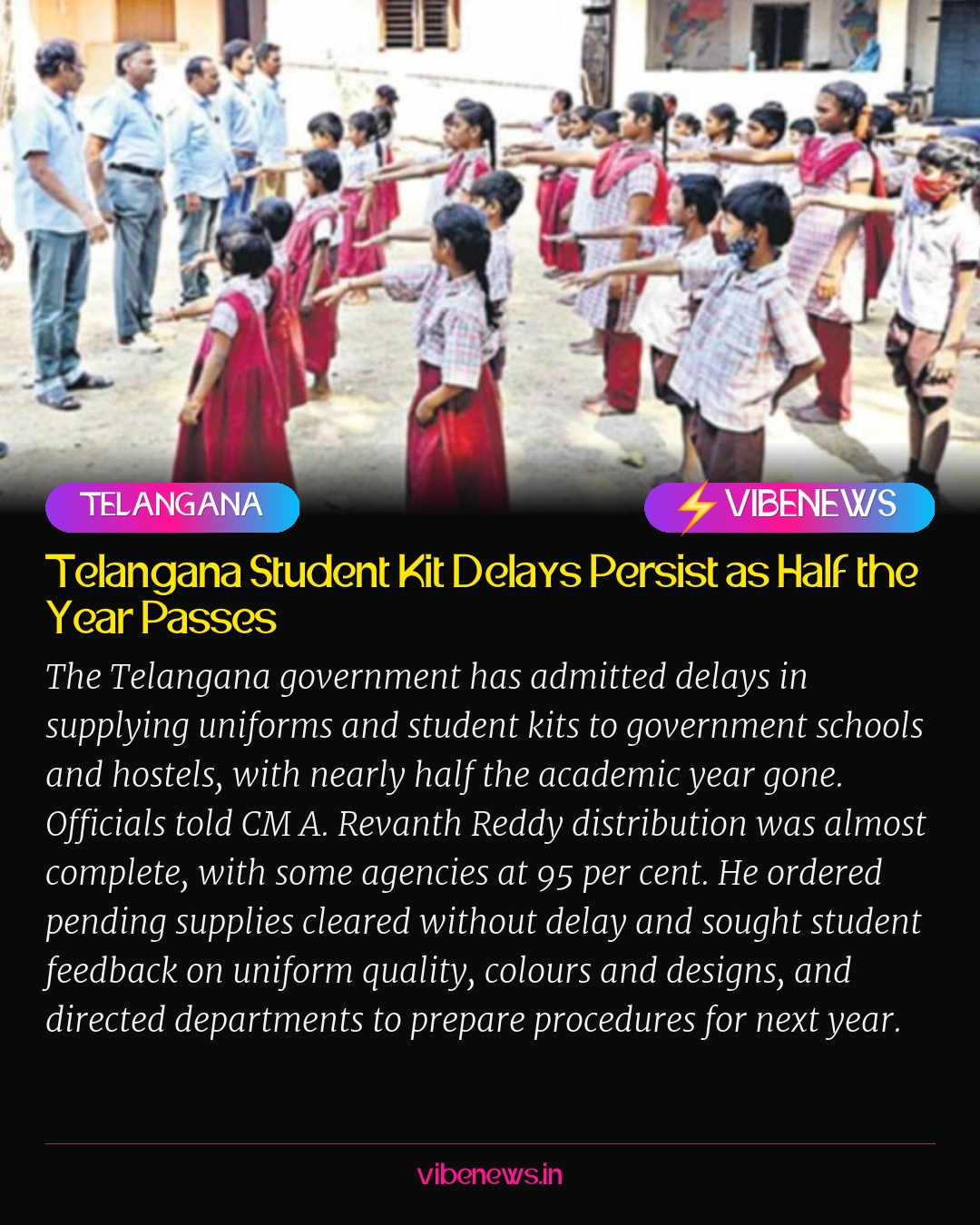
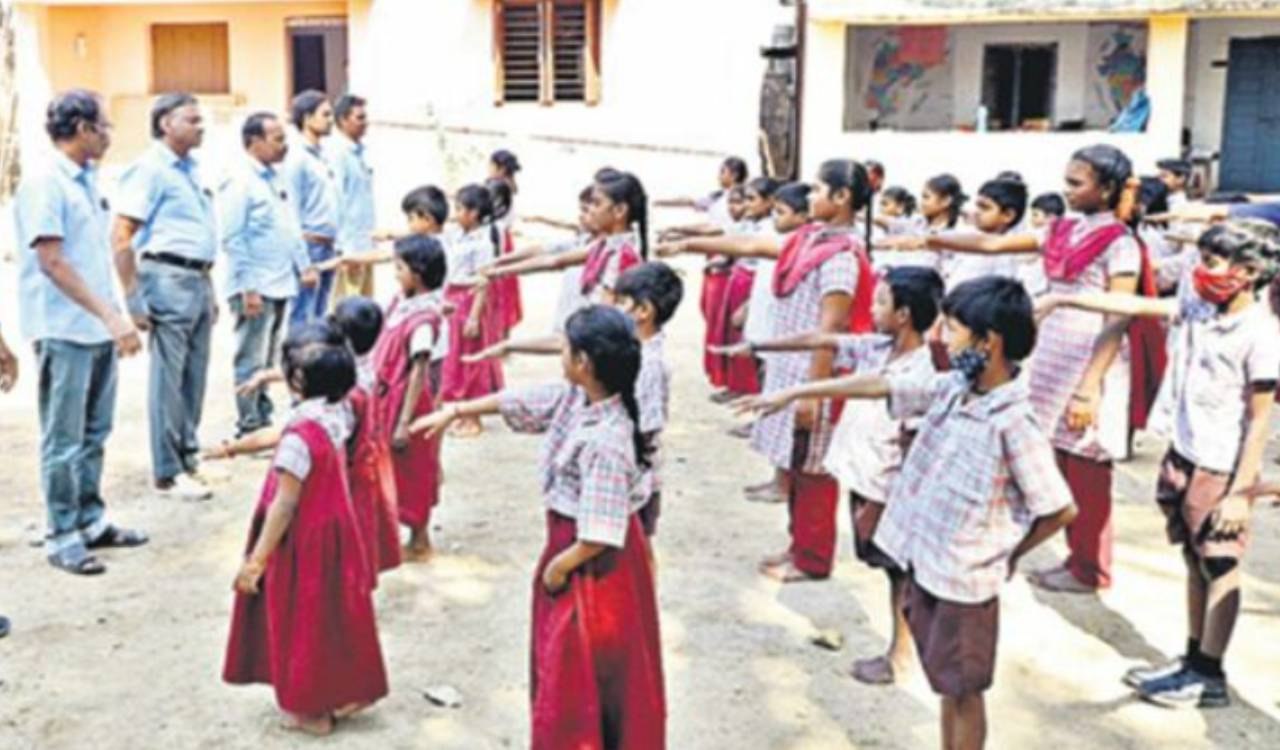
The Telangana government has admitted that uniforms and student kits have not reached every student in government schools and hostels, even though nearly half the academic year is already over. Officials told Chief Minister A. Revanth Reddy that distribution was “almost complete” during a review meeting on the supply of these essentials in government schools, hostels and residential institutions.
The admission is a rare public acknowledgement of a problem that parents have long suspected. Basic supplies are meant to be in children’s hands before classes settle in, not months into the year. Instead, the status report came while the academic year was well underway, raising hard questions about why essential items were still being distributed this late.
What officials reported
The list of items under review was long and specific. It covered uniforms along with ties, belts, identity cards, shoes, socks, plates, glasses, bowls, mats and school bags. Each of these is a basic requirement for a child attending a government school or living in a state-run hostel. When officials say distribution is “almost complete,” they are describing a process that still has pending items, and the families waiting on those items are the ones who will notice.
Officials also gave a more precise picture for some organisations involved in the work. Distribution by certain organisations was about 95 per cent complete. That figure shows progress, but it also means that a portion of the work remains open, and the report did not say how many students or which institutions were still waiting.
“Almost complete.”
That phrase, used by officials to describe the state of distribution, is the core of the government’s account. It is a reassuring line on its face. Yet a supply that is “almost complete” halfway through the academic year is still a supply that arrived late, and the report offered no timeline for finishing the remainder.
The Chief Minister’s directive
Revanth Reddy responded by telling officials to complete the pending distribution without further delay. That instruction puts the onus squarely on the departments responsible for the rollout. It also signals that the Chief Minister’s office was aware the timing had slipped.
He went further than an order to finish the job. He asked officials to gather feedback from students on the quality, colours and designs of the uniforms, and to finalise the options based on what the majority of students preferred. That request suggests the state is now looking at the product itself, not just the delivery schedule. A uniform that students actually want to wear is more likely to be worn, and that matters for both comfort and dignity in a classroom.
Why the timing matters for Telangana families
For families across Telangana, the issue is not abstract. Parents plan around school starts, and many budget for the items that the government is supposed to provide. When a state-supplied uniform or school bag arrives late, the cost and the stress land on households, and on the students who have to keep attending school without the full set of essentials. This is where the story moves from a administrative review into something that touches everyday life in government schools and hostels across the state.
The hostels and residential institutions named in the review deserve particular attention. Students in these settings depend more heavily on the state for their daily basics, from identity cards to plates and bowls. A delay here is not a minor inconvenience. It can shape how comfortable and prepared a child feels in a place where the state is the main provider.
A plan for next year, and the questions it raises
The Chief Minister also directed the concerned departments to prepare standard operating procedures for the next academic year. According to the directive, those procedures must specify the list of items to be supplied, the tendering and procurement processes, and the distribution schedules. Put simply, the state wants a clear checklist, a clear buying process and a clear timetable before the next academic year begins.
That is the right instinct, and it also serves as an implicit admission that the current system did not have those elements locked in. Procurement and scheduling are the mechanics behind every school kit. If tendering is slow or schedules are loose, the result is exactly what this review describes: a supply that is nearly done when it should already have been finished.
The questions that follow are straightforward. Will the pending items reach students quickly, and who will confirm that they have? Will the student feedback on uniforms actually shape what is purchased next year? And will the new procedures set firm dates that parents can hold the system to? The government has promised process. Parents will judge the state by whether the kits arrive on time.
What to watch next
The review left several gaps that the public can track. The report did not identify which items are still outstanding, nor how many students remain without them. It did not name the organisations behind the 95 per cent figure, and it did not give a completion date for the final stretch. Each of these details would tell parents far more than the phrase “almost complete” does.
Until those answers arrive, the story stands as a clear signal from the state that the timeline failed students this year. The Chief Minister has told officials to finish the job, gather student opinion and write better rules for next year. Whether that results in kits in every child’s hands, and in time for the classes they are meant for, is the test that matters now.
TL;DR
- Telangana admits uniform and student kit delays as nearly half the academic year has passed.
- Officials told CM A. Revanth Reddy that distribution was almost complete, with some agencies at 95 per cent.
- Items pending include uniforms, ties, belts, identity cards, shoes, socks, plates, glasses, bowls, mats and school bags.
- The CM directed officials to complete pending distribution without further delay.
- He also asked for student feedback on uniform quality, colours and designs before finalising options.
- Departments must prepare standard operating procedures for next year covering items, procurement and schedules.