Chief Ministers of Maharashtra and Telangana met in Mumbai on October 26 to discuss the Tummidihatti Barrage, and the talks have produced a committee study rather than a construction decision. Within hours, the Telangana government issued a press note saying a committee of secretaries from both states would study how much land would be submerged and what the project would do to the Chaprala Wildlife Sanctuary.
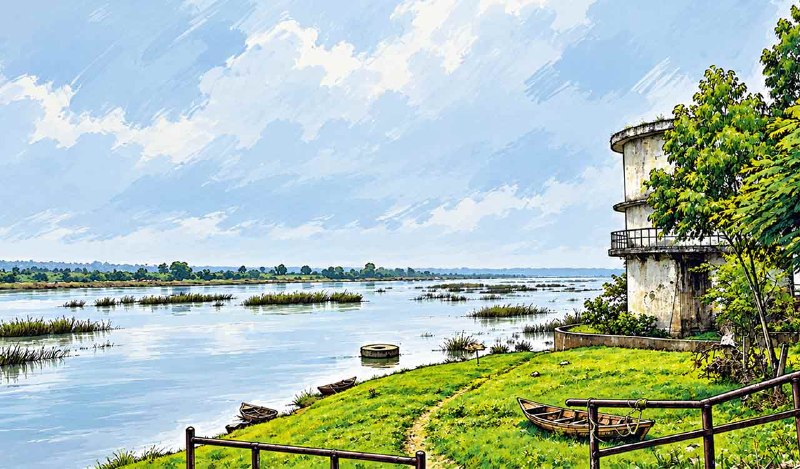
The sanctuary sits on the left bank of the confluence of the Wardha and Wainganga rivers, exactly where the barrage is proposed. The committee is supposed to build a roadmap for construction. Telangana’s own leaders have been talking about that roadmap for more than a decade.
Maharashtra’s conditional opening
According to the press note, Maharashtra Chief Minister Devendra Fadnavis said his state was willing to reconsider its agreement with the previous Telangana government. That agreement set the barrage at a Full Reservoir Level of 148 metres, provided there were no adverse effects on Maharashtra or its people. He also said Maharashtra had no objection to supporting Telangana’s water requirements.
Read that carefully. Maharashtra is open to re-examining a request to raise the height, but a final decision would come only after a comprehensive study of technical, environmental and administrative aspects. Alternative options should also be explored. That is the language of a government buying time.
Telangana’s case for 152 metres
Telangana Irrigation Minister Uttam Kumar Reddy used a PowerPoint presentation to argue that the 2016 agreement, which fixed the height at 148 metres, would not fully meet the drinking and irrigation needs of the Telangana region. He pointed to current electricity demand, energy costs, environmental conservation, climate change and maintenance expenses. He stressed the possibility of moving water by gravity. His conclusion was blunt: a 152-metre barrage would be the most advantageous option for Telangana.
The present leadership made a promise to the people of Telangana before and during the elections. Once in office, they said, they would build the Tummidihatti Barrage and ensure water reached Yellampalli through a gravity canal. They repeated that promise several times after coming to power. The voters heard it. The question now is what was delivered.
The canal that was never finished
The uncomfortable history starts long before this government. The author, a retired Superintending Engineer from the I&CAD Department, writes that the government in the undivided state had already known, back in the tenure of YS Rajasekhara Reddy, that moving water from Tummidihatti to Yellampalli by gravity was not feasible.
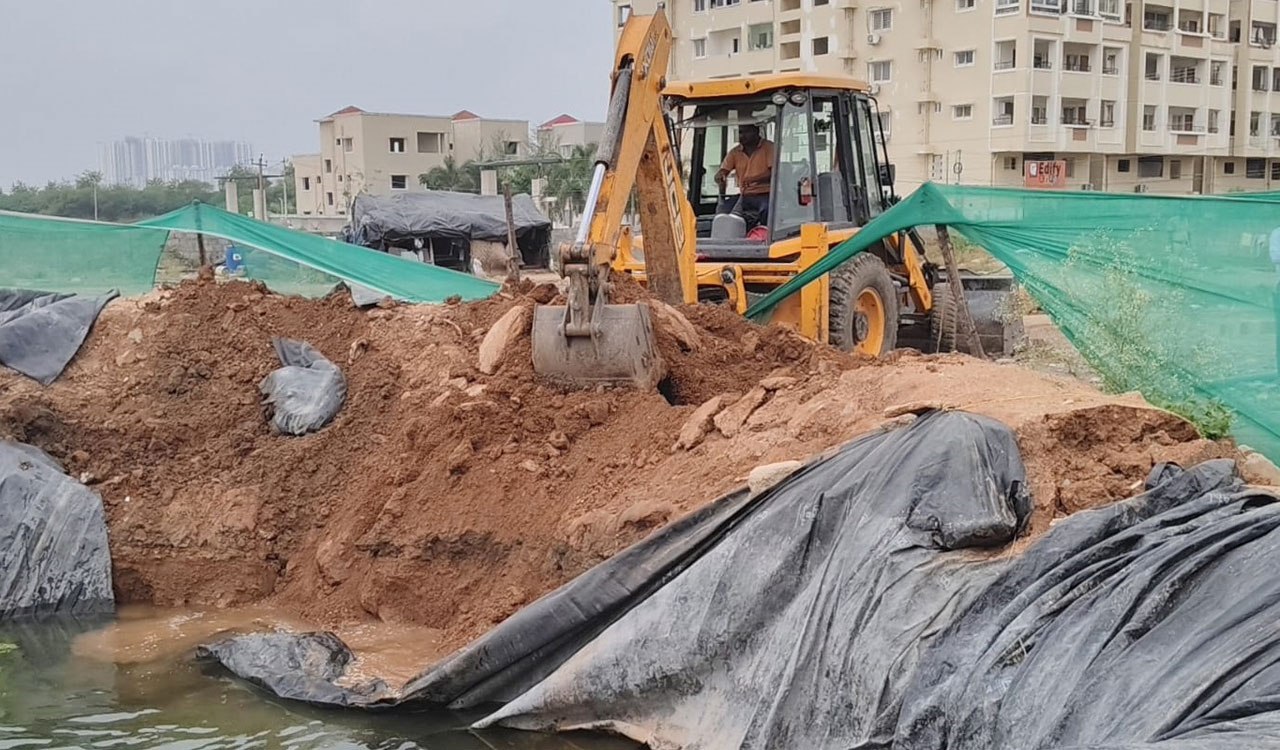
The 116-km gravity canal was excavated for 73 km and then abandoned. Work stopped because Singareni Collieries identified coal deposits along the proposed alignment. To bypass them, the canal would have had to be realigned along a higher contour all the way to Yellampalli, requiring a 29-metre lift at the 73rd km and a 19-metre lift at the 92nd km. Engineers prepared a schematic map and submitted it to the government. No decision followed until 2014. The 73-km stretch already dug was left incomplete.
Maharashtra remained firm in its opposition, stating that they would not permit a height even an inch above 148 metres.
Seven years of talks, then a retreat
The undivided state failed to reach an agreement with Maharashtra despite seven years of negotiations. After Telangana was formed, the K Chandrashekar Rao-led government spent a year trying to build the barrage at 152 metres. Successive governments in Maharashtra, under both the Congress and the BJP, refused to move. The KCR government then concluded that it would be prudent to proceed at 148 metres rather than keep wasting time.
The Central Water Commission added pressure. It sent three letters within a month, warning that net water availability at the Tummidihatti site was insufficient for the project. Simulation studies showed that at the 148-metre height Maharashtra wanted, no more than 44 TMC of water could be diverted. The project had to be re-engineered.
The split that changed everything
The Pranahita-Chevella project was then divided in two. The BR Ambedkar Pranahita Project would irrigate two lakh acres in the eastern part of Adilabad district, using a barrage at Tummidihatti with a 148-metre FRL and 20 TMC of water. The Kaleshwaram Project would serve other districts. The CWC permitted use of 240 TMC of Godavari water through the Medigadda, Annaram and Sundilla barrages.
The Tummidihatti design was never simple. The barrage would have a length of 6.5 km, 102 gates, a storage capacity of just 1.85 TMC and a 40-degree skew, at an estimated construction cost of Rs 2,500 crore. Technical problems, the impact on Chaprala Wildlife Sanctuary and those numbers pushed the previous government toward an alternative.
The Wardha project that got sidelined
That alternative was the BR Ambedkar Wardha Project. Its detailed project report proposed a barrage on the Wardha River near Veerdandi village in Kautala Mandal of Adilabad district, now Asifabad district. It would store about 3 TMC, measure 1.75 km, have 29 gates and a pond level of 152 metres, at an estimated cost of Rs 4,500 crore. The CWC had even begun issuing the necessary clearances.
Then the government changed. The new administration sidelined the Wardha proposal, and the Tummidihatti project came back to the front. The result is a cycle that has consumed years, with committees now replacing decisions and a promised gravity canal still unfinished.
This is the first part of a two-part opinion on the Tummidihatti proposal. The facts laid out so far show that the water Telangana was promised has repeatedly been delayed by politics, engineering reversals and shifting state positions, and that the people who voted on those promises are still waiting.
TL;DR
- Maharashtra and Telangana chief ministers met in Mumbai on October 26, but the barrage talks produced only a committee study.
- Telangana’s press note says a secretaries’ committee will study submergence and the impact on Chaprala Wildlife Sanctuary.
- Maharashtra’s Fadnavis is open to reconsidering the 148-metre agreement, but only if there are no adverse effects.
- Telangana’s Uttam Kumar Reddy says a 152-metre barrage is the most advantageous option for the state.
- The 116-km gravity canal to Yellampalli was abandoned after 73 km, despite earlier promises.
- The Wardha alternative, with a Rs 4,500 crore estimate, has been sidelined by the new administration.