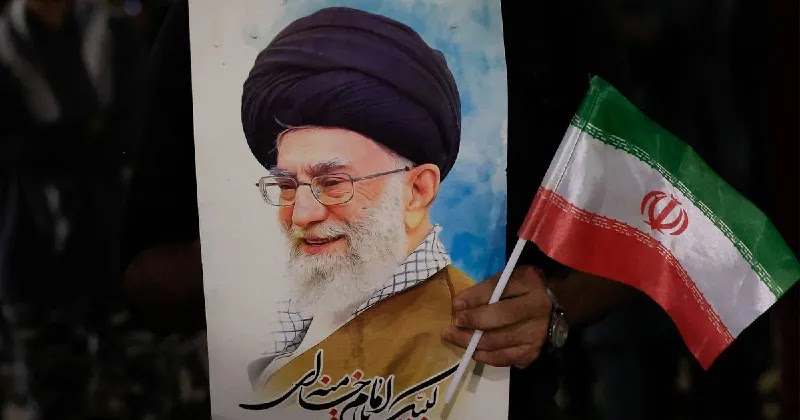
Khamenei's Death and Immediate Aftermath
The US and Israel launched coordinated strikes on February 28, 2026, under "Operation Epic Fury" by Washington and "Roaring Lion" by Tel Aviv, targeting Iranian leadership and military sites. Ayatollah Ali Khamenei was killed, along with top IRGC commanders, Army Chief of Staff Abdul Rahim Mousavi, and Defence Minister Aziz Nasirzadeh. Suspected nuclear sites were also hit. Iran confirmed the death and declared 40-day nationwide mourning. An interim Supreme Leader, senior cleric Ayatollah Arafi, was appointed, while President Masoud Pezeshkian stated revenge as a legitimate right and duty. Iranian officials, including deputy foreign minister Saeed Khatibzadeh, condemned the US for crossing a dangerous red line.
Iran's Retaliatory Measures and Resolve
Tehran responded with intense counterstrikes, firing ballistic missiles and drones at Israeli cities and 14 US bases in the Gulf region, including Bahrain, UAE, Qatar, Kuwait, and Jordan. Parliament Speaker Mohammad Bagher Ghalibaf announced pre-planned contingencies for Khamenei's martyrdom, leading to the formation of a Leadership Council comprising senior clerics, IRGC officials, and political figures to ensure governance continuity. The regime portrayed the strikes as foreign aggression, rallying domestic support amid reports of shock, grief, and mourning, particularly among women, though some celebrated the killing.
Historical Resilience of the Iranian Regime
Iran's response echoes past confrontations where military pressure failed to bend its will. The June 2025 12-day war involved US and Israeli bombings that killed generals and scientists, yet Tehran rebuilt and continued proxy activities. Deadly protests in December 2025 were cracked down, reinforcing regime control. Unlike Iraq or Syria, Iran's clerical system provides continuity beyond the Supreme Leader. Historically, Iran has refused to bow to Western pressure, sanctions, and covert operations, enduring sieges and protests as an ancient civilization.
Goals of US and Israel Versus Outcomes
The strikes aimed to decapitate the regime, disrupt its nuclear program, deter aggression, and pave the way for regime change, as claimed by US President Donald Trump, who urged Iranians to topple their ruler. Israeli Prime Minister Benjamin Netanyahu framed them as necessary to neutralize nuclear threats and proxy networks. However, no regime change has occurred, and Iran's retaliation has widened the conflict regionally, with flares reaching Dubai and Abu Dhabi. Geopolitical commentator Will Schryver noted that a high-intensity war could not be sustained, leading to logistical crises for the US after weeks.
Proxy Networks and Regional Escalation
Iran's proxy networks, though weakened, remain active, with Houthis in Yemen announcing renewed Red Sea attacks, evolving the conflict into a multi-front confrontation. The Strait of Hormuz, through which 20% of global oil passes, has been shut down, impacting oil prices. Hamidreza Azizi, an Iran expert, described the pattern as more coordinated and escalatory than the 12-day war, with direct US participation and immediate spillover. Former CIA officer Philip Geraldi had warned that US wars with Iran often stem from Israeli influence and manufactured pretexts.
Future Implications and Unbreakable Stance
The road ahead appears tough for the US and Israel, as Iran's quick transition and unbowed posture indicate hardened resolve. No clear successor outside the regime, such as exiled Crown Prince Reza Pahlavi, enjoys broad support. Iranians, having seen US interventions in the neighborhood, prefer an authoritarian government over chaos. The clerical regime stands firm after 37 years under Khamenei, refusing to kneel despite leadership losses and infrastructure damage.
TL;DR
- The killing of Iran's Supreme Leader Ayatollah Ali Khamenei occurred on February 28, 2026, in US and Israeli strikes.
- The strikes targeted Iranian leadership, military sites, and suspected nuclear facilities.
- Iran appointed Ayatollah Arafi as interim Supreme Leader and formed a Leadership Council for continuity.
- Tehran launched missile barrages on Israeli cities and US bases in the Gulf region.
- President Masoud Pezeshkian declared revenge a legitimate right and duty.
- The operation aimed to decapitate the regime and disrupt its nuclear program.
- Iran's resilience mirrors past events like the June 2025 12-day war.
- Proxy networks, including Houthis, have escalated attacks regionally.
- The Strait of Hormuz has been shut down, affecting global oil supply.
- No regime change has occurred, and the clerical system ensures governance persists.