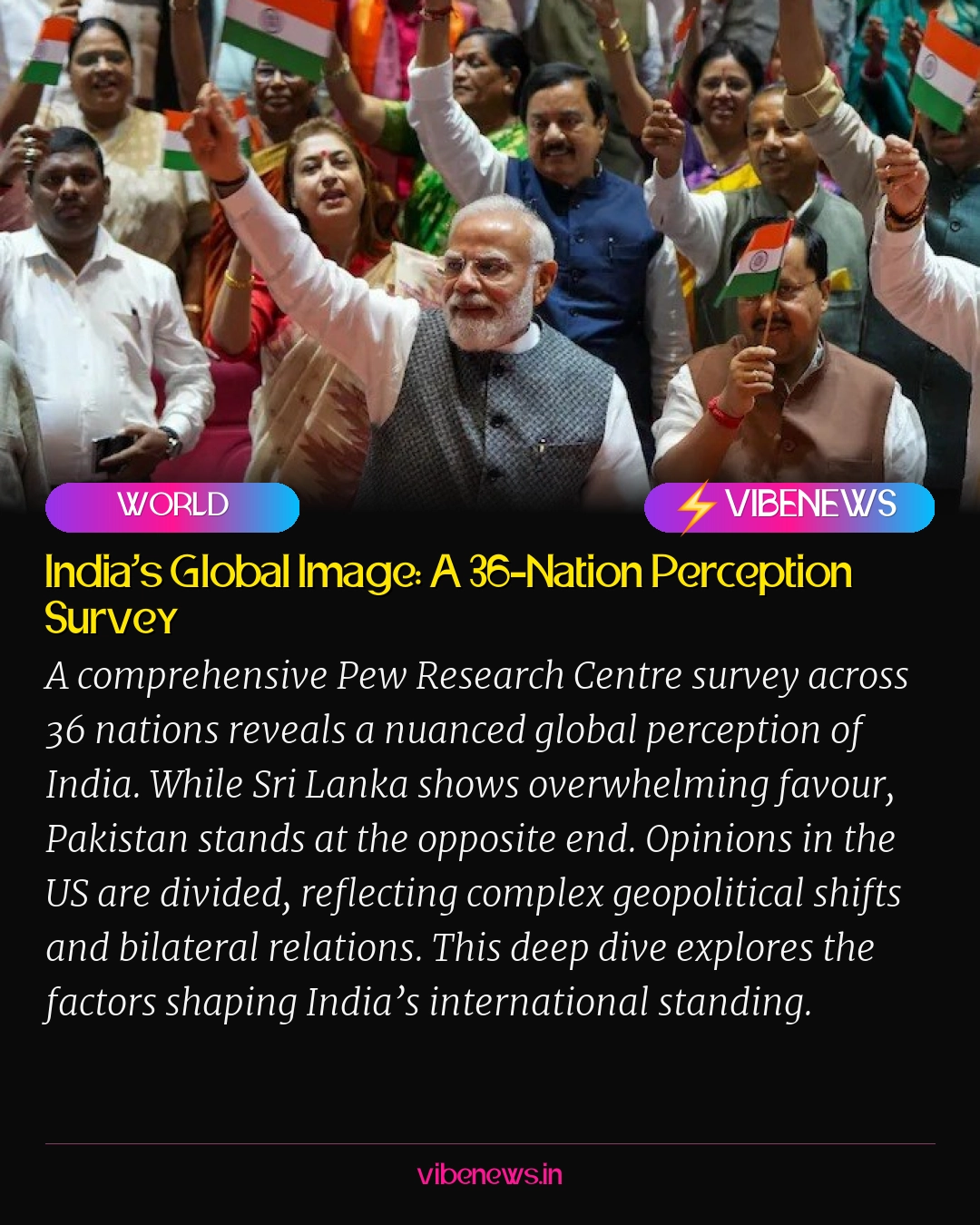
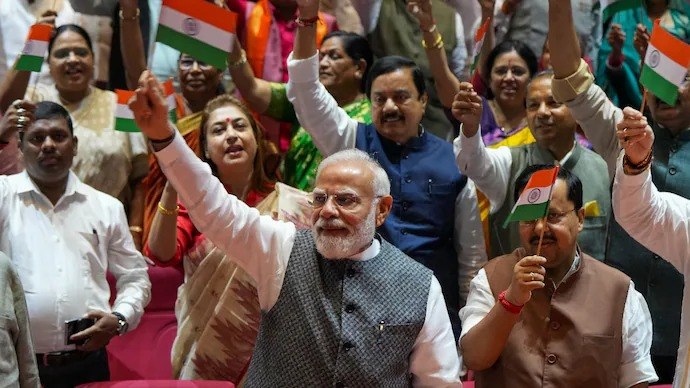
A recent comprehensive survey by the Pew Research Centre, spanning 36 nations, offers a detailed look into how the world perceives India. Conducted between February and May this year, involving over 42,000 individuals, the findings present a nuanced global image for the South Asian giant.
Overall, the survey indicates a generally more positive than negative view of India across the surveyed countries. A median of 45% of respondents held a favourable opinion, while 41% expressed an unfavourable one, highlighting a significant, albeit not overwhelming, global endorsement.
Sri Lanka’s Strong Endorsement
Among all nations surveyed, Sri Lanka stands out with the most favourable perception of India, registering an impressive 79%. A substantial 63% of Sri Lankan respondents also identified India as their country’s key ally, with only 11% holding an unfavourable view.
This marks a notable improvement from 2024, when 65% of Sri Lankans viewed India positively. This surge in goodwill is largely attributed to a significant reset in Delhi-Colombo ties, particularly following Sri Lanka’s severe economic crisis in 2022.
During that tumultuous period, India extended crucial support, providing credit lines and financial aid exceeding USD 7.5 billion, which played a vital role in the island nation’s recovery and rebuilding efforts.
A Spectrum of International Support
Beyond Sri Lanka, India enjoys a strong positive perception in several other countries. Kenya (71%), the United Kingdom (71%), Israel (60%), Germany (63%), Italy (56%), and Sweden (55%) all reported high favourability ratings.
In Asia, India also garners relatively positive assessments. Around 55% of Japanese, 51% of Singaporeans, and 50% of Indonesians view India favourably. The Philippines (49%) and Thailand (55%) also show strong ratings, reflecting India’s growing economic and strategic engagement in the Indo-Pacific region.
Complexities in the Neighbourhood
The picture becomes more intricate in India’s immediate neighbourhood, where historical and political dynamics often shape public opinion. In Bangladesh, for instance, only 42% have a favourable view of India, contrasted with 51% who hold an unfavourable perception.
Ties between India and Bangladesh have faced turbulence, particularly concerning India’s decision to grant shelter to deposed Prime Minister Sheikh Hasina. Hasina was forced to flee Bangladesh in 2024 amidst a violent student-led uprising that tragically resulted in over 500 deaths, creating diplomatic ripples.
Similarly, Malaysia saw an ‘India Out’ campaign in 2024, contributing to a significant 58% unfavourable view of India among its populace. These instances underscore the delicate balance of regional diplomacy and the impact of internal political events on international perceptions.
The Pakistan Anomaly
Unsurprisingly, Pakistan stands as a stark outlier in the survey, reflecting the deep-seated historical animosity between the two nuclear-armed neighbours. A staggering 91% of those surveyed in Pakistan expressed an unfavourable view of India, with only 7% holding a favourable opinion.
This overwhelming sentiment is a direct consequence of long-running tensions that have frequently escalated into diplomatic spats and military confrontations. Relations reached a particularly low ebb following the May 2025 hostilities and a diplomatic dispute over India’s suspension of the Indus Waters Treaty.
Further exacerbating the situation was India’s launch of Operation Sindoor last year, which involved destroying terror camps and striking Pakistani air bases in retaliation for the Pahalgam terror attack. These events collectively reinforce the entrenched negative perceptions in Pakistan.
Other Critical Views
Beyond Pakistan, India’s ratings are notably low in Turkey, with only 15% favourable views, and in the West Bank and East Jerusalem, where favourability stands at 18%. In Australia, which recently experienced anti-immigrant protests, around 55% of respondents held an unfavourable view of India, indicating a different set of domestic factors at play.
The American Divide on India
In the United States, opinions on India are markedly divided. Half of the Americans surveyed reported an unfavourable view, while 45% offered a positive assessment. Pew’s report highlighted that these ratings are among the lowest recorded since 2008, signaling a shift in American public sentiment.
Data indicates a decline in favourable views among Americans, falling from 51% in 2023 to 45% in 2026. This trend is further complicated by a partisan divide, with 50% of Democrats holding a favourable view compared to 42% of Republicans, the party of former President Donald Trump.
When asked about India’s global influence, 30% of Americans believed it was strengthening, while over half (54%) felt it had remained constant. Only 13% perceived India’s influence to be waning.
Under the Trump administration, US-India ties experienced a chequered period, marked by disagreements over tariffs and an impending trade deal. Trump’s perceived warming relations with Pakistan also contributed to uneasiness in the bilateral relationship, influencing public perceptions.
Regional Patterns and Global Standing
The survey ultimately reveals a clear regional divide in India’s global image. The nation enjoys particularly strong ratings in parts of Asia and Africa, where its developmental partnerships and cultural influence resonate positively. However, opinions are more mixed in Europe and Latin America, suggesting varying levels of engagement and understanding.
The split opinion in the United States further underscores the complex nature of India’s international standing, influenced by a myriad of geopolitical, economic, and historical factors.
Editorial Context: India’s Enduring Global Influence
The Pew Research Centre’s findings offer more than just a snapshot of current global sentiment; they provide critical insights into the long-term trajectory of India’s international relations and its aspirations as a rising global power. The significant favourability in key Asian and African nations underscores the success of India’s ‘Neighbourhood First’ and ‘Act East’ policies, alongside its growing role in South-South cooperation.
This positive perception in developing regions is invaluable for India’s soft power projection and its efforts to build consensus on global issues, from climate change to multilateral reforms. It strengthens India’s position in forums like the G20 and its bid for a permanent seat on the UN Security Council, leveraging goodwill to advance its diplomatic agenda.
Conversely, the deeply entrenched negative views in Pakistan and the mixed sentiments in the United States and parts of Europe highlight persistent challenges. The US data, in particular, suggests that despite strategic convergences, public opinion can be swayed by specific policy decisions, trade disputes, or even the political leanings of an administration.
For India, these results necessitate a continuous, adaptive foreign policy approach. It means not only nurturing existing alliances through economic aid and strategic partnerships but also actively addressing areas of concern through public diplomacy and transparent engagement. Understanding these global perceptions is crucial for India to effectively navigate its complex geopolitical landscape, secure its economic interests, and solidify its role as a responsible and influential global actor in the decades to come.
TL;DR
- A median of 45% across 36 nations view India favourably, while 41% hold an unfavourable opinion, according to a Pew Research Centre survey.
- Sri Lanka exhibits the most favourable perception of India (79%), identifying it as a key ally, largely due to India’s substantial economic aid post-2022 crisis.
- Pakistan stands as a significant outlier with 91% unfavourable views, a reflection of long-standing geopolitical tensions and recent conflicts like the May 2025 hostilities and Operation Sindoor.
- Opinion in the United States is divided, with 50% unfavourable and 45% favourable, marking some of the lowest ratings since 2008 and showing a partisan split.
- India enjoys strong positive ratings in parts of Asia (e.g., Japan, Singapore) and Africa (e.g., Kenya), but faces mixed or negative views in its neighbourhood (e.g., Bangladesh, Malaysia) and other regions like Turkey and Australia.
- Specific events, including India’s support for Sri Lanka, Bangladesh’s political turmoil, and US-India trade dynamics under the Trump administration, significantly influence regional perceptions.