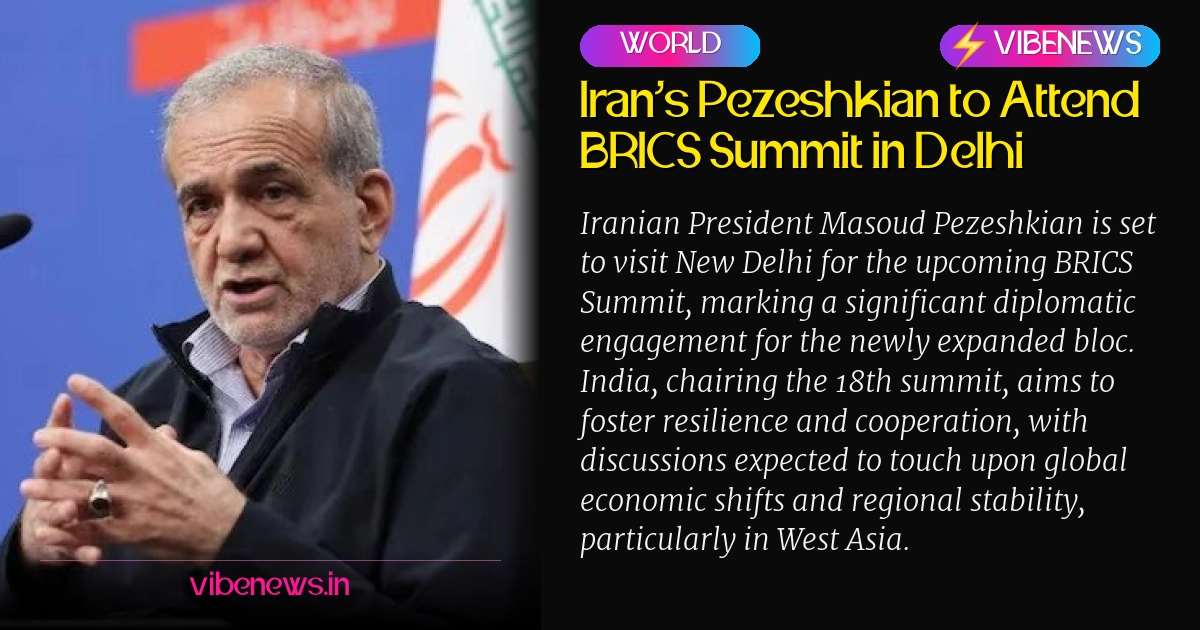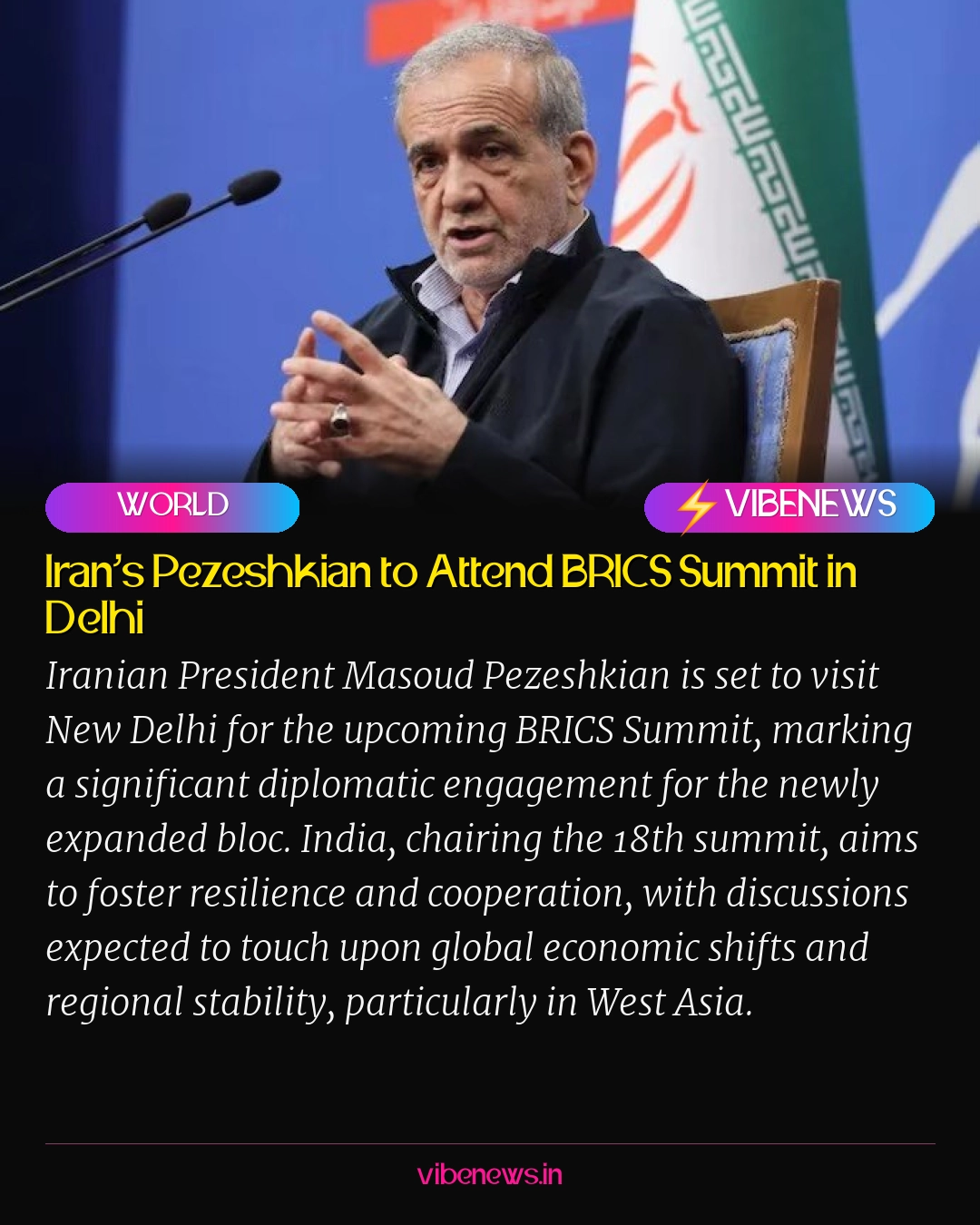
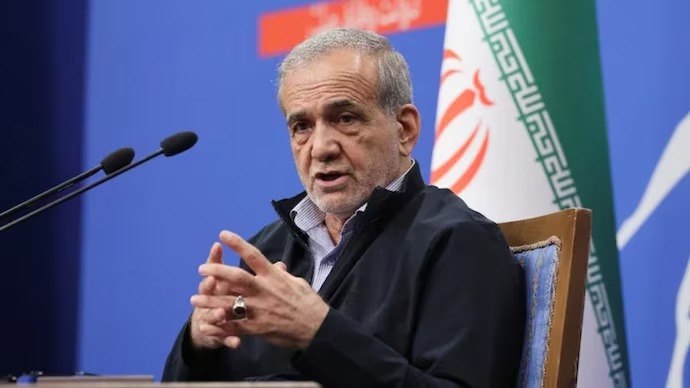
Iranian President Masoud Pezeshkian is slated to travel to New Delhi next month to participate in the highly anticipated BRICS Summit. This visit underscores the growing diplomatic significance of the expanded grouping and India’s pivotal role as its current chair.
The 18th BRICS Summit, hosted by India under the theme "Building for Resilience, Innovation, Cooperation and Sustainability," will convene in the national capital. India assumed the chairship from Brazil at the beginning of 2026, setting the agenda for discussions that are expected to shape global economic and geopolitical landscapes.
Iran’s Integration into BRICS
Iran officially became a full member of BRICS in 2024, alongside Egypt, Ethiopia, and the United Arab Emirates. Indonesia joined the grouping in 2025, bringing the total number of full members to eleven. This expansion reflects a broader shift towards a more multipolar world order, with emerging economies seeking to amplify their collective voice on international platforms.
President Pezeshkian’s attendance in Delhi follows his previous engagement with Prime Minister Narendra Modi in October 2024, on the sidelines of the BRICS Summit in Kazan, Russia. Their discussions then covered a range of bilateral and regional issues, laying groundwork for continued dialogue.
Diplomatic Overtures and Regional Stability
The upcoming summit also builds upon recent diplomatic exchanges. Earlier in June, Iranian Foreign Minister Abbas Araghchi visited India for the BRICS Foreign Ministers’ Meeting. During his visit, Araghchi emphasized India’s increasing influence as a global peacemaker, suggesting New Delhi could play a more substantial role in de-escalating the volatile situation in West Asia.
Araghchi articulated Tehran’s firm belief that there is no military solution to the current regional crises, advocating instead for a negotiated settlement as the only viable path forward. He explicitly welcomed any constructive role India might undertake in mediation efforts, signaling Iran’s openness to diplomatic solutions.
In his discussions with External Affairs Minister S Jaishankar, Araghchi also affirmed Iran’s reliability as a partner for commercial security. He reiterated Iran’s historical commitment to safeguarding security in the Strait of Hormuz, a critical waterway for global energy trade, assuring friendly nations of safe commerce.
The Iranian government, through its official channels, highlighted Foreign Minister Araghchi’s statements at the BRICS meeting, which underscored the importance of challenging Western hegemony and ensuring international institutions remain free from political manipulation. These sentiments resonate with the broader BRICS agenda of fostering a more equitable global governance structure.
The Geopolitical Backdrop in West Asia
Pezeshkian’s visit occurs against a complex geopolitical backdrop, particularly in West Asia. The region remains embroiled in a precarious stalemate, marked by ongoing hostilities that have pitted the combined forces of the United States and Israel against Iran since February 28. This enduring tension makes platforms like BRICS crucial for diplomatic engagement and potential de-escalation.
For India, hosting the summit with Iran’s President in attendance offers a significant opportunity to reinforce its diplomatic standing. India maintains robust ties with both West Asian nations and Western powers, positioning it uniquely to facilitate dialogue and promote stability. The summit provides a forum for India to advance its strategic interests, including energy security and regional connectivity, through multilateral cooperation.
Editorial Context
The participation of Iranian President Masoud Pezeshkian at the BRICS Summit in New Delhi carries profound long-term implications for global geopolitics and economic realignment. Iran’s full membership and active engagement within BRICS signify a strategic pivot for Tehran, seeking to diversify its international partnerships and mitigate the impact of Western sanctions. This move strengthens the bloc’s anti-hegemonic narrative and its ambition to create alternative financial and trade architectures.
For India, hosting this summit with an expanded BRICS, including a key West Asian player like Iran, solidifies its position as a crucial bridge between diverse global powers. It allows India to demonstrate its capacity for independent foreign policy, balancing relationships with traditional Western allies while fostering deeper ties with emerging economies. The discussions on West Asian stability, energy security, and de-dollarization efforts within BRICS will have lasting effects on global trade routes, energy markets, and the future of international financial systems. This gathering is not merely a diplomatic formality but a critical juncture in the ongoing redefinition of the global order, where multilateral platforms are increasingly challenging established power dynamics and offering new avenues for cooperation and conflict resolution.
TL;DR
- Iranian President Masoud Pezeshkian will attend the 18th BRICS Summit in New Delhi next month, hosted by India.
- Iran became a full BRICS member in 2024, alongside Egypt, Ethiopia, and UAE, expanding the bloc to eleven nations.
- Iranian Foreign Minister Abbas Araghchi recently visited India, advocating for India’s role in de-escalating West Asian tensions and welcoming Indian mediation.
- Araghchi affirmed Iran’s commitment to commercial security in the Strait of Hormuz and highlighted BRICS’ role in challenging Western hegemony.
- The visit occurs amid a ‘cold, precarious stalemate’ in West Asia, positioning BRICS as a critical platform for diplomatic engagement.
- India’s chairship of the summit under the theme ‘Building for Resilience, Innovation, Cooperation and Sustainability’ underscores its growing diplomatic influence.