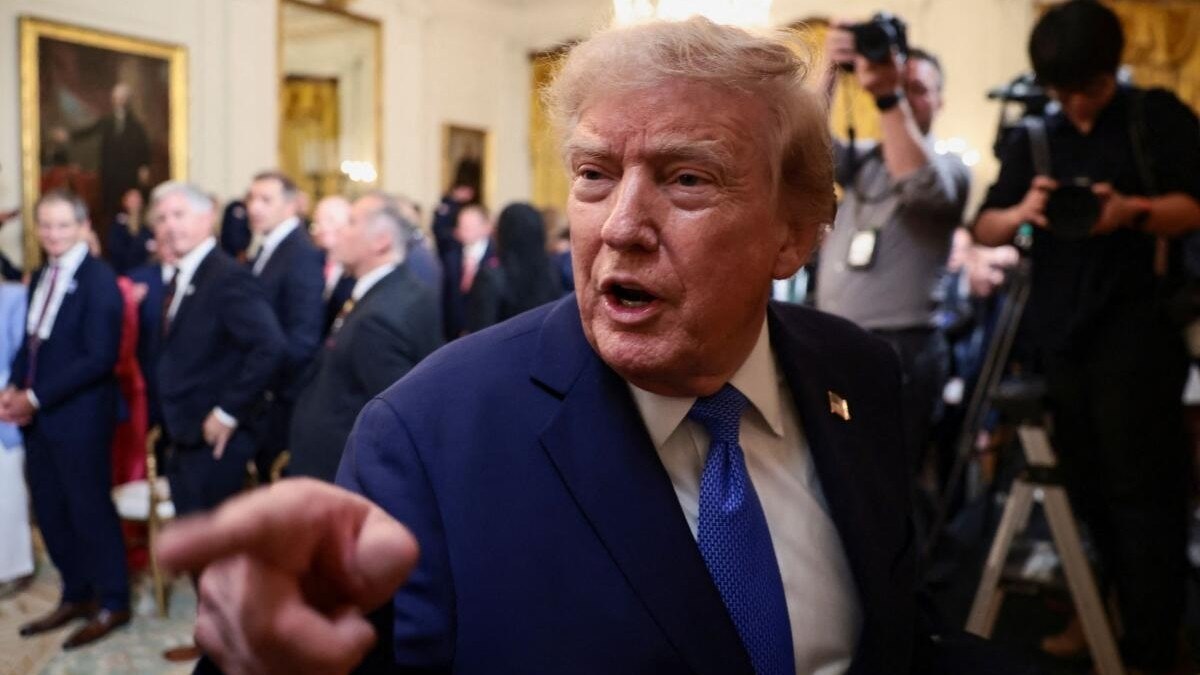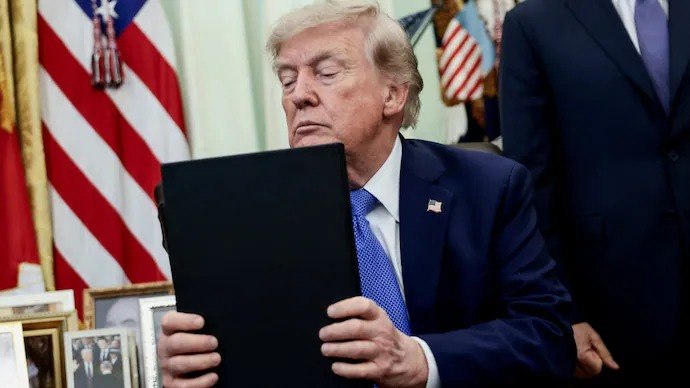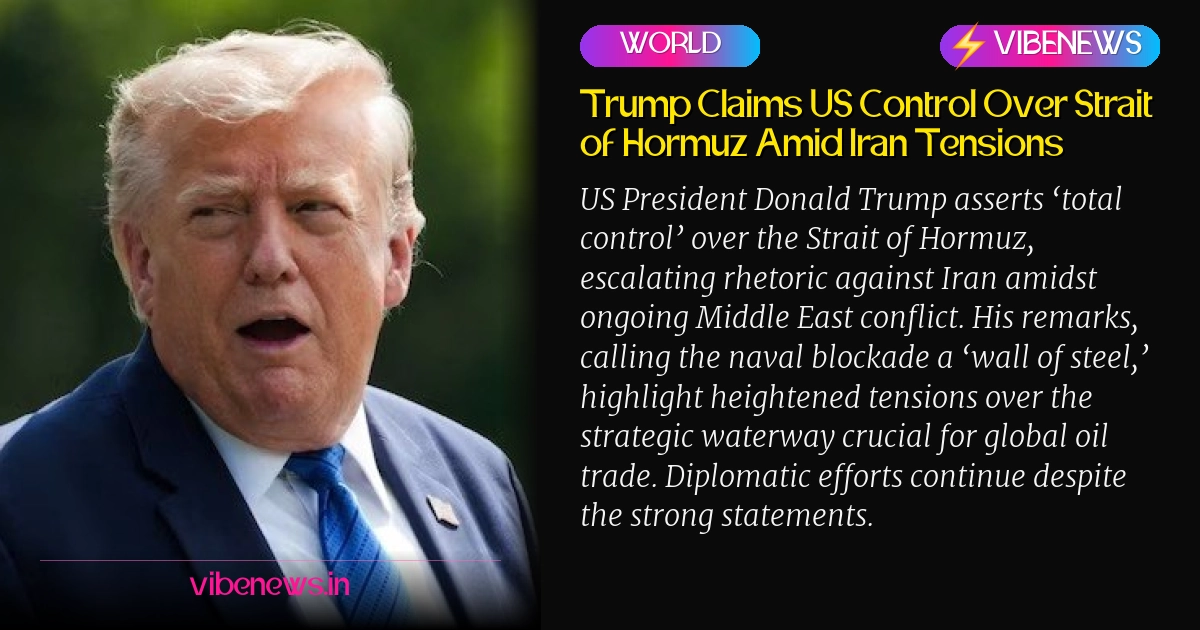
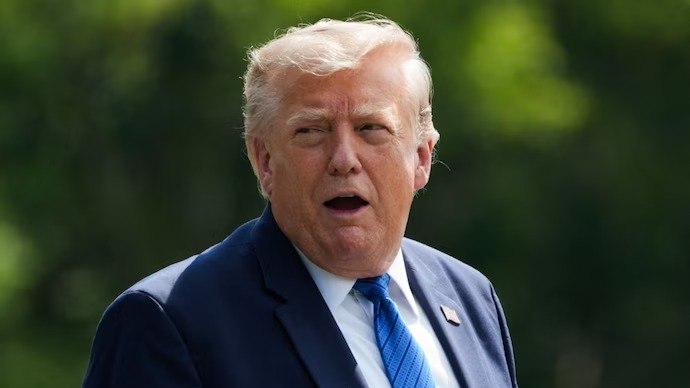
US President Donald Trump on Tuesday declared that Washington had achieved "total control" over the Strait of Hormuz. This assertion marks a significant escalation in rhetoric against Iran, coming amidst persistent high tensions over the ongoing Middle East conflict, maritime security in the Gulf, and stalled negotiations concerning the strategic waterway.
In a post on Truth Social, Trump stated, "The U.S.A. has total control over the Strait of Hormuz. I THINK WE WILL KEEP IT! Our Naval Blockade is being called, by everyone, ‘A WALL OF STEEL,’ and there is nothing Iran can do about it." He further claimed that Iran’s military capabilities had been severely weakened, concluding his post with the phrase, "Praise be to Allah!"
Trump added, "All they have is FAKE NEWS and 300% INFLATION, and getting worse! Iran is all talk and no action, the Bully of the Middle East No Longer. Praise be to Allah! President DONALD J. TRUMP." These forceful remarks underscore a prolonged standoff over the Strait, a critical maritime passage.
The Strait’s Geopolitical Significance
The Strait of Hormuz is one of the world’s most vital maritime chokepoints, through which approximately one-fifth of the world’s oil trade passes daily. Its narrow passage, situated between Iran and Oman, makes it exceptionally vulnerable to disruption.
Any impediment to traffic through this strategic waterway carries immediate and far-reaching implications for global energy markets, significantly impacting shipping insurance rates and broader economic stability worldwide. The current crisis has already prompted heightened naval patrols and considerations by shipping companies for rerouting.
Escalating Rhetoric and Regional Dynamics
The latest flare-up follows weeks of intense military confrontation involving Iran, Israel, and US forces across the region. This deepening conflict has fueled fears of a wider regional war, with Tehran repeatedly warning that it could restrict or disrupt maritime traffic if pressure on Iran continues to intensify.
In response, the United States has maintained a substantial naval presence in the Gulf, signaling that freedom of navigation remains a core security objective. This military posture serves as a deterrent while also reassuring allies concerned about energy supplies and maritime security.
Diplomatic Undercurrents and Economic Pressure
Trump’s comments also emerged as diplomatic efforts continued behind the scenes. Washington and Tehran have been engaged in indirect talks, exploring conditions for easing the Hormuz crisis and restoring normal shipping activity. These discussions are complex, touching upon various contentious issues.
Iran has reportedly sought compensation linked to wartime damage and sanctions-related economic losses, a demand that President Trump has publicly rejected. The Trump administration has simultaneously intensified economic pressure on Tehran, maintaining existing sanctions and warning of additional punitive measures if Iran refuses to cooperate.
Iranian officials have consistently accused Washington of employing military pressure and economic coercion to force concessions at the negotiating table. This fundamental disagreement over the nature of engagement complicates any potential breakthrough.
On Monday, Pakistan indicated that the US and Iran appeared to be moving closer to an arrangement aimed at reducing tensions around the Strait. However, officials familiar with the discussions have cautioned that major differences persist over sanctions, security guarantees, and the sequencing of any de-escalation measures, suggesting a formal agreement is still distant.
Historical Precedent and Future Implications
Analysts suggest that Trump’s latest statement is likely aimed at reinforcing deterrence and reassuring allies worried about energy supplies and maritime security in the volatile region. However, they also caution that such maximalist language could complicate ongoing diplomacy by hardening positions in Tehran and increasing domestic political pressure on Iranian leaders.
The Strait of Hormuz has historically been one of the world’s most sensitive geopolitical chokepoints. Previous confrontations there have triggered significant spikes in global oil prices and widespread fears of military escalation, underscoring the fragility of the current situation.
For now, commercial traffic through the Strait continues under heavy security monitoring, but the situation remains precarious. The immediate focus is on whether ongoing negotiations can produce a limited understanding that reduces the risk of military confrontation while preserving essential shipping access. Trump’s forceful intervention has underlined that, despite diplomatic contacts, the Hormuz dispute remains intrinsically tied to the wider Iran conflict and the broader struggle for influence in the Middle East.
Editorial Context
The ongoing tensions in the Strait of Hormuz represent a critical flashpoint with profound long-term implications for global stability and economic security. The Strait’s role as a conduit for a significant portion of the world’s oil supply means that any sustained disruption could trigger a global energy crisis, impacting economies far beyond the Middle East. This situation tests the limits of international diplomacy and the effectiveness of deterrence strategies.
Over the long term, the dispute highlights the persistent challenges in managing geopolitical rivalries in resource-rich regions. It also underscores the evolving nature of US foreign policy in the Middle East, balancing assertive posturing with the need for de-escalation. The outcome of these negotiations and confrontations will not only shape the future of US-Iran relations but also influence regional power dynamics and the future of maritime security for decades to come.
TL;DR
- US President Donald Trump claimed "total control" over the Strait of Hormuz, calling the naval blockade a "wall of steel."
- The Strait of Hormuz is a critical chokepoint through which approximately one-fifth of the world’s oil trade passes.
- Trump’s remarks escalate rhetoric amidst ongoing regional conflicts involving Iran, Israel, and US forces.
- Despite strong public statements, indirect diplomatic talks are underway between Washington and Tehran to de-escalate the crisis.
- Iran seeks compensation for wartime damage and sanctions-related losses, a demand publicly rejected by Trump.
- Analysts suggest Trump’s statement aims to reinforce deterrence but could complicate delicate diplomatic efforts.