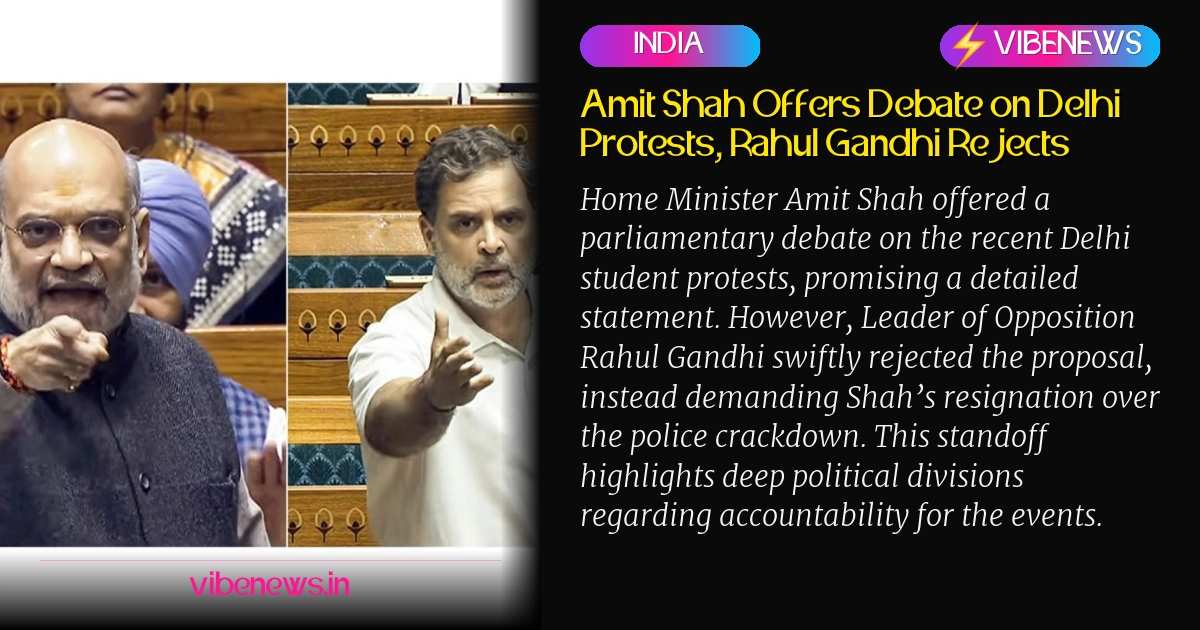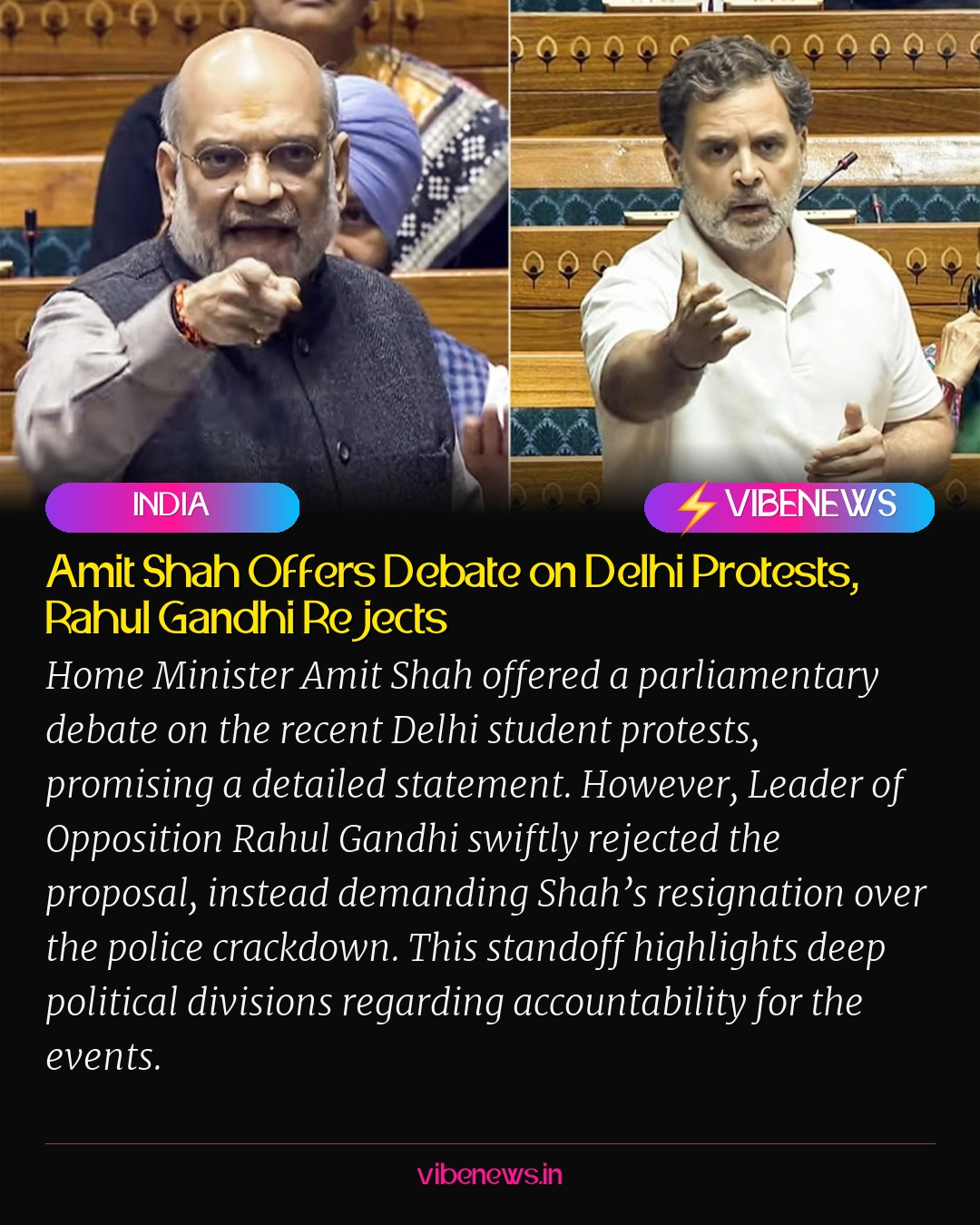
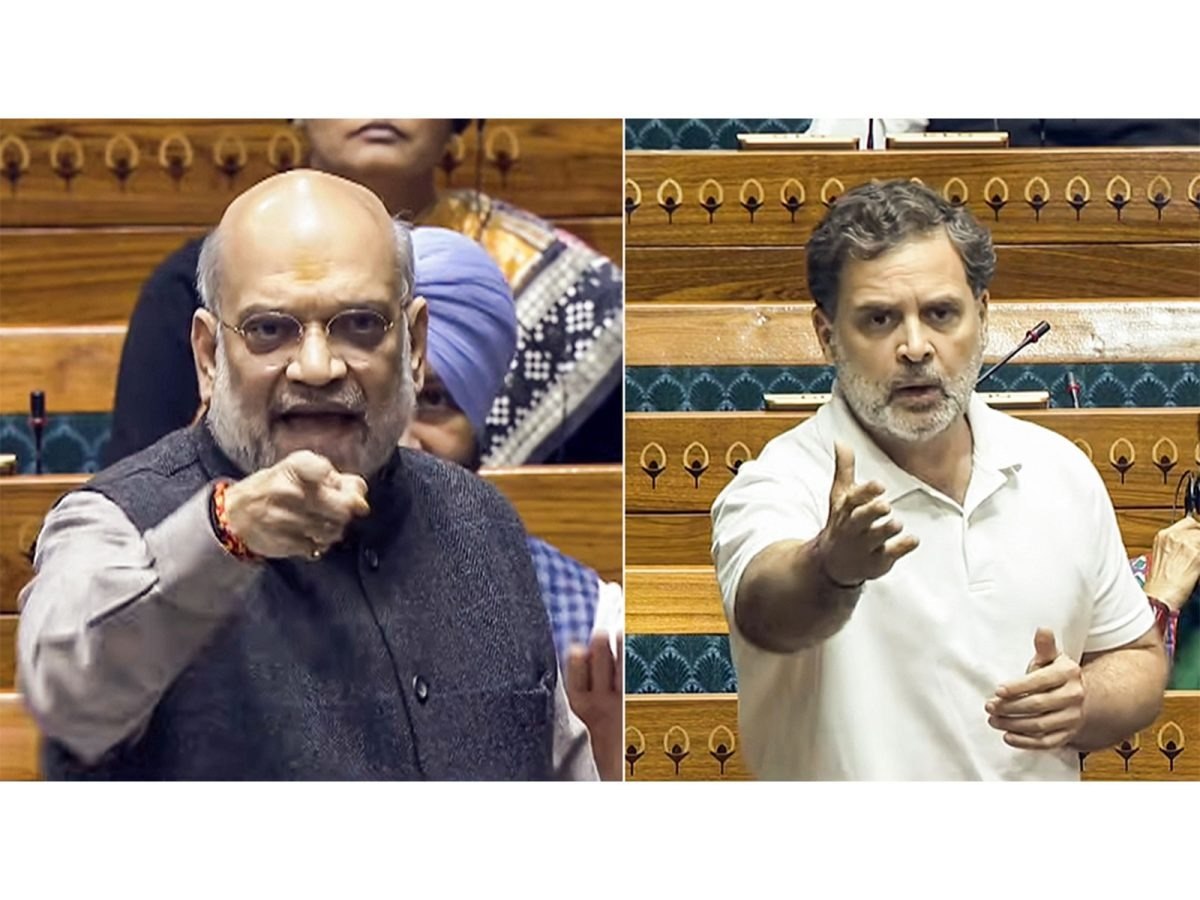
Home Minister Amit Shah recently extended an offer for a comprehensive parliamentary debate concerning the recent student protests and subsequent police action in Delhi. He assured a detailed statement following the discussion. However, this proposal was swiftly rejected by Leader of Opposition Rahul Gandhi, who instead called for Shah’s immediate resignation.
The exchange unfolded amidst persistent opposition demands for accountability regarding the events, which have seen Parliament repeatedly stalled. Shah’s challenge aimed to break the legislative deadlock, but it only intensified the political confrontation.
The Parliamentary Standoff
Speaking publicly on the contentious issue for the first time, Home Minister Amit Shah accused the Opposition of deliberately avoiding a substantive debate on the student-related matters and obstructing parliamentary proceedings. He challenged the Opposition to allow a discussion to commence, promising to remain in the House and provide a thorough response the following day.
Shah stated, "Let’s start the debate from 3 pm today. I will sit in the House and will give a detailed reply at 3 pm on Thursday." He firmly rejected the Opposition’s demand for an immediate statement, emphasizing that parliamentary rules dictate the proper procedure for discussing crucial issues, and conditions cannot be imposed.
Within minutes of Shah’s public challenge, Rahul Gandhi dismissed the offer outright. Gandhi asserted that the youth of the nation were not interested in hearing from the Home Minister and reiterated his demand for Shah’s resignation. He questioned the chain of command, stating, "Who gave the order to shoot the students? Delhi Police and RAF come under Home Ministry. Did Amit Shah give the order? If he did, he is culpable, if he didn’t, he is incompetent. In both cases, he should resign."
Background to the Unrest
The political uproar stems from a significant incident on July 20, when Delhi witnessed a lathicharge and other police actions against protesting students. While the specific trigger for these student demonstrations is not detailed in the immediate context, such events often arise from deep-seated grievances related to government policies or broader socio-political issues.
Student movements have historically played a pivotal role in India’s democratic discourse, often serving as a barometer for public sentiment and a catalyst for change. The Delhi Police, which operates under the direct administrative control of the Union Home Ministry, has been at the center of this controversy, inevitably drawing scrutiny towards the Home Minister.
Procedural Battleground
The standoff between Shah and Gandhi highlights a recurring tension in Indian parliamentary democracy: the balance between established procedural rules and the political imperative for immediate accountability. Shah’s insistence on a structured debate, as per House rules, reflects a desire to follow established norms and present a comprehensive government position.
Conversely, the Opposition’s demand for an immediate statement or resignation often stems from a perception of urgency and a desire to exert maximum political pressure. They argue that when public trust is eroded, especially concerning state action against citizens, the highest levels of government must provide swift and unequivocal answers, even if it means bypassing traditional debate formats.
Wider Political Implications
The confrontation extends beyond the immediate issue of student protests, touching upon the broader health of India’s democratic institutions. The Opposition’s aggressive stance, led by Rahul Gandhi, signals a concerted effort to corner the government on issues of governance and human rights, particularly concerning the handling of dissent.
For the ruling party, the challenge is to manage public perception while upholding its authority and parliamentary procedures. The Home Minister’s willingness to debate, albeit on his terms, can be seen as an attempt to project transparency and confidence, countering accusations of evasion and demonstrating adherence to parliamentary decorum.
Editorial Context: A Test of Democratic Accountability
This ongoing political tussle over the Delhi student protests is more than just a fleeting news cycle; it represents a critical test for democratic accountability in India. The core issue revolves around the state’s use of force against its citizens, particularly students, and the subsequent demand for ministerial responsibility.
In the long term, how this situation is resolved—or not resolved—will set precedents for future government responses to public dissent and the Opposition’s role in holding power accountable. A failure to address these concerns transparently and effectively could further erode public trust in institutions and deepen societal divisions, impacting the efficacy of legislative governance.
TL;DR
- Home Minister Amit Shah offered a parliamentary debate on the Delhi student protests, promising a detailed statement.
- Leader of Opposition Rahul Gandhi rejected the offer, instead demanding Shah’s immediate resignation.
- Shah accused the Opposition of stalling Parliament and insisted on following established parliamentary rules for discussion.
- Gandhi questioned Shah’s culpability or competence regarding the police action, stating he should resign in either case.
- The political standoff stems from a July 20 lathicharge on students in Delhi, leading to demands for accountability from the Home Ministry.
- The confrontation highlights a broader tension between parliamentary procedure and political demands for immediate answers in Indian democracy.